



Structured Play vs Open-Ended Play: Why Children Need Both


Louise
@inspiremyplay
Part of the @InspireMyPlay team. Sensory play specialist and mum to two boys.
As a mum of two energetic boys and after nearly a decade immersed in sensory play and running early years groups, I’ve learned something important when it comes to play:
Sometimes what we think is open-ended play, isn’t really play at all. It’s actually just an adult directed activity wearing a playful costume of our own design.
But this isn’t a blog about “good” play versus “bad” play – it’s about understanding the different benefits of structured and open-ended play, where they overlap, and where they differ.
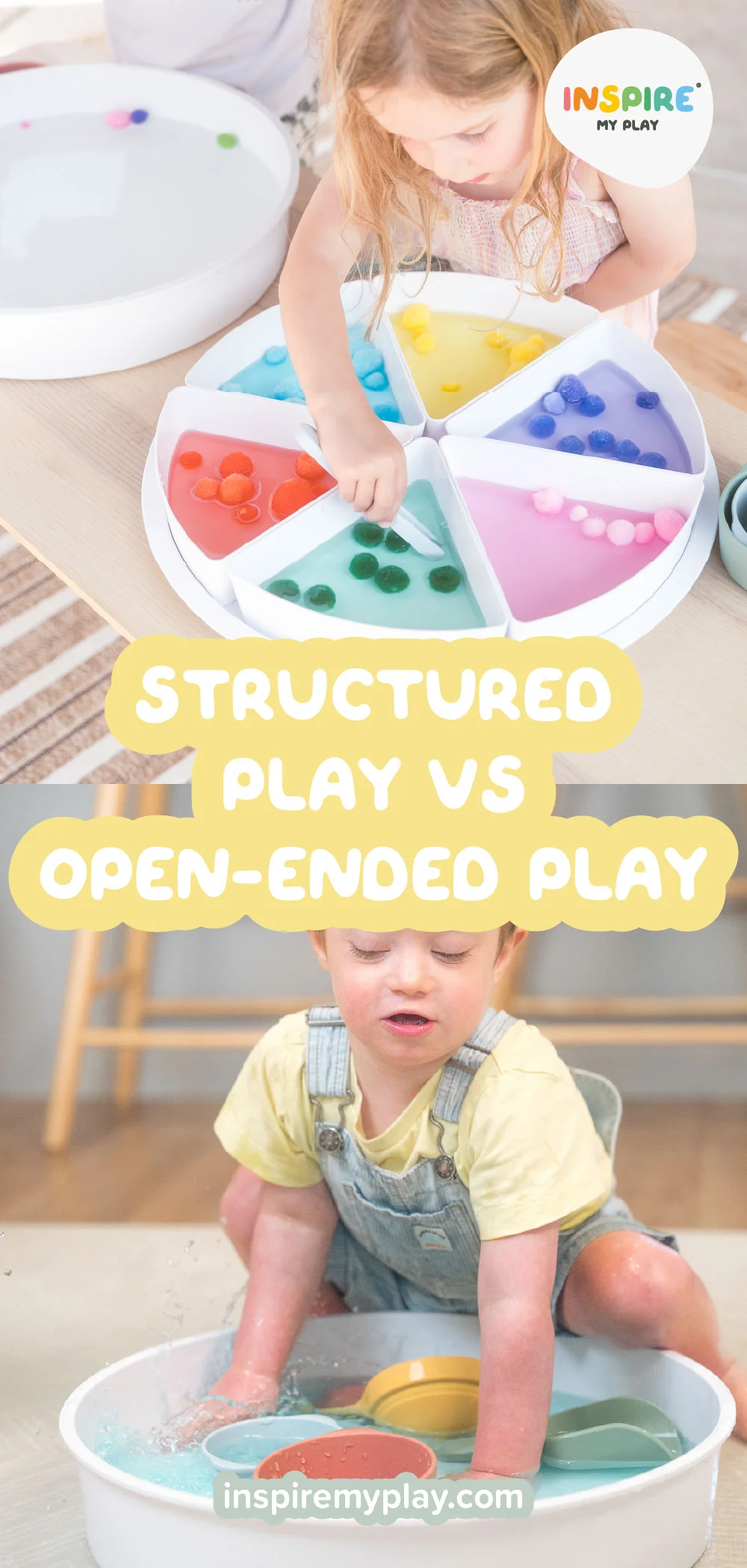
Here at Inspire My Play, you’ll find a mixture of everything — from a PlayTRAY filled with whatever materials are to hand, alongside a selection of enticing tools ready for a child’s imagination to flow freely and explore (where the process is the only thing that matters), - right through to beautifully pre-prepped crafts with a finished idea in mind.
Both styles matter.
Both offer amazing benefits.
And both deserve a place in every child’s day.
The trick is understanding the difference, because the opportunities they offer children are not the same.
What is Structured Play?
Structured activities are the ones we, as grown‑ups, design with a plan in mind. I’m sure most people reading this blog will recognise them instantly:
- A tidy craft where the polar bear should look something like the picture or pre-made example on display to inspire or to copy
- A PlayTRAY set up with step‑by‑step tasks, for example “Put the pom poms in the matching coloured pots.”
-
Activity books or early worksheets, such as letter matching sheets or nature treasure hunts (we’ve done this one many times in our local woods and still haven’t tired of it!)
- A LEGO® kit where the goal is to follow instructions
- Guided nursery “stations” children rotate through during their day
These activities are incredibly valuable Structured play can help children to:
- Learn new skills
- Cope with frustration and practise perseverance
- Follow simple instructions appropriate to their developmental stage
- Feel proud of achieving a clear end result
- Help carers and educators to understand and support a child’s development
The important thing to keep sight of is that the idea, the process, and often even the outcome have already been decided by us. The child steps into something that is, ultimately, adult‑led.
So, What Is Open‑Ended Play?
To me, open-ended play is a celebration of children’s innate drive to explore, experiment, and occasionally climb straight into the PlayTRAY and become one with the rice.
This is where open‑ended shines.
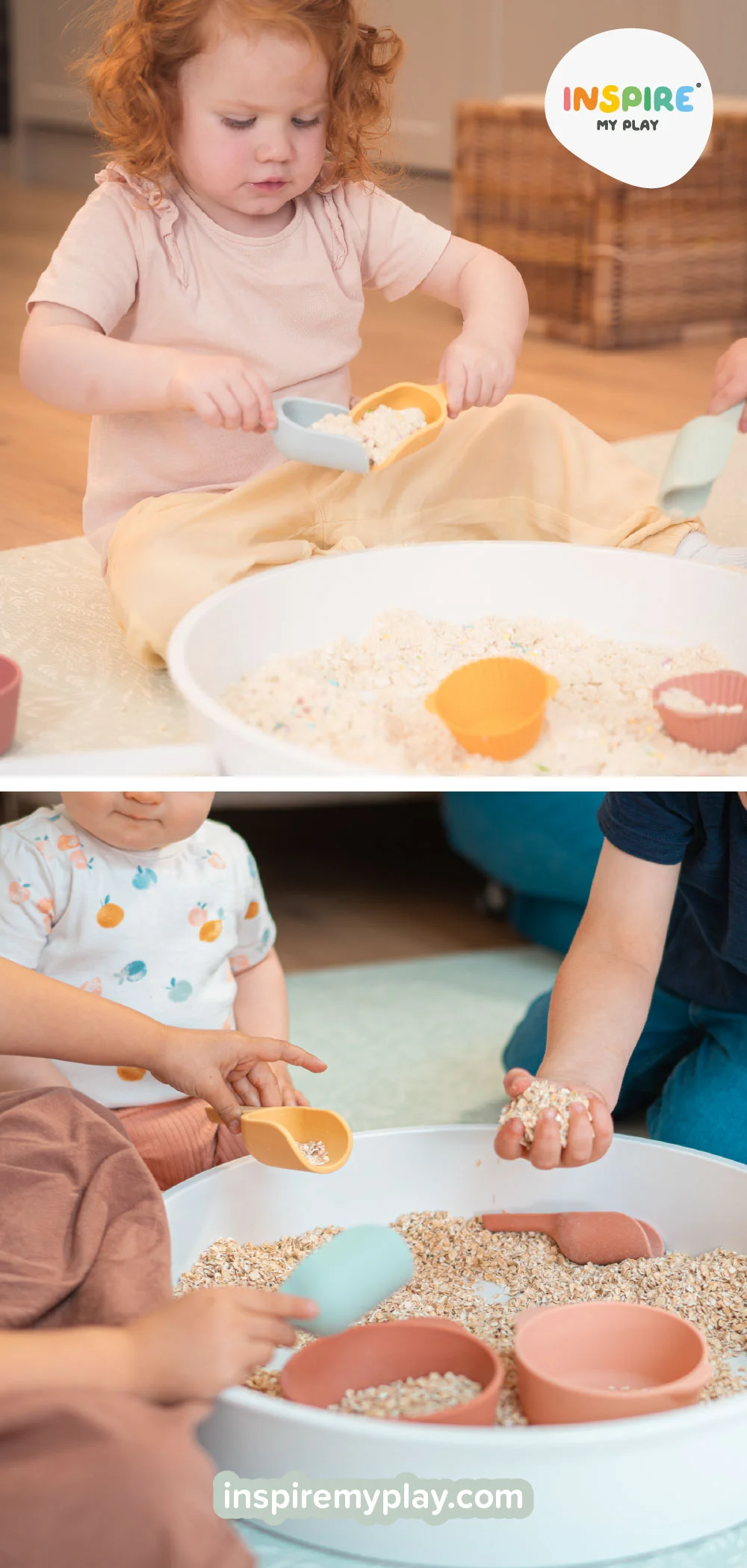
In open‑ended play, the child decides how things are used, which direction the play goes, and what the “outcome” means — if there even is one in our adult eyes.
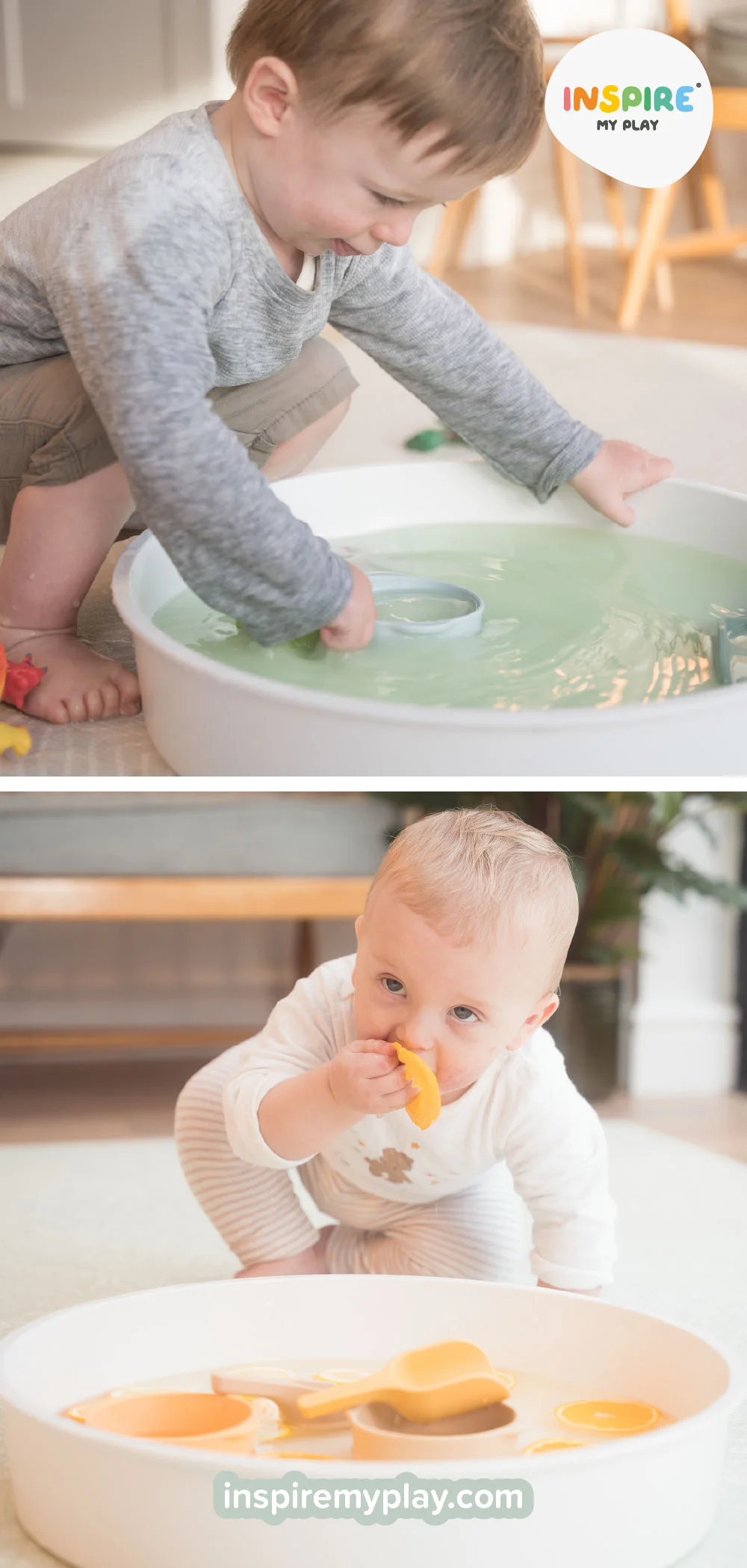
- It’s the toddler pouring water back and forth endlessly instead of washing the toy animal you had in mind, and you allowing them that freedom to lead.
- It’s the preschooler turning your PlayTRAY into a pretend bakery, despite there being no visible bakery props.
- It’s a baby mouthing treasure basket items, banging them, swapping them back and forth in pure sensory exploration without interruption or guidance, with the adult simply responding rather than directing.
It often looks messy.
It might change direction halfway through… or three times in ten minutes.
And it might look like “nothing much is happening.”
But in reality, everything is happening.
When children lead their own open-ended play, something magical unfolds that we cannot directly teach. They’re developing:
- Problem-solving skills (“That didn’t fit, what else can I try?”)
- Creativity and flexible thinking — improvising, imagining and inventing.
- Communication and language as they narrate their ideas.
- Confidence in their own thinking.
- Self‑trust and independence as they decide what to do next without adult cues or intervention.
Why Open-Ended Play Can Feel Hard for Adults
Open-ended play is often the trickiest for us because if we’re doing it well, then:
- We’re not rushing them through a task.
- We’re not pushing for a set result.
- We’re not “fixing” their creations to match our vision.
Instead:
- We slow down.
- We soften the structure (while still holding clear boundaries around mess and behaviour).
- We create environments that invite exploration, curiosity and wonder…and then step back, only contributing when invited to do so.
Because when children are trusted to follow their own ideas, something amazing happens:
They don’t just do learning.
They become learners.
Curious.
Confident.
Capable.
Joyfully absorbed in their own discoveries.
So… Which Is is Better? Structured Play or Open-Ended Play?
The honest answer is: neither is better on its own.
Structured play gives children opportunities to practise skills within a safe scaffold. Open‑ended play gives them the freedom to stretch, experiment, and explore.
They need both.
Practical Ways to Blend Structured Play and Open-Ended Play at Home
Here are a few simple ideas:
Try a Structured Invitation… That Can Turn Open-Ended
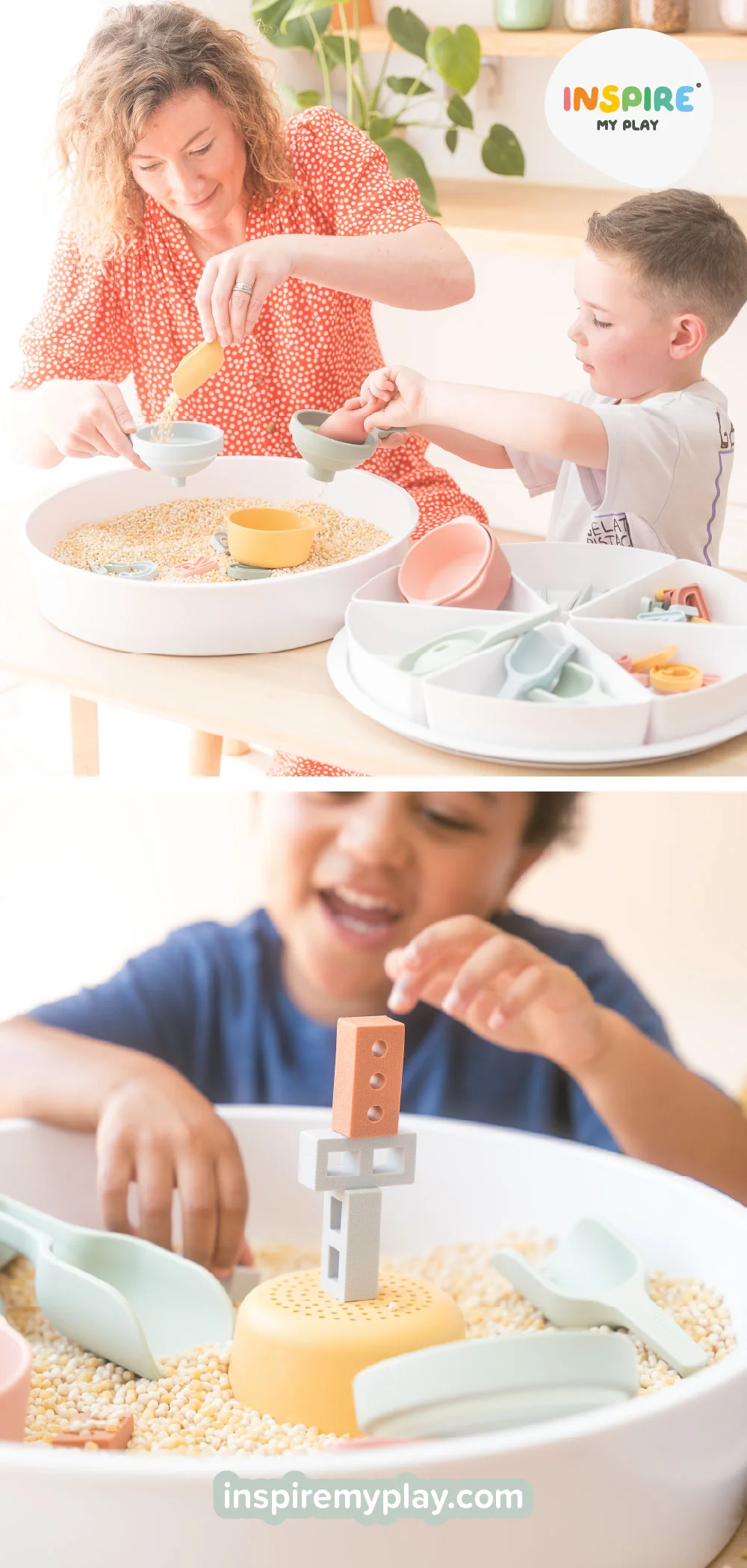
- Set up a PlayTRAY with scooping and pouring tools in a base like lentils, oats or whatever is appropriate and safe for your child. You can go as wild or as neutral as you like with colouring chickpeas or plain oats – whatever makes your heart sing – but once it’sset-up, you must be prepared to gently hand over the reins!
- Show your child how to transfer from one pot to another.
- Then step back and let them run with it. If it becomes pretend soup? Brilliant! If it remains unlabelled and they’re immersed in the scooping and pouring motions, also brilliant.
Offer an Open‑Ended Setup… With Gentle Structure Nearby
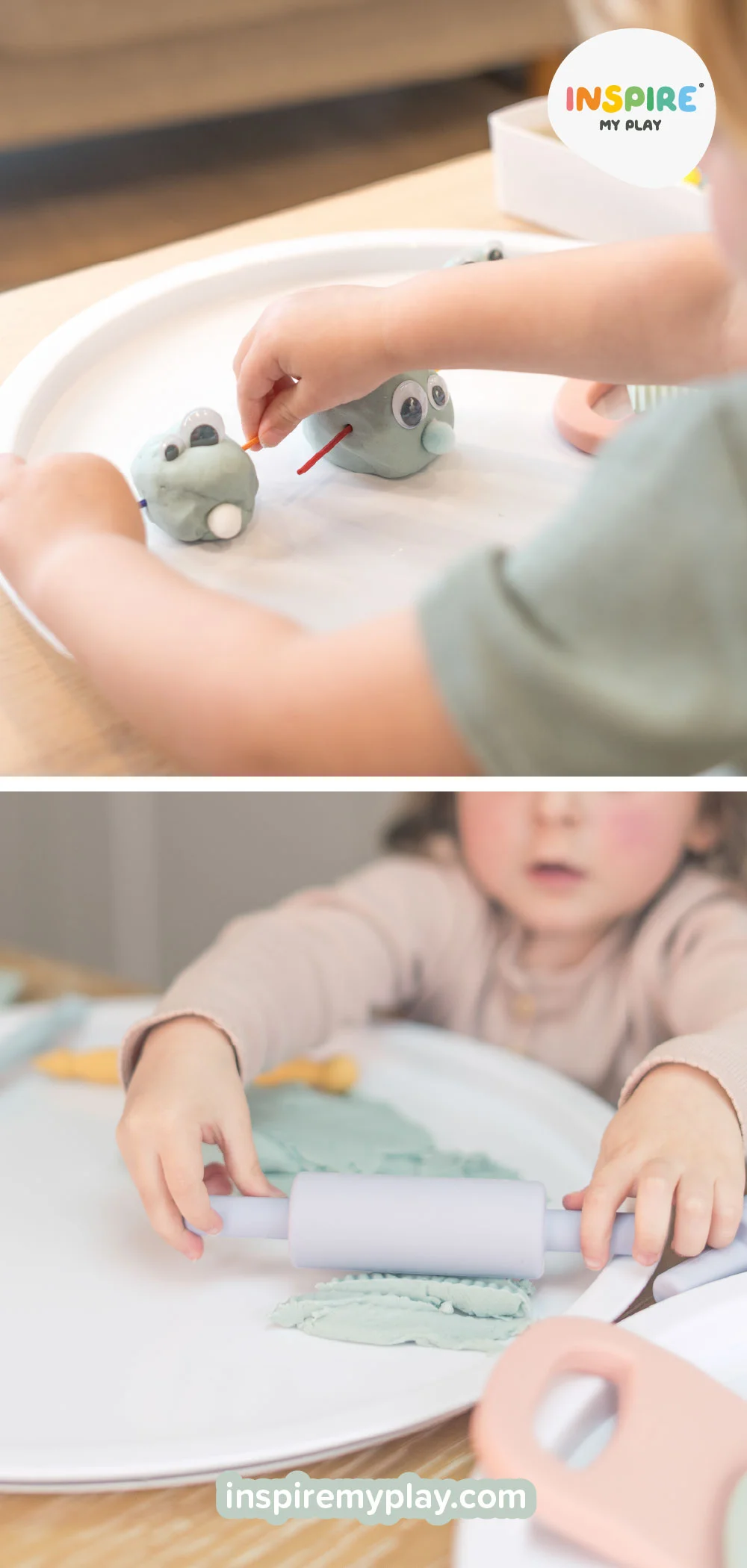
- Put out loose parts, playdough, and a few suggested ideas printed out.
- You can model rolling or cutting once, then step back and provide space for total freedom.
- Or you could play alongside following your own structure, working through the printed suggestions while letting the child decide to do the same, or do their own thing.
- Children often create their own structure naturally, so provide space at first, and see how they go.
Combine Both Over a Few Sessions
- One day: a themed PlayTRAY with a simple task (e.g., rescue the animals from the “ice”).
- Another day: A completely open PlayTRAY setup with no instructions.
Balance is the goal.
The Heart of It All
Play should be joyful — for children and for us.
When we understand the difference between structured and open‑ended play, we can use both with confidence. We stop worrying about whether we’re “doing enough” and start noticing what’s unfolding in front of us.
Because whether they’re following our lead or taking the reins, children are always learning.
And that’s the real magic of play!


