


Learning Letters Through Play: 7 Hands-On Alphabet Activities for Kids


Laura @inspiremyplay
Founder of @inspiremyplay, Early Years teacher for 11 years and mummy to three gorgeous girls. I'm passionate about about the benefits of play in early childhood.
With National Scrabble Day on April 13, it’s a lovely reminder that a love of letters starts early.
Hands-on play is one of the most effective ways to support early literacy. When children can see, touch and explore letters in a playful way, learning not only becomes more meaningful, but much more memorable.
Whether you're supporting a toddler who’s just starting to recognise letters or a preschooler beginning to form them, playful, sensory experiences help build the strong foundations needed for reading and writing.
Why Learning Letters Through Play Matters
Early experiences with letters help children to:
- Recognise and name letters.
- Connect letters to their sounds.
- Build fine motor skills needed for writing.
- Develop hand-eye coordination and control.
- Gain confidence before putting pen to paper.
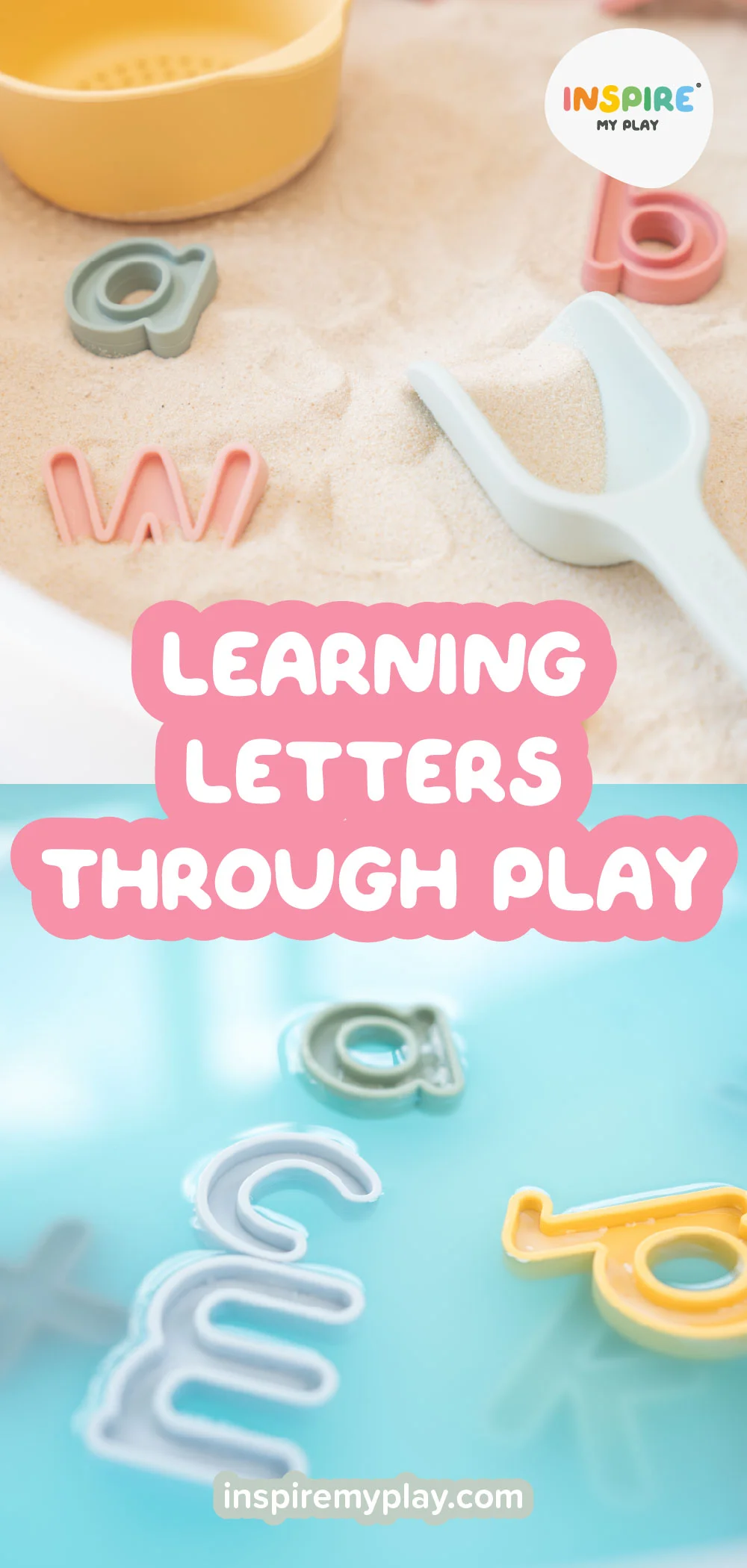
Our silicone lowercase and uppercase letter sets are designed to make learning letters tactile, engaging and fun.
With raised edges and recessed centres, children can trace, stamp and imprint each letter, helping them physically feel each shape as they learn. This hands-on interaction supports letter recognition while also strengthening the small hand muscles needed for pencil control later on.
The sets are also colour-coded, with vowels grouped in one colour, making it easier for children to begin distinguishing between vowels and consonants during play.
Fun Alphabet Activities to Support Letter Learning
There are so many playful ways to explore letters beyond flashcards and worksheets. Sensory play, mark-making and hands-on exploration all help children engage more deeply with letter shapes and sounds.
These types of activities don’t just support early literacy — they’re also brilliant for building coordination, control and dexterity (all the skills little hands need for things like getting dressed, using scissors and eventually writing).
We’ve rounded up some of our favourite alphabet activities for toddlers and preschoolers. Each one is simple to set up, fun to explore and designed to support both letter learning and fine motor development through play.
We hope your kids love them!
1. Mystery Water Letter Match
This sensory activity is a hit with children of all ages. They love the sensory element, and it’s a great way to explore letters while practising coordination as they search, grasp and match.
What You’ll Need:
- 1/4 cup of cornflour (cornstarch)
- Water
- Food colouring
- Alphabet Letters
- PlayTRAY
- Tongs
- Free Alphabet Printable
How to Play:
- Download our uppercase and lowercase letters printable.
- Place the letters into the deep tray of the PlayTRAY.
- Mix the cornflour with coloured water and pour over the letters.
- Invite your child to retrieve the letters using tongs and match them to the corresponding letter on the printable.
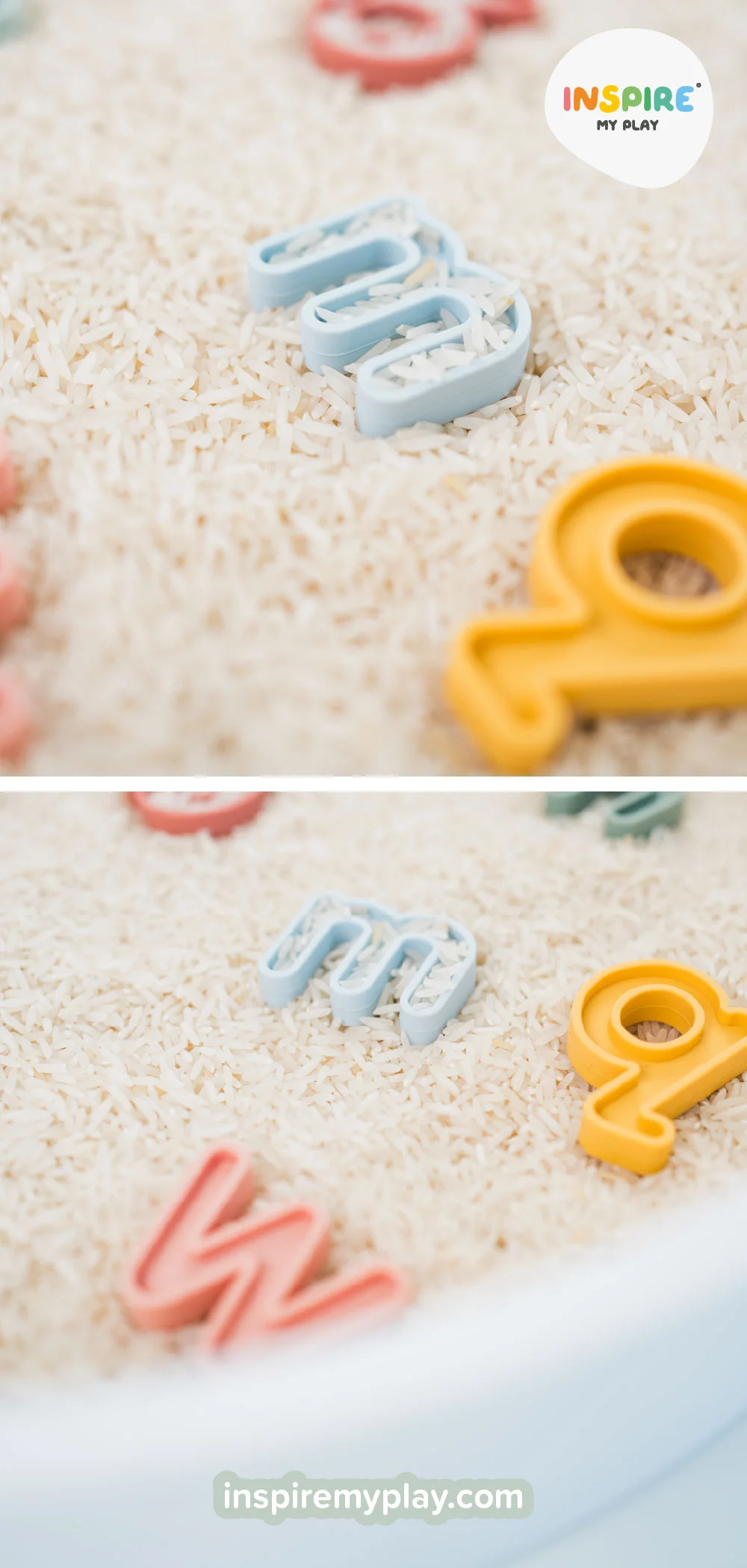
Prefer less mess? Hide the letters in rice instead.
💡 Top tip: Laminate the printable or place it in a clear bag to protect it from splashes!
2. Mark-Making Tray
Mark-making is an important first step towards letter formation, helping children practise the movements and control needed for writing.
What You’ll Need:
- Salt
- Food colouring
- Clear plastic bag
- PlayTRAY
- Free Pre-Writing Flashcards
-
Alphabet Letters
How to Play:
- Pour salt into a clear plastic bag.
- Add a few drops of food colouring and scrunch the bag until evenly coloured.
- Pour onto a tray and leave to dry.
- Empty the salt into the lid or base of the PlayTRAY.
- Download our Pre-writing Flashcards.
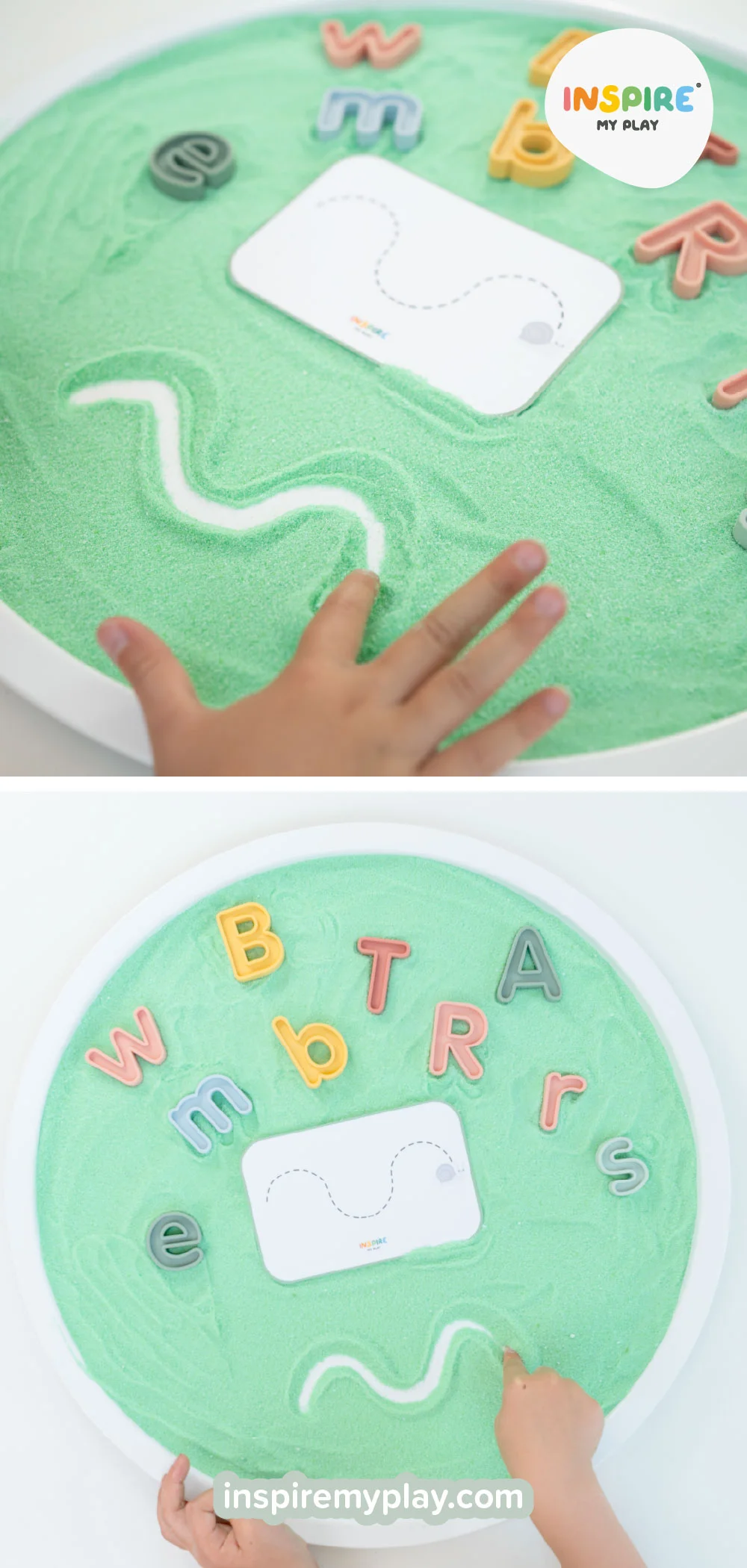
- Encourage your child to copy the shapes on the flashcards using their finger.
- Once they’re feeling confident, introduce the alphabet letters and invite them to trace around each one.
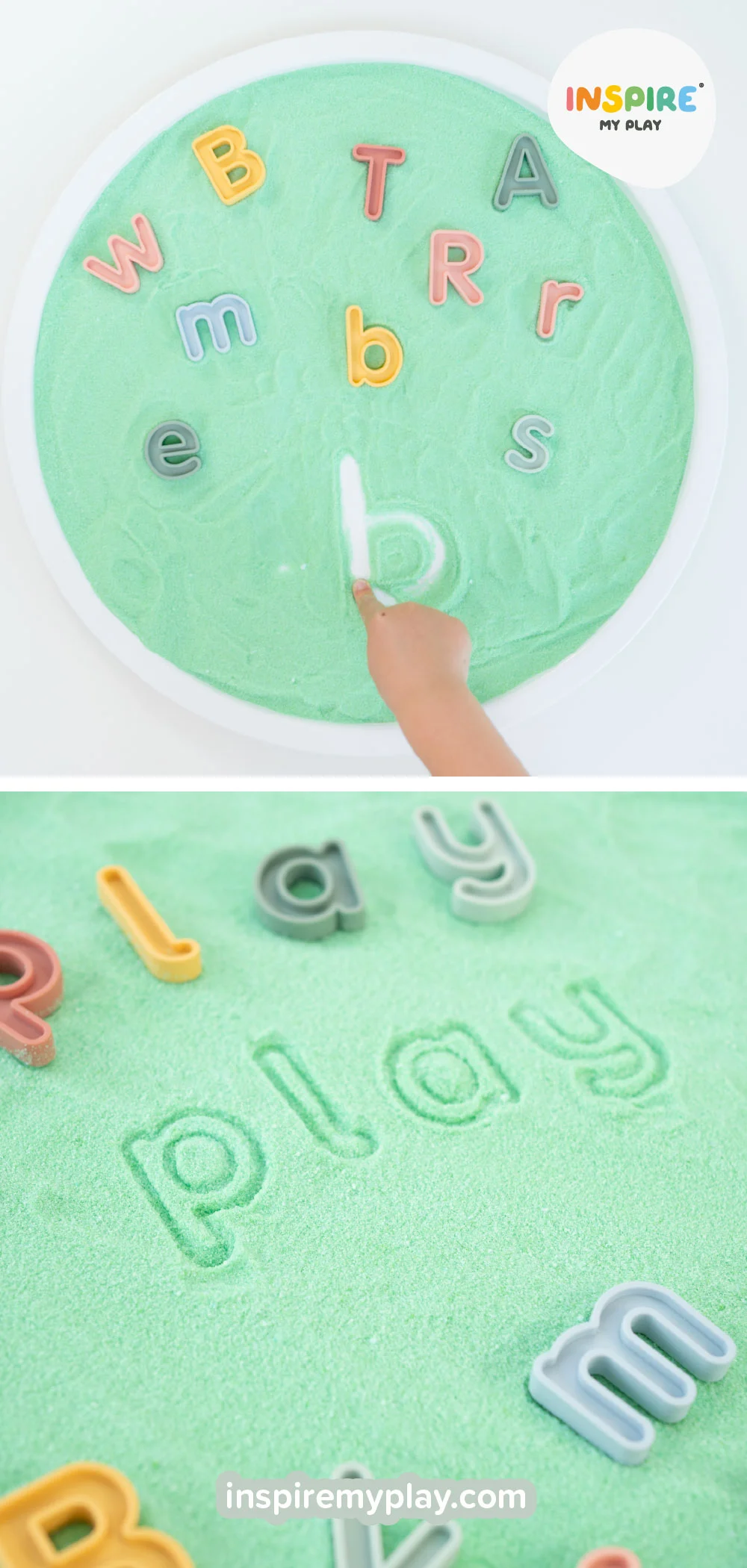
Mix it up: Sand works just as well if you don’t want to use salt.
3. Ice Excavation
This exciting activity turns letter learning into a mini rescue mission, while strengthening hand muscles and coordination as children squeeze, spray and pick up the letters.
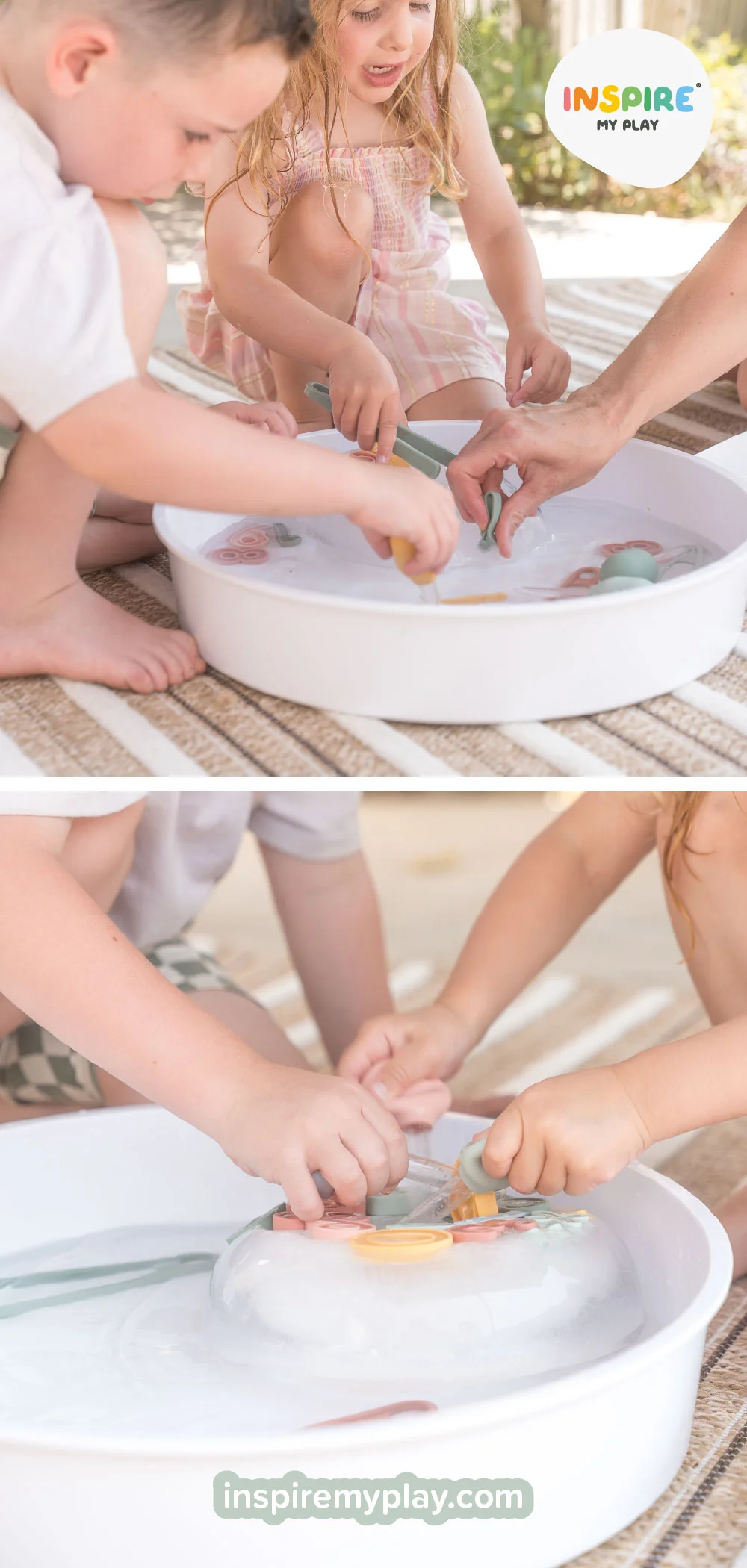
What You’ll Need:
- Warm water
- Spray bottles
- Alphabet Letters
- Droppers
- Tongs
-
PlayTRAY
How to Play:
- Put the Alphabet Letters into a bowl of water and freeze overnight.
- Place the frozen block onto the PlayTRAY lid.
- Fill spray bottles and droppers with warm water.
- Invite your child to melt the ice and rescue the letters using droppers and tongs.
- Encourage them to name each letter or use them to build simple words.
Bonus: The beauty of freezing something so large is that it takes a long time to melt, which means the kids are entertained for longer!
4. Alphabet Playdough
Let’s face it, children love playdough! It provides a rich sensory experience that helps them explore letter shapes while building strength and dexterity in their hands.
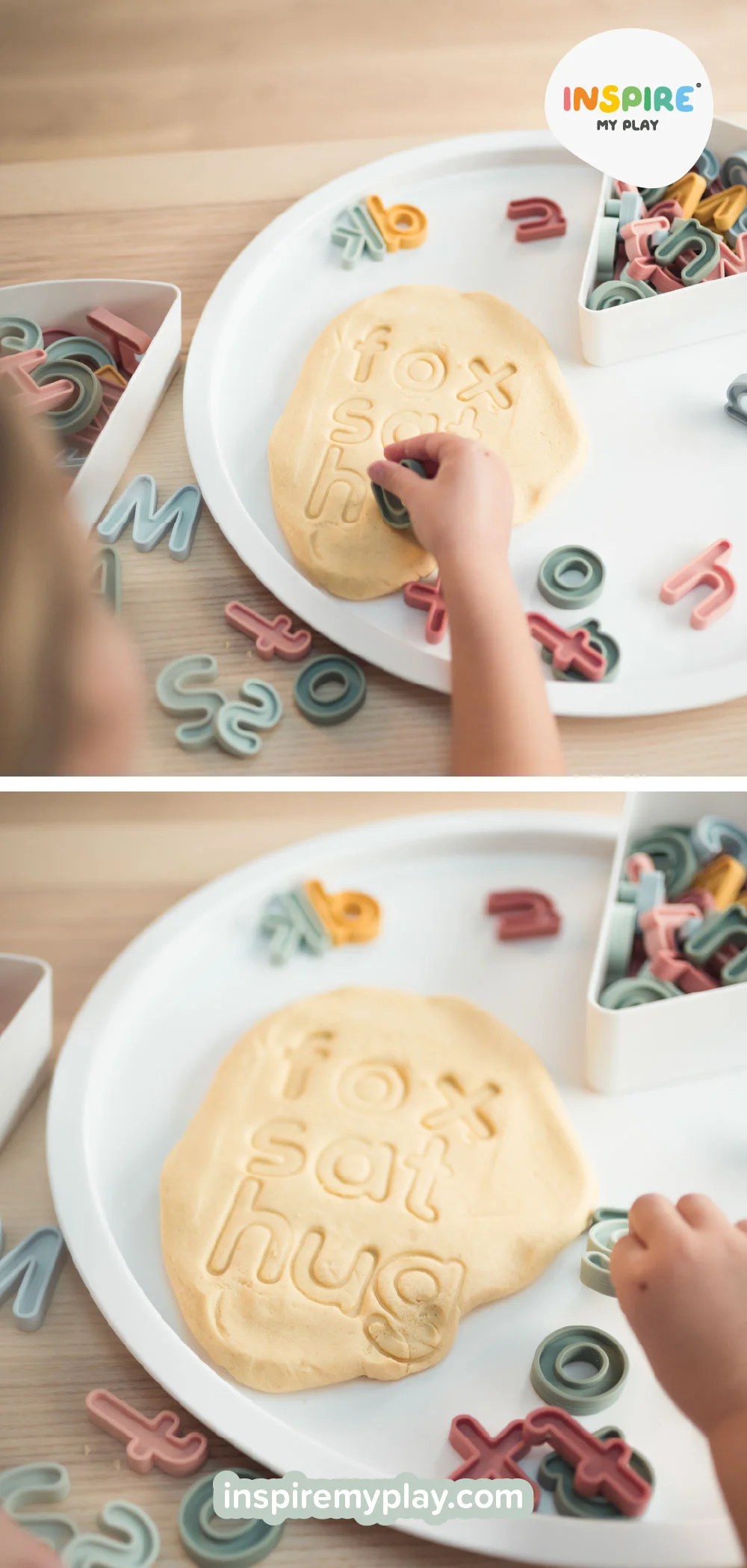
What You’ll Need:
- Playdough
- Playdough tools
- Alphabet Letters
- PlayTRAY
- Optional: Free Alphabet Printable
How to Play:
- Roll out playdough on PlayTRAY lid.
- Let children press the Alphabet Letters into the play dough to create imprints.
- Encourage them to name the letters as they explore and play.
Extra fun: Use our Letters Printable as an alphabet dough mat (just laminate it first). Encourage your child to build each letter using playdough, then match it to the correct letter on the sheet. They can also use the silicone letters to stamp the shape before cutting it out.
5. Alphabet Pasta Play
We absolutely love this letter activity from @lifewith3men. It’s a lovely mix of sensory play and letter matching, with lots of scooping and pouring along the way.
What You’ll Need:
- Alphabet Pasta
- Paint
- Alphabet Letters
- Scoops, Bowls and Funnels
-
PlayTRAY
How to Play:
- Paint or dye the alphabet pasta and leave to dry. (Check out our blog: How to Dye Pasta for Play & Craft Activities.)
- Add the pasta and silicone letters to the PlayTRAY.
- Provide scoops, bowls and funnels for play.
- Encourage your child to match the pasta letters to the larger silicone letters. Due to their raised silicone edges they’ll fit nicely inside!
Extend the fun: Ask older children to sort vowels and consonants into the PlayTRAY compartments.
6. Letter Slime
This fun idea from @teachingbythemountains adds a sensory twist to letter learning, as children dig, pull and search for hidden letters.
What You’ll Need:
- PlayTRAY
- Alphabet Letters
- Tongs
- Bowls
- Slime
How to Play:
- Fill your PlayTRAY lid with the Alphabet Letters and mix them into the slime.
- Invite your child to retrieve them using tongs or their fingers.
- Sort the letters into bowls by type (uppercase/lowercase), vowels and consonants, or colour.
Mix it up: Instead of slime try using jelly for a different texture. We use gelatine powder made up using the packet instructions and add a bit of food colouring to make it visually more engaging. Our PlayTRAY segments are great for this as the gelatine sets really well.
7. Letter Stamping
This lovely activity from @itstimetoplaynow is a great way to explore letter shapes through repetition, while also building control and hand-eye coordination.
What You’ll Need:
- PlayTRAY
- Alphabet Letters
- Paint
- Paper
How to Play:
- Fill the PlayTRAY compartments with different coloured paints.
- Cut paper to fit the PlayTRAY lid.
- Dip the letters into the paint and stamp onto the paper.
- Encourage your child to name the letters as they stamp.
Learning Letters Can Be Fun!
With the right tools and a playful approach, learning letters can feel natural, engaging and enjoyable for young children.
By combining letter recognition with hands-on activities that build strength, coordination and control, you’re supporting the key skills children need for both everyday tasks and early writing.
Our lowercase and uppercase letter sets are designed to support this journey —turning everyday play into meaningful learning experiences.
And to make life easier for parents, they’re dishwasher safe and come with a washable storage bag!
If you try any of these activities, we’d love to see — feel free to tag us over on Instagram @inspiremyplay so we can share the fun!
Happy PlayTRAYing!