



10 Minibeast and Insect Sensory Play Ideas & Crafts for Children


Laura @inspiremyplay
Founder of @inspiremyplay, Early Years teacher for 11 years and mummy to three gorgeous girls. I'm passionate about about the benefits of play in early childhood.
Minibeasts are a familiar and much-loved topic in early years, capturing the imagination of toddlers and young children as they begin to explore the natural world around them.
For those of you wondering, “What on earth are minibeasts?”, the term refers to small creatures like worms, snails, spiders, centipedes, woodlice, moths and butterflies. Most are invertebrates, meaning they don’t have a backbone. These fascinating little creatures naturally spark curiosity, encouraging children to observe, ask questions and talk about what they see.
These early encounters with nature are more than just engaging — they help children build important foundations for learning, including curiosity, empathy and respect for living things, people and the environment.
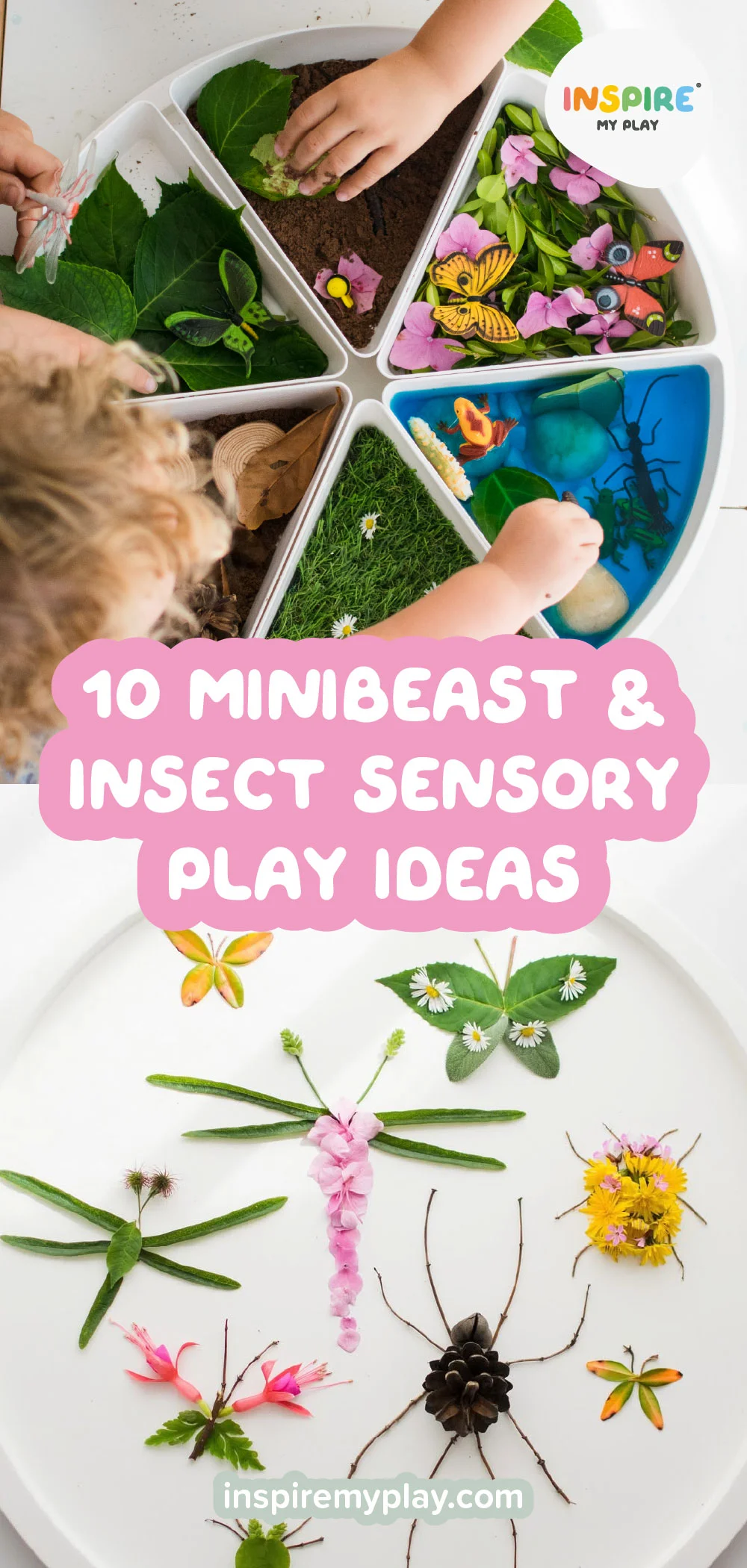
Sensory play is a powerful way to bring the minibeast theme to life. Through hands-on exploration, children can safely investigate textures, shapes and movements while developing communication, creativity, concentration and fine motor skills. It helps turn abstract ideas about nature into meaningful, memorable learning experiences.
In this blog, we’ve pulled together our favourite minibeast and insect sensory play ideas and crafts that you can use to help children explore the natural world through play, whether at home, in the classroom or in an early years setting.
Tip: While your child is playing, try asking open-ended questions such as “What do you notice about this creature?” or “Where do you think it lives?” to support language development, storytelling and deeper thinking.
1. Digging for Worms Sensory Play Tray
This messy, hands-on PlayTRAY setup from @playdayswithjess is brilliant way for children to learn about worms and how important they are for soil health and plant growth, all while engaging their senses.
What you’ll need:
How to play:
- Add some jelly into the PlayTRAY (following the packet instructions) along with your fake worms.
- Put the tray into the fridge and leave to set (usually around 4 hours).
- Once set, add blended Coco Pops over the top.
- Give your child some tongs and get them to find the wiggly worms and transfer them into the bowls.
This activity supports fine motor skills, hand strength and concentration as children use the tongs to search and transfer the worms into their bowls. It also introduces early scientific thinking about minibeasts and their role in healthy soil.
2. Cotton Wool Caterpillars Water Play
If your little one is a fan of The Very Hungry Caterpillar, Heimlich from A Bug’s Life or Wigglers from Super Mario World, then they’ll love this sensory play activity combining water play, colour mixing and fine motor practice.
What you’ll need:
How to play:
- Add water to the compartments of the PlayTRAY and mix in a few drops of food colouring.
- Arrange cotton wool pads on a piece of cardboard to create a wiggly caterpillar shape.
- Provide droppers for your child to pick up the coloured water and gently squeeze it over the cotton wool, watching the colours spread and blend.
- To finish, add googly eyes to the first pad for the head, and draw on some antennae with a black marker.
While playing, you can chat together about caterpillars and where they might live, or what they might eat, helping children build early understanding of minibeasts in a fun, natural way.
Looking for more caterpillar crafts? Check out our Sensory Setups for World Book Day blog, featuring Eric Carle’s The Very Hungry Caterpillar.
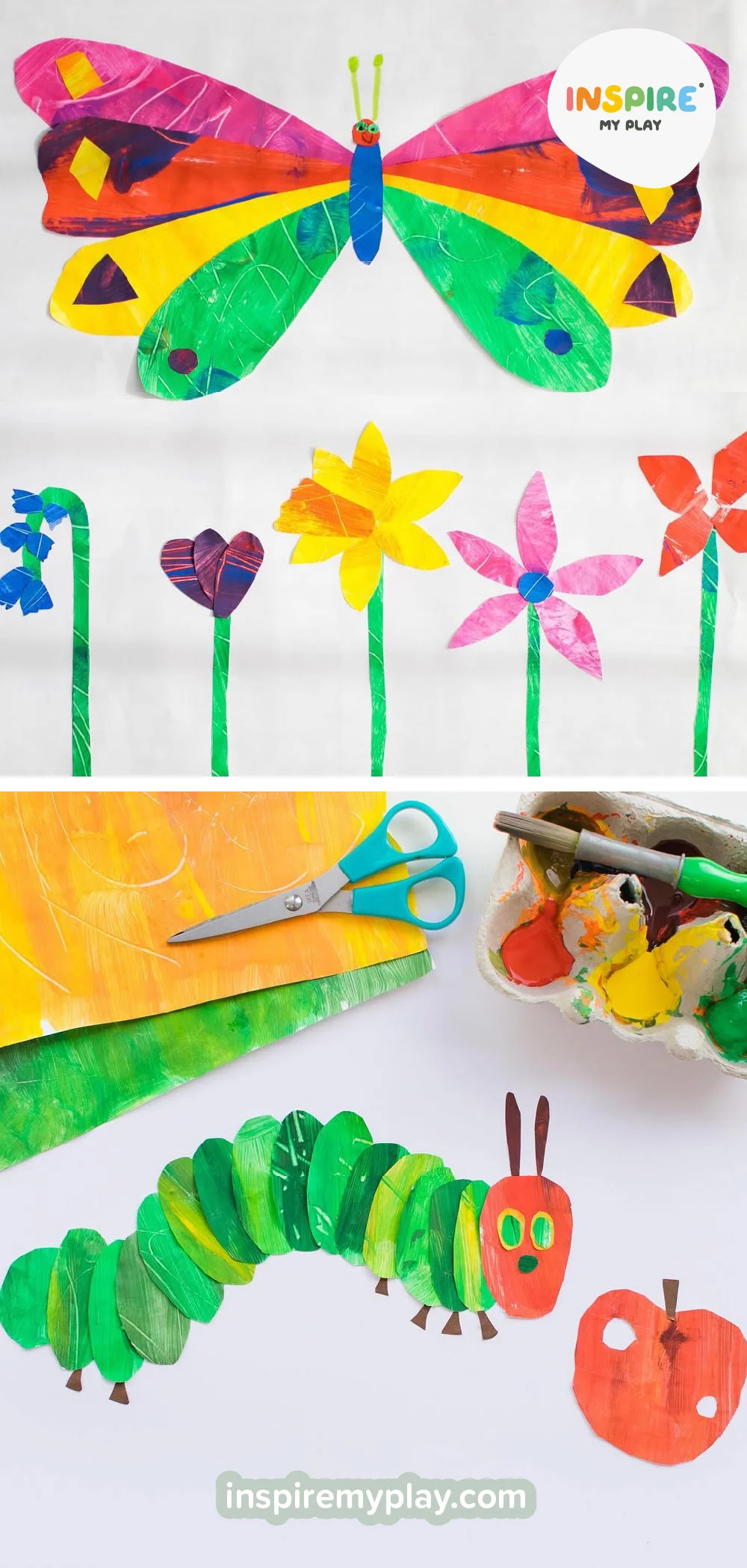
3. Butterfly Sponge Prints Craft
Butterflies are such beautiful and fascinating insects for children to observe, and this creative craft is a lovely way for children to explore colours, patterns and symmetry.
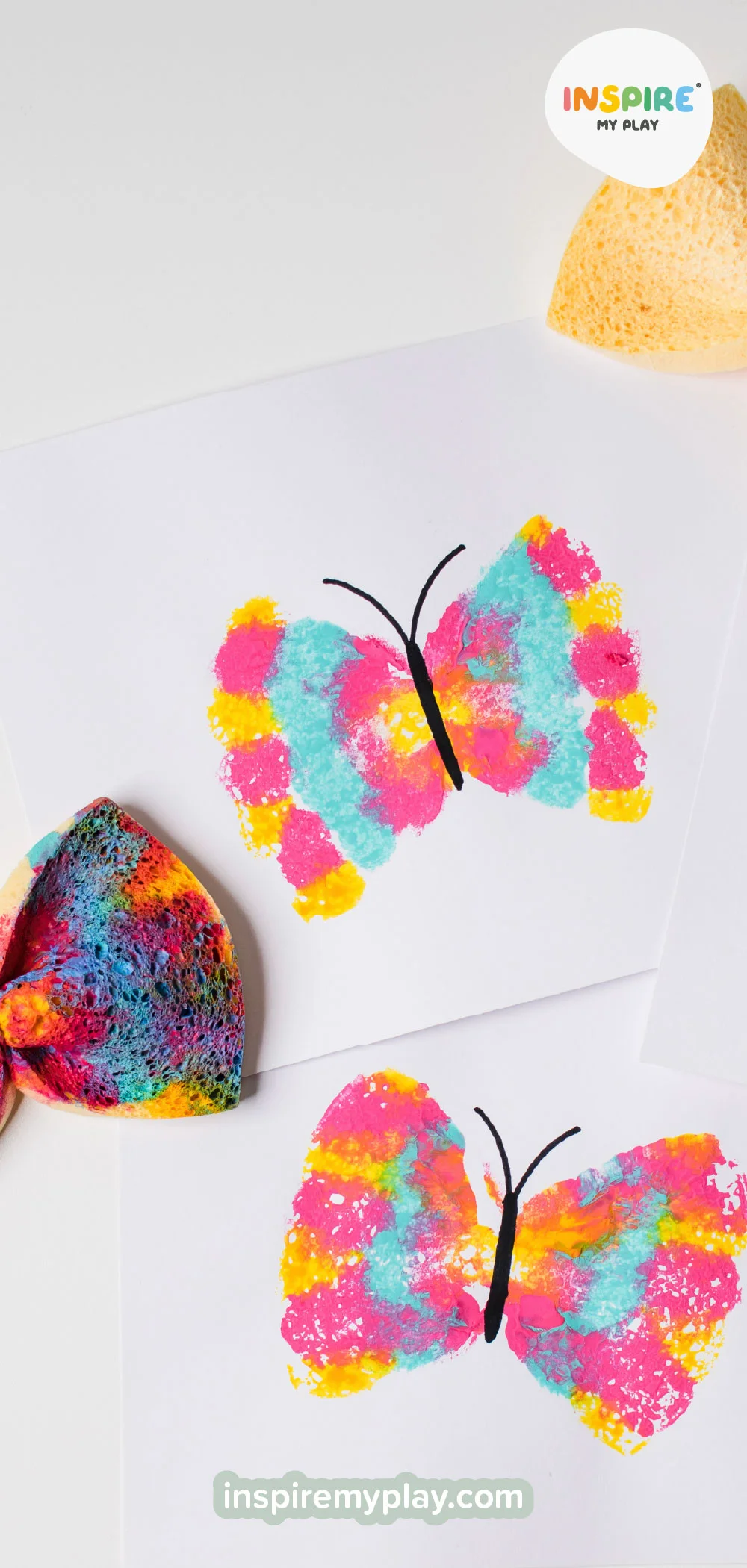
While your child is making their butterfly print, you can share simple fun facts such as how butterflies use their wings to protect themselves against predators and how they are cold-blooded, meaning they struggle to fly in warm temperatures.
What you’ll need:
- A clean sponge
- Paint
- Elastic band
- Paper or card
- Paintbrushes (optional)
- Black pen or marker
How to play:
- Wrap an elastic band around the centre of the sponge to form a simple butterfly wing shape.
- Apply paint liberally to one side of the sponge.
- Fold the sponge in half to spread the paint across both sides, then open it back out.
- Press the sponge firmly onto your paper or card to transfer the butterfly shape.
- Lift it away to reveal your colourful butterfly design.
- When the paint has dried, add a butterfly body and antennae using a black pen or marker.
Your child should be able to make a couple of prints from the same sponge before washing it. Make sure you give it a good squeeze to remove excess water before they start printing again.
4. Minibeast Ice Rescue Water Play
Freeing frozen creatures from ice is always a hit with children, and this minibeast version from @teachingbythemountains turns learning the names of the creatures into a fun rescue mission.
What you’ll need:
How to play:
- Put your minibeasts into a bowl of boiling water with a tiny bit of blue food colouring and freeze overnight. (Using boiling water instead of cold helps make the ice clearer.)
- Place the frozen block onto the PlayTRAY lid.
- Fill spray bottles and droppers with warm water.
- Invite your child to melt the ice, rescue the bugs and insects using droppers and tongs and place them into the bowls.
- Encourage them to name each minibeast as they rescue them from the ice.
This activity supports problem-solving, concentration and coordination as children use the tongs and droppers to free the insects. It also introduces early science ideas in a simple, playful way as they watch the ice melt and change.
Tip: Place your minibeasts upside down so they are the right side up when you flip the bowl over.
5. Mini Beast Small World Sensory Tray
This minibeast sensory tray lets children explore the insects that live in their garden while engaging in open-ended sensory play.
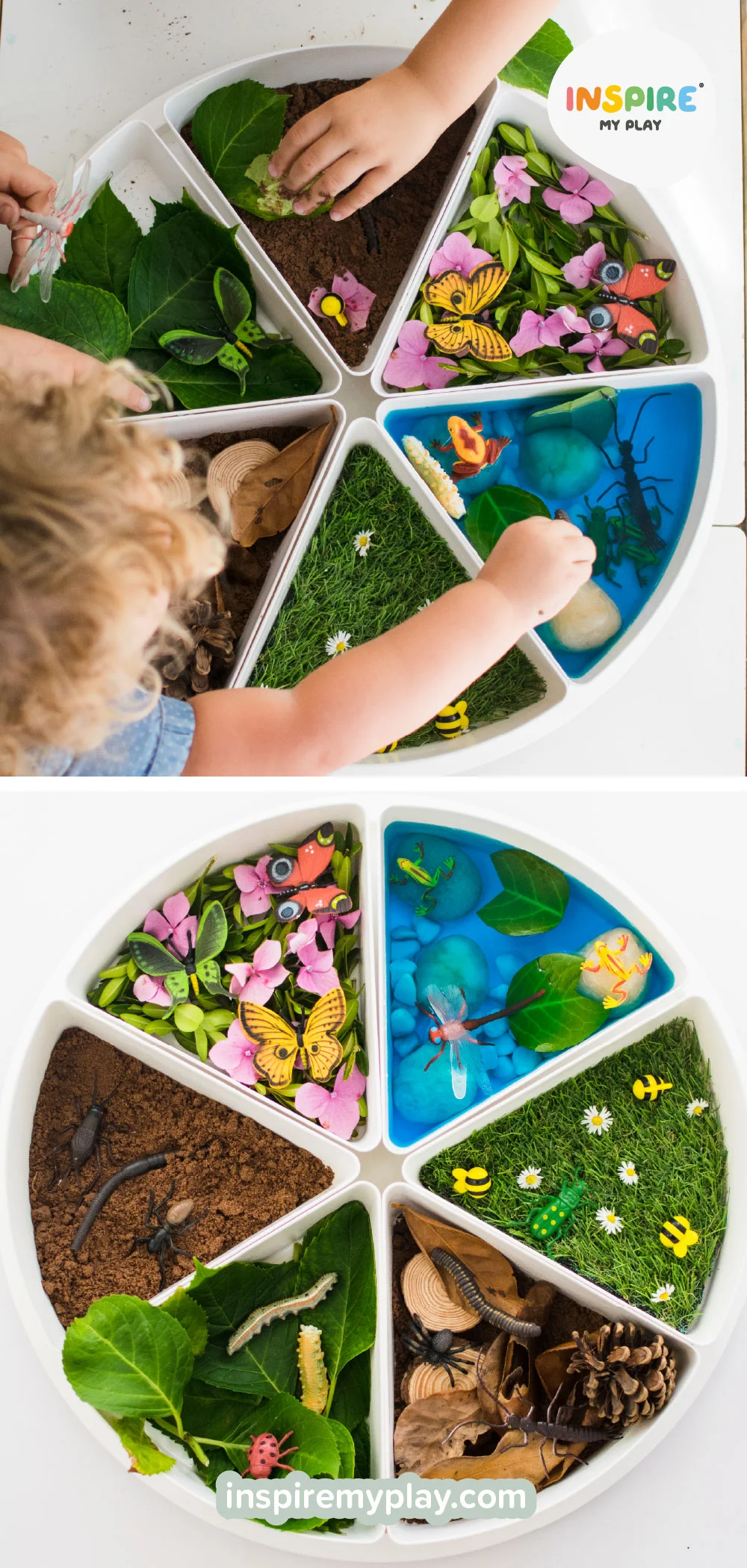
What you’ll need:
- PlayTRAY
- Natural materials (log slices, pinecones, twigs, leaves, grass, pebbles, bark)
- Coloured green rice for grass (See our blog:“How To Make Rainbow Rice for Play” for step-by-step instructions.) Water and blue food colouring
- A selection of minibeasts/insects
- Chocolate cloud dough (1 cup flour, ½ cup cocoa powder, ¼ cup oil) for soil
-
Small bowls, scoops and tongs
How to play:
- Head outside for a short nature walk and collect a variety of natural treasures from your garden.
- Place the PlayTRAY compartments into the deep tray, then sort your finds to create a simple minibeast small world.
- Add chocolate cloud dough for soil, green rice for grass, along with log slices, leaves and your mini insects.
- Invite your child to explore the tray, scooping, moving and investigating the different materials while discovering where minibeasts might live.
This activity encourages creativity, imagination and language development. It also helps children understand where minibeasts might live and gives them the opportunity to create their own little stories and adventures.
6. Potato Masher Bee Prints Craft
Bees are an important minibeast for children to learn about because they help flowers, fruit and vegetables grow. This simple potato masher activity using everyday kitchen tools is great for exploring shapes, patterns and creativity, while gently introducing the importance of bees in nature.
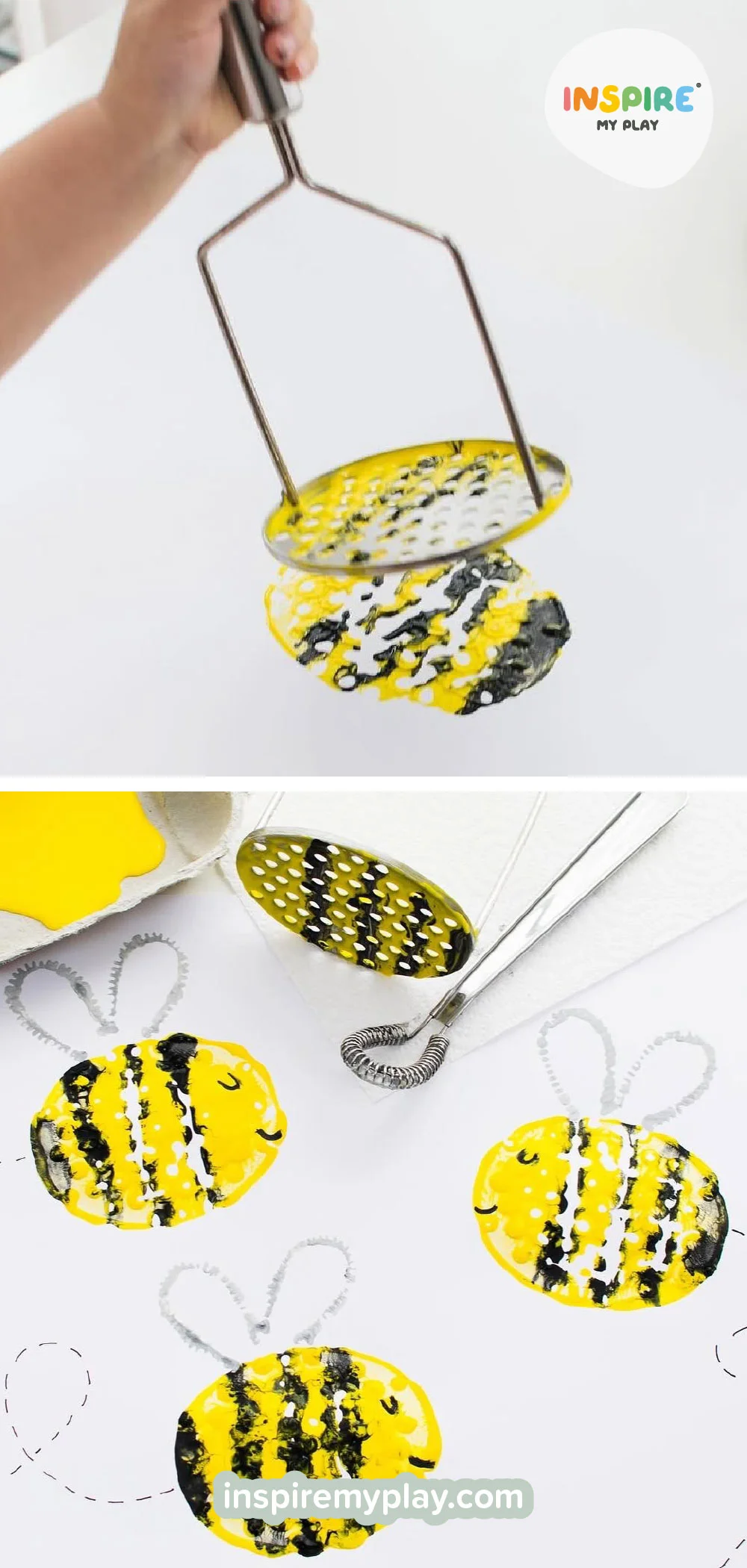
What you’ll need:
- A potato masher (for the body)
- A mini whisk or milk frother (for the wings)
- Yellow and black paint
- Paintbrushes (optional)
- Paper or card
How to play:
- Dip a potato masher into yellow paint and press it onto the paper to create the bee’s body shape.
- Add black stripes by brushing onto the masher.
- Use a mini whisk or frother to stamp wings on either side of the body.
- Once everything is dry, your child can finish their bee by drawing on antennae, eyes or a smile.
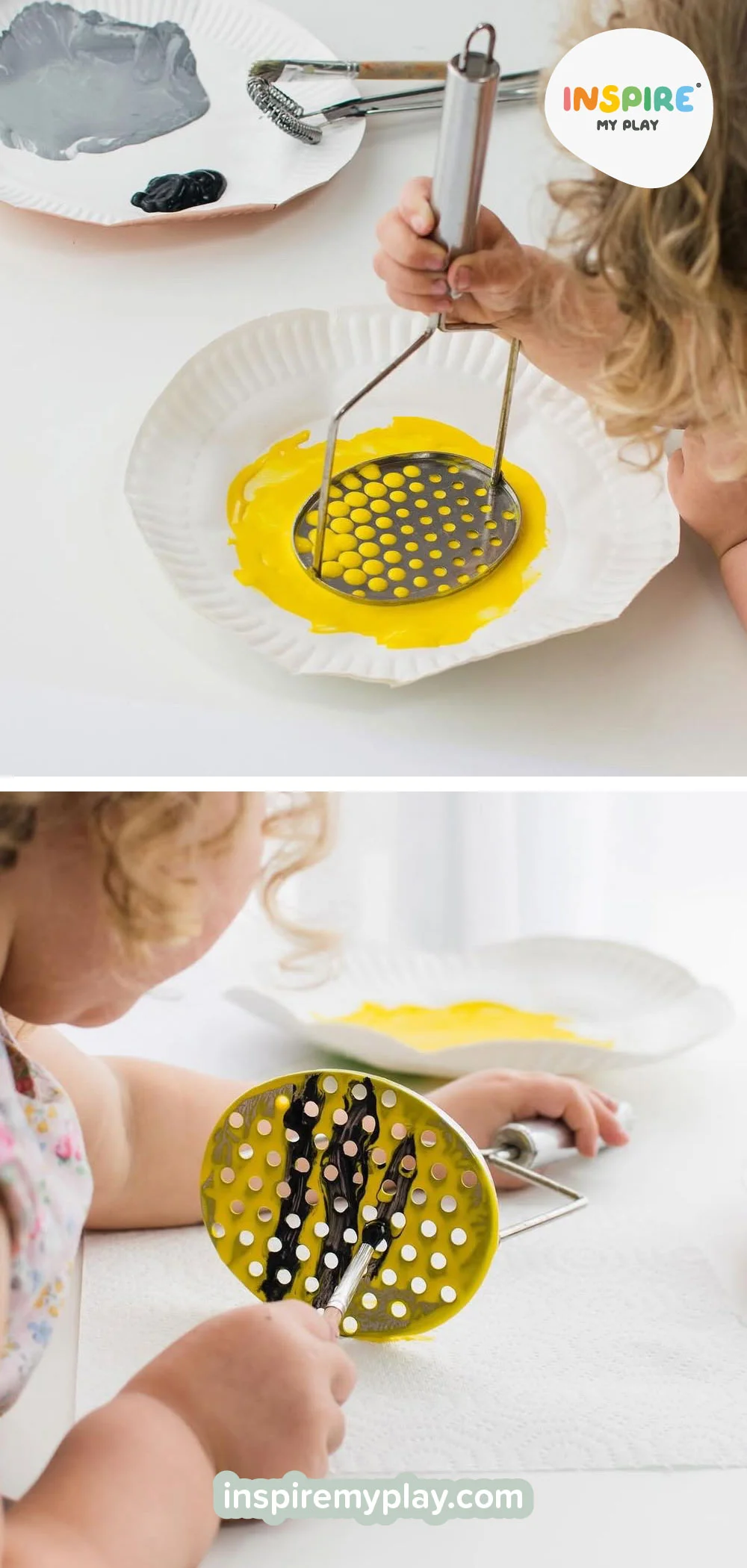
This activity supports creativity, pattern making and fine motor skills. It also helps children begin to understand how bees are part of the natural world around them.
7. Wiggly Caterpillars STEM Activity
This caterpillar activity never fails to fascinate children. It’s a lovely way to explore movement in nature while developing fine motor skills and curiosity.
What you’ll need:
- PlayTRAY lid
- Droppers
- Kitchen towel
- Felt tip pens
- Wooden skewer
- Water
How to play:
- Invite your child to decorate paper towels with felt tips.
- Wrap them loosely around wooden skewers, or something similar.
- Push both ends up on the skewer to make the caterpillar as small as possible before pushing it off the skewer.
- Lay the caterpillar on the lid of the PlayTRAY and get your child to squirt them with water using the droppers.
- Watch in wonder as the caterpillars wiggle and grow!
This activity encourages curiosity and early exploration as children watch what happens when water is added to their caterpillars. It also helps strengthen hand control and coordination through squeezing the droppers.
Tip: Don’t wrap the kitchen towel too tightly around the skewer or it won’t work as well.
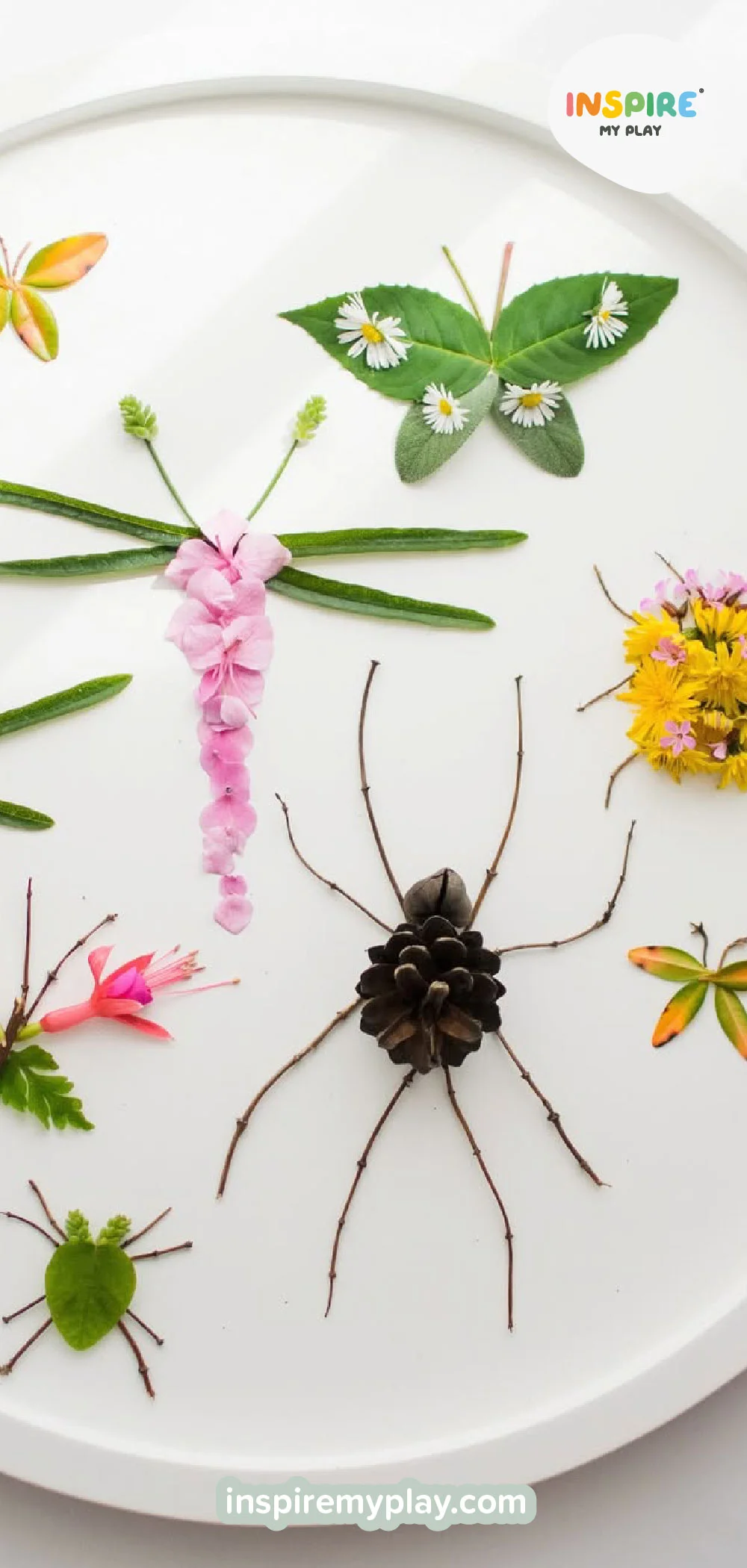
8. Nature Insects Craft
This activity is particularly good for preschoolers, encouraging them to go outside, explore nature and gather materials to create their own marvellous minibeasts!
What you’ll need:
- Pinecones, twigs, leaves, flower stalks, flower petals, pebbles, grass, bark etc.
-
PlayTRAY lid (or another flat surface)
How to play:
- Go outside for a simple nature hunt, encouraging children to gather small items like leaves, petals, twigs and pinecones.
- Return indoors (or stay in the garden) and use your PlayTRAY lid as a base for creating minibeasts.
- Use the natural materials to design different creatures, for example:
- A spider with a pinecone body and twig legs.
- A bee using a pebble with painted stripes.
- A butterfly made from leaves with petal details.
- Invite your child to give their minibeast creations names and imagine stories about where they live and the adventures they go on.
This activity brings together creativity, hands-on exploration and imaginative play. helping children connect with the world of minibeasts and the natural environment. As children build and arrange their minibeasts, they develop observation skills, fine motor control and a stronger connection to the natural world.
9.Mud Bug Science Tray
This mud bug PlayTRAY by @teachingbythemountains combines sensory play with science exploration, perfect for little ones learning about minibeasts!
What you’ll need:
- PlayTRAY
- Nesting bowls
- ½ cup unsweetened cocoa powder
- ½ cup of baking soda
- Vinegar
- Toy insects
How to play:
- To make your mud use a 1:1 ratio of ½ cup unsweetened cocoa powder and ½ cup of baking soda.
- Pour the combined mixture of cocoa powder and baking soda onto the lid of the PlayTRAY.
- Add your toy insects on top.
- Pour the vinegar into the nesting bowls and provide droppers for your child to squeeze onto the “mud”.
- Watch the mud bubble!
This activity introduces children to simple cause-and-effect in a playful way while supporting sensory exploration, curiosity and fine motor skills as they explore the “mud” and hidden minibeasts.
10. Frog Pond Taste-Safe Sensory Tray
This tase-safe frog pond is a lovely way for children to explore frogs and begin to learn about their life cycle through hands-on sensory play.
What you’ll need:
- PlayTRAY
- Mini scoops
- Funnels
- Gelatine
- Water
- Green food colouring
- Toy frogs and lily pads (or make your own from foam or leaves)
How to play:
- Make up the gelatine according to the packet instructions, adding a few drops of green food colouring and double the amount of water.
- Leave it to set until you have a soft, watery-jelly like substance.
- Pour into the base of the PlayTRAY and add your tog frogs and lily pads.
- Invite your child to scoop, pour, squish and explore the jelly using their hands, scoops and funnels.
This activity is taste-safe, making it a great option for siblings or younger children who still like to explore with their mouths. It also offers a gentle introduction to frogs as part of the minibeast world, while supporting sensory exploration and early play skills.
Explore the wonderful world of minibeasts through play
Minibeasts are a brilliant early years topic for both home and classroom learning. By introducing toddlers and young children to insects and small creatures through sensory play, you’re supporting curiosity, fine motor development, empathyand an early understanding of the natural world.
These simple, hands-on activities help children build confidence, communications skills and a love of exploring nature through play.
If you try any of the minibeast sensory play ideas or crafts, please tag us @inspiremyplay — we love sharing content from our community.


