





How to Create a Playful Home Where Children Can Thrive


Louise @inspiremyplay
Part of the @InspireMyPlay team. Sensory play specialist and mum to two boys.
There’s something truly magical about watching your child discover the world through play — a joy that's unique to childhood.
I never tire of the way their whole face lights up when they get excited over an evolving idea, or how they proudly show off something they’ve built themselves — in my case usually just moments before they knock it down with glee! Or, those quieter moments, curled up with a favourite book in a cosy corner, lost in a story or a drawing.
These everyday moments might seem small, unnecessary even, but they're doing big things. Through play, children are building confidence, curiosity, resilience and joy — setting the foundations of who they will become.
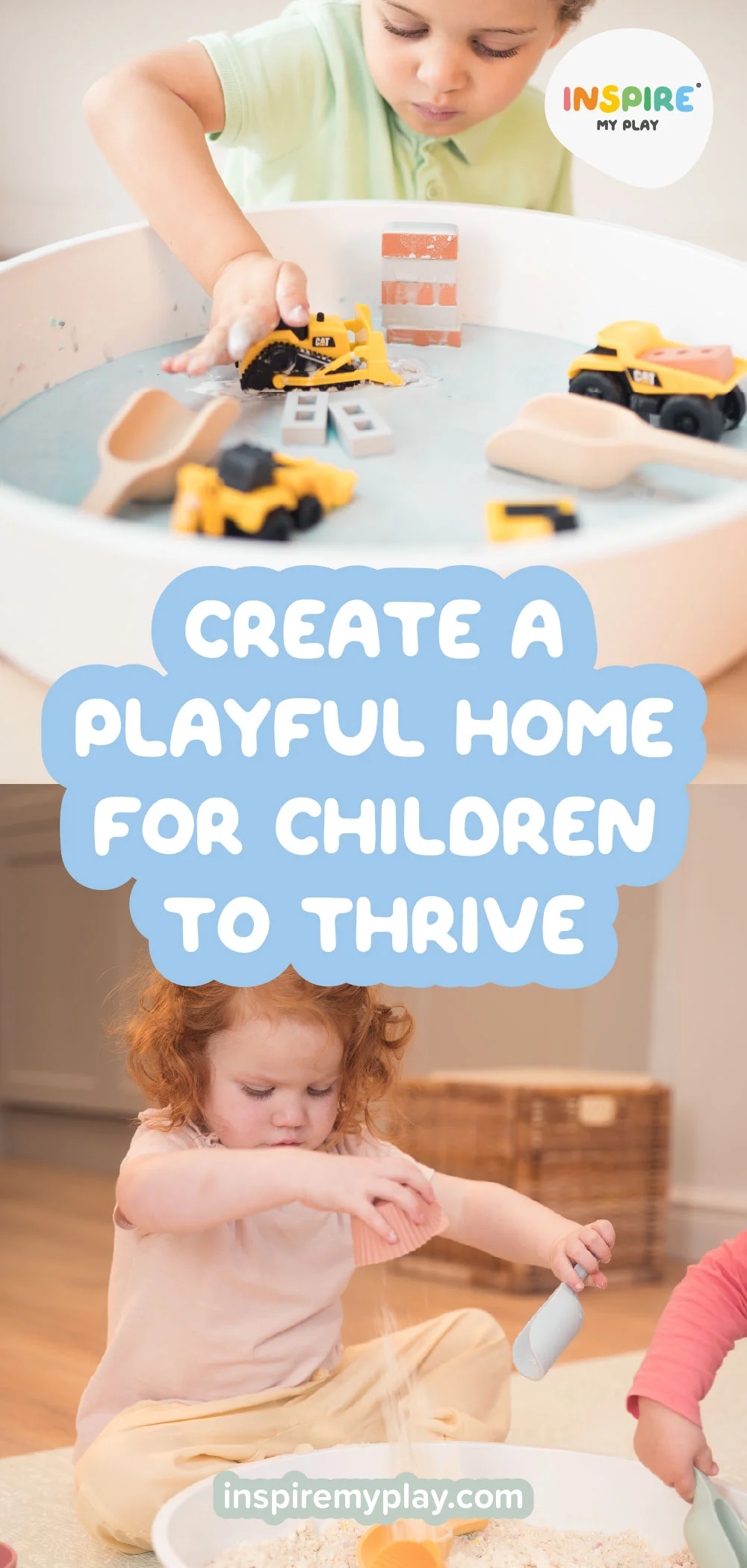
Something I find very reassuring is that creating a home where children can thrive doesn’t mean redecorating, decluttering your entire life, or buying all the “must-have” toys you see online. A nurturing, playful home is built with intention, warmth, and a little bit of flexibility (and sometimes mess!).
In this blog, you'll discover how you can gently shape your home into a space that supports play, connection and growth — without the pressure of perfection or expense.
1. Set the Scene: Calm, Safe and Inviting Spaces
Children thrive in environments that feel safe, predictable and welcoming. We’ve all heard the saying “Tidy space, tidy mind,” well, there’s a lot of science behind this saying! When oursurroundings feel calm, our nervous systems can relax, which means more capacity for learning, creativity and play.
This doesn’t mean a spotless house (if only)! It means creating spaces that feel manageable for our children.
A few simple ideas:
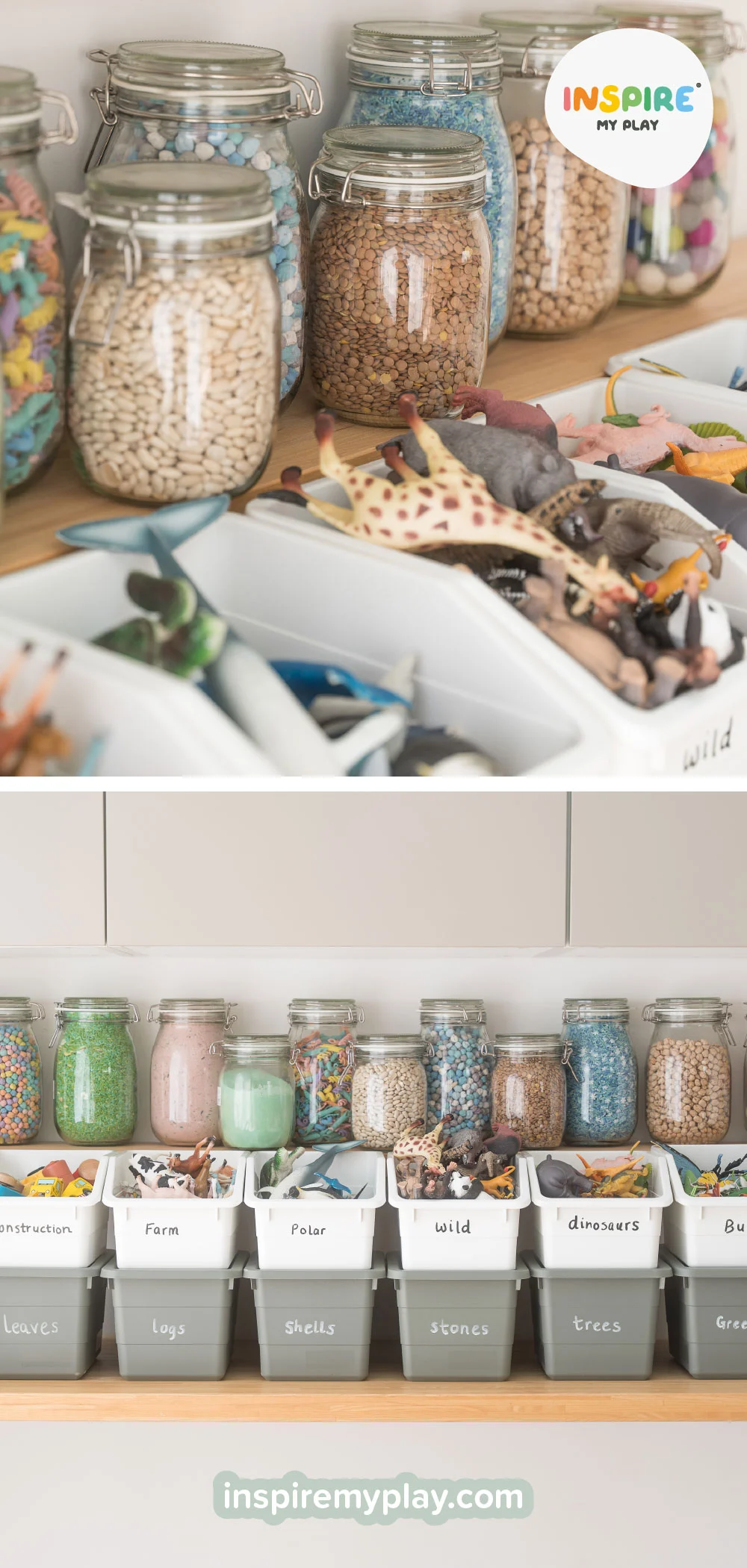
Create mini “zones”: A soft rug and cushions can become a cosy reading nook. A small table or floor space with a PlayTRAY can become a creativity or sensory play station. This is a useful way to contain mess (and sanity!) as it creates a very clear boundary for sensory activities like rice, water or dough without taking over the whole room!
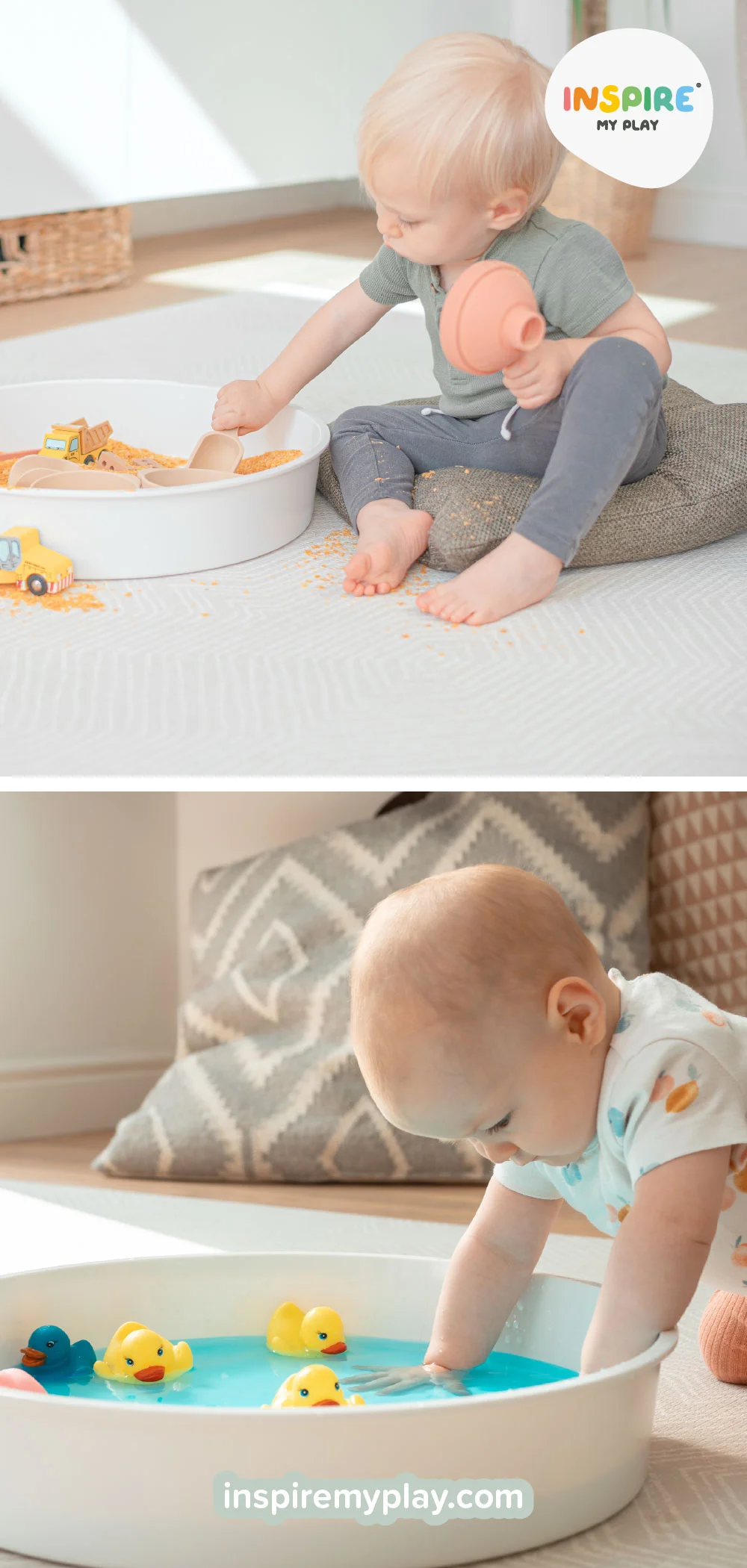
Invite nature indoors: A basket of natural items such as pinecones, shells, stones, leaves or a small plant can add texture, calm and curiosity to play spaces, adding a natural element often missing from shop-bought toys. It's often surprising to see how introducing these imperfect natural items can spark new creativity.

2. Build Emotional Security Through Love and Routine
Before children can confidently explore, they need to feel safe, loved and understood. Experiments have been carried out on this topic for decades, some of the more recent ones captured on video have become famous across social media debunking old theories of the child who should be “seen and not heard,” and forming the basis of what we know today - that emotional security is the foundation beneath all learning and play.
Routines, connection and warmth help children know what to expect and that sense of predictability can work wonders for behaviour and wellbeing.
Ways to support emotional security at home:
- Lead with connection: Hugs, cuddles, eye contact and kind words are powerful at all times, but this is especially poignant during tricky moments where you may find your mind reaching for harsher words and less contact. These are the moments where connection matters most, and not only do our children de-escalate faster with connection, but so do adults! What a win!
- Create gentle rhythms: Regular mealtimes, playtimes and bedtime routines - of course we can flex these when we need to. Sometimes they’re unavoidable when travelling or celebrating a special occasion, and that’s just part of life but having a familiar structure to return to quickly and easily helps children feel grounded and calm.
-
Name feelings together: Helping children recognise and talk about emotions builds emotional intelligence and resilience. You can turn this into a mark making game using a layer of rice or sand in the bottom of a PlayTRAY. A contracting colour is useful either by colouring the rice or by placing some coloured paper beneath the rice. You can name a feeling, draw the face in the base, then talk about what that feeling feels like in the body, some unhelpful ways someone might behave when they feel that way, and brainstorm ideas of other things they could try to do instead.
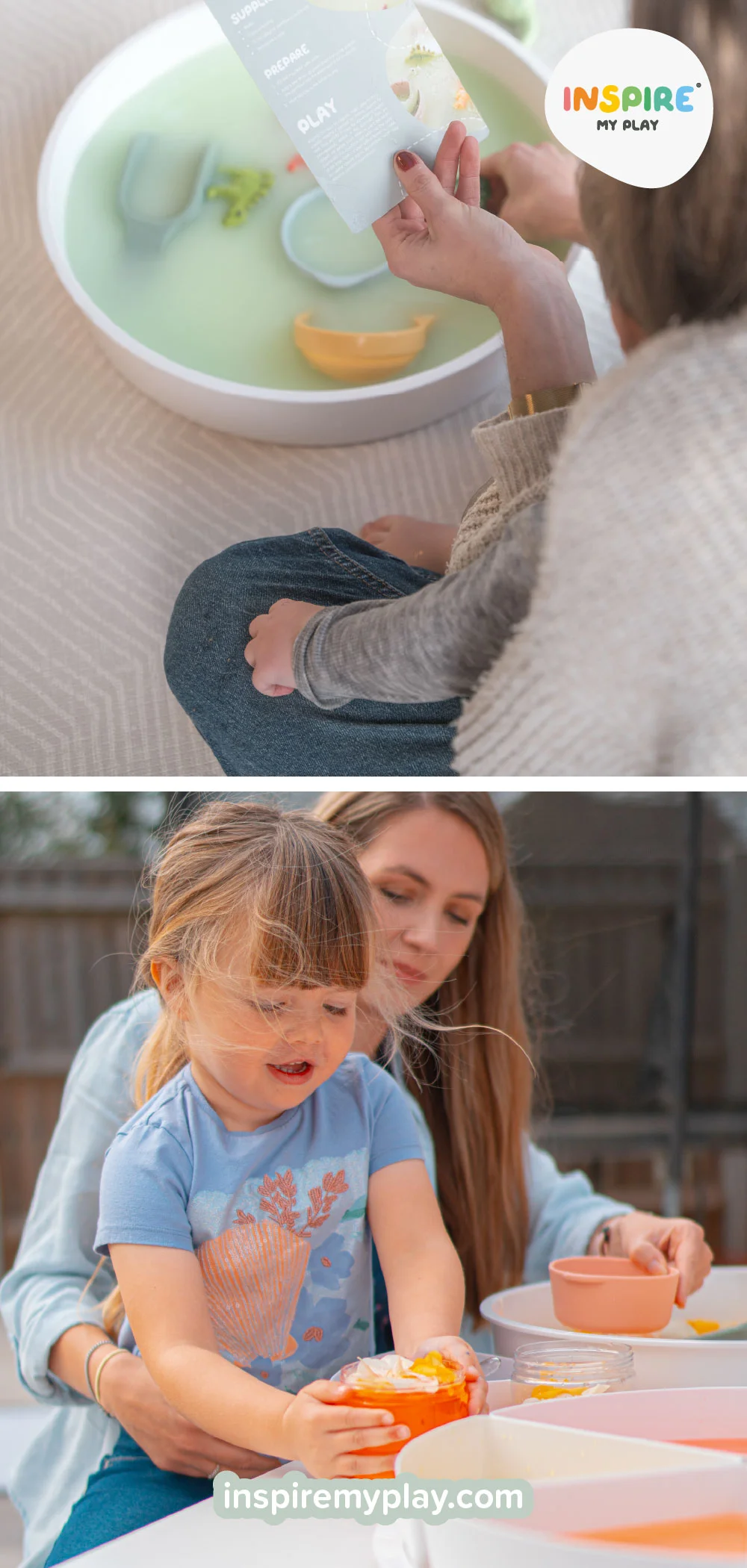
You could follow up this activity by creating a simple feelings station with a mirror, soft toys and emotion cards or faces you’ve drawn together. Children can act out feelings, comfort a teddy, or practise naming emotions all through play. This can work wonders with an older sibling who is being frustrated by a younger baby or toddler, or a child who is feeling nervous about things, like a new baby, a new house, nursery or school.
It can also be a valuable tool for children with additional needs who may have a harder time detecting these feelings in themselves or others until it reaches boiling point.
3. Fuel Curiosity with Play-Based Learning
Children are natural learners and play is how they make sense of the world.
Sensory play, imaginative games and open-ended activities support brain development, problem-solving, language and social skills. Best of all? They don’t need to be complicated.
Here are five simple sensory play ideas you can set up at home to support learning and exploration:
1. Treasure Basket for babies
Fill a low basket with safe, everyday objects - wooden spoons, fabric scraps, silicone kitchen tools, smooth stones. Babies can explore textures, sounds and shapes at their own pace.
2. Simple Sensory PlayTRAY
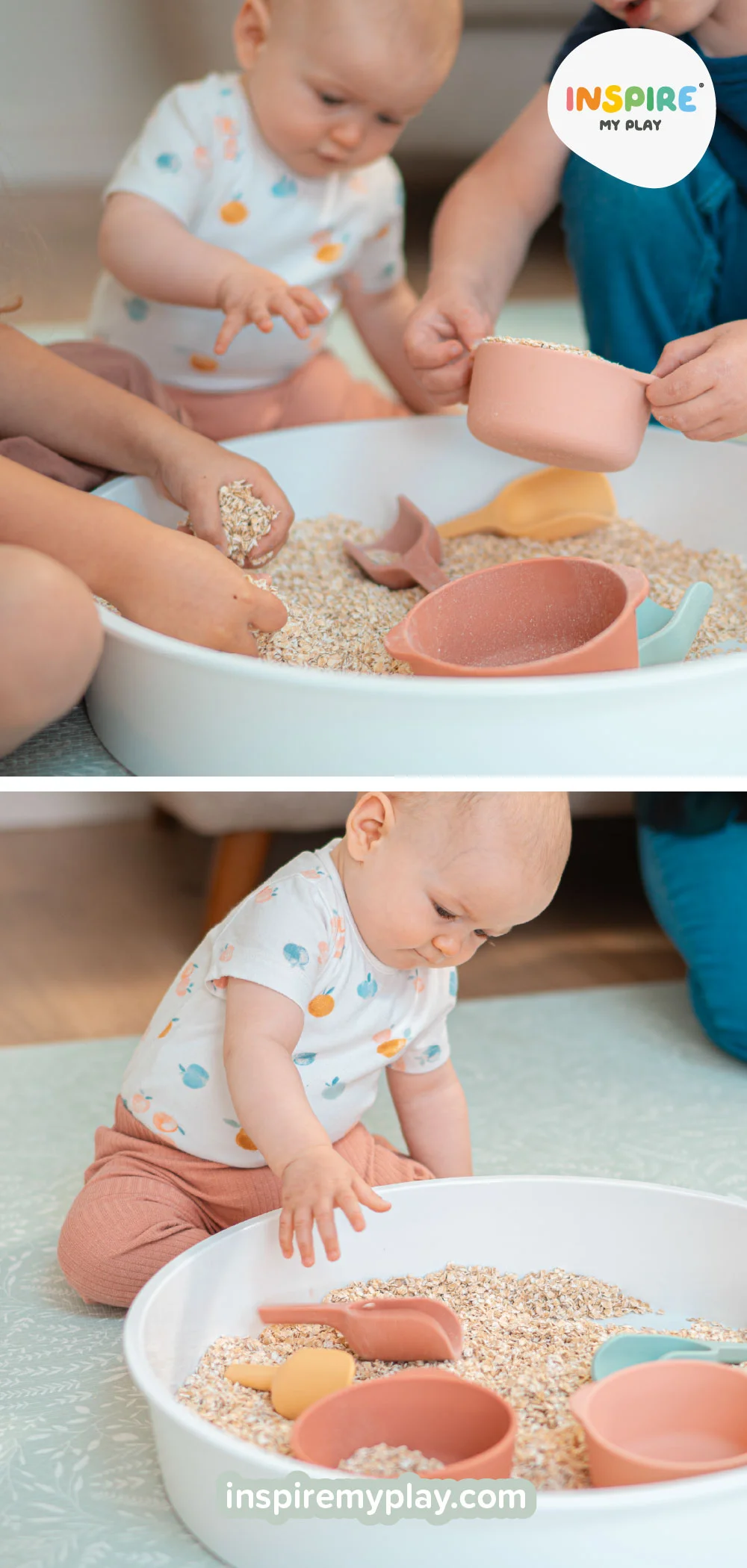
Add dry rice, oats or pasta to a PlayTRAY. Include our food-safe silicone Scoops, Bowls Funnels and other sensory tools. Incorporate some small toys your child will enjoy such as animals, or you could add our letter and number sets which work brilliantly with rice, oats and sand. This kind of play is wonderfully calming and builds fine motor skills. You don’t have to colour the dry base materials - just pour them in and play! If you do want to colour them, check out our blog ‘How to Make Rainbow Rice for Play’.
3. Small-World Play
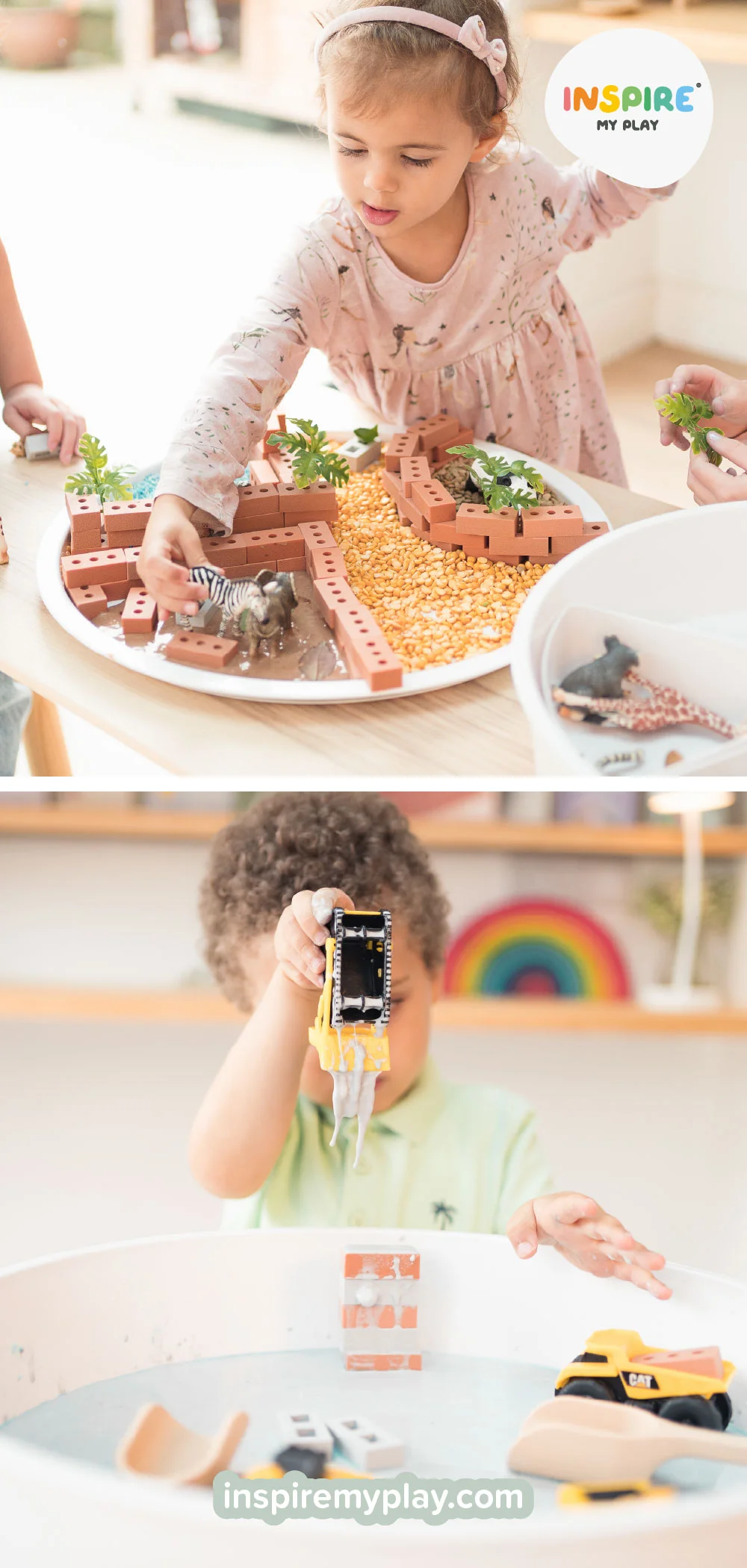
Create a little scene - a farm, ocean, jungle or construction site using toy figures, natural materials and sensory bases like sand or water. We’ve used gelatine and jelly to create an ocean or swamp! Children love telling stories and acting out ideas in these worlds. If you need some small world play inspiration, check out our blog: ‘10 Sensory Bases for Small World Play.’
4. Homemade Cloud Dough
Check out our fail-safe recipe for homemade Cloud Dough. Mix flour and oil for a soft, mouldable sensory experience. Add spoons and cups or little animals, and let children squeeze, pour and create.
5. Process Art Tray
Offer paint, chalk, stickers or collage materials without a set outcome. It’s all about the experience, not the finished product. We love to use chalk on black card. You can use the PlayTRAY lid as a protective boundary for the artwork and divide resources in its compartments to keep the activity organised and the resources easy for children to manage. It also makes the activity easy to tidy away if you need to stop and come back to it later, without having to put everything away and get it all back out again.
And always remember: Good enough is good enough. These activities don’t need to look perfect, they just need to invite curiosity and joy.
4. Step Outside: Nature as the Ultimate Play Space
Sometimes the best play space doesn’t have four walls. Outdoor play supports physical development, mental health and sensory regulation and it’s equally beneficial for parents too. Sometimes it’s easier to connect with each other away from the home where you can’t simply wander off to separate rooms.
Here are some easy ways to bring more outdoor play into your days:
- Go on a nature treasure hunt and collect leaves, sticks and stones to use later in art or sensory play (check our free treasure hunt printable).
- Set up a mud kitchen with old pots, spoons and bowls for imaginative, messy fun in the garden (all our sensory play accessories can be used outdoors and easily cleaned). If you don’t have a garden, take a look at some ideas for how to bring this indoors using the PlayTRAY here.
- Encourage barefoot play on grass, sand or mud for sensory rich input.
Top tip: We live in the Midlands, UK which is notoriously rainy. Keeping a basket in our cupboard by the door with wellies, waterproofs and a towel means we are park-ready whatever the weather, and spontaneous outdoor adventures feel much easier to say yes to.
5. Build Confidence Through Play and Connection
The way we respond to our children’s play shapes how they see themselves.
When we focus on effort rather than outcomes, children learn that trying, experimenting and making mistakes are all an important part of learning, and it takes the pressure off if your little one is a prone to anxiety or perfectionism.
Confidence-building habits to try:
- Praise the process: “You worked really hard on that!”
- Make your positive feelings known: “I’m really enjoying doing this with you!”
- Let children problem-solve before stepping in.
- Offer small choices to build independence and agency.
Shared playtime, whether it’s a board game, a sensory tray or a walk to the park, strengthens connection and creates lasting memories.
The Magic of a Playful Home
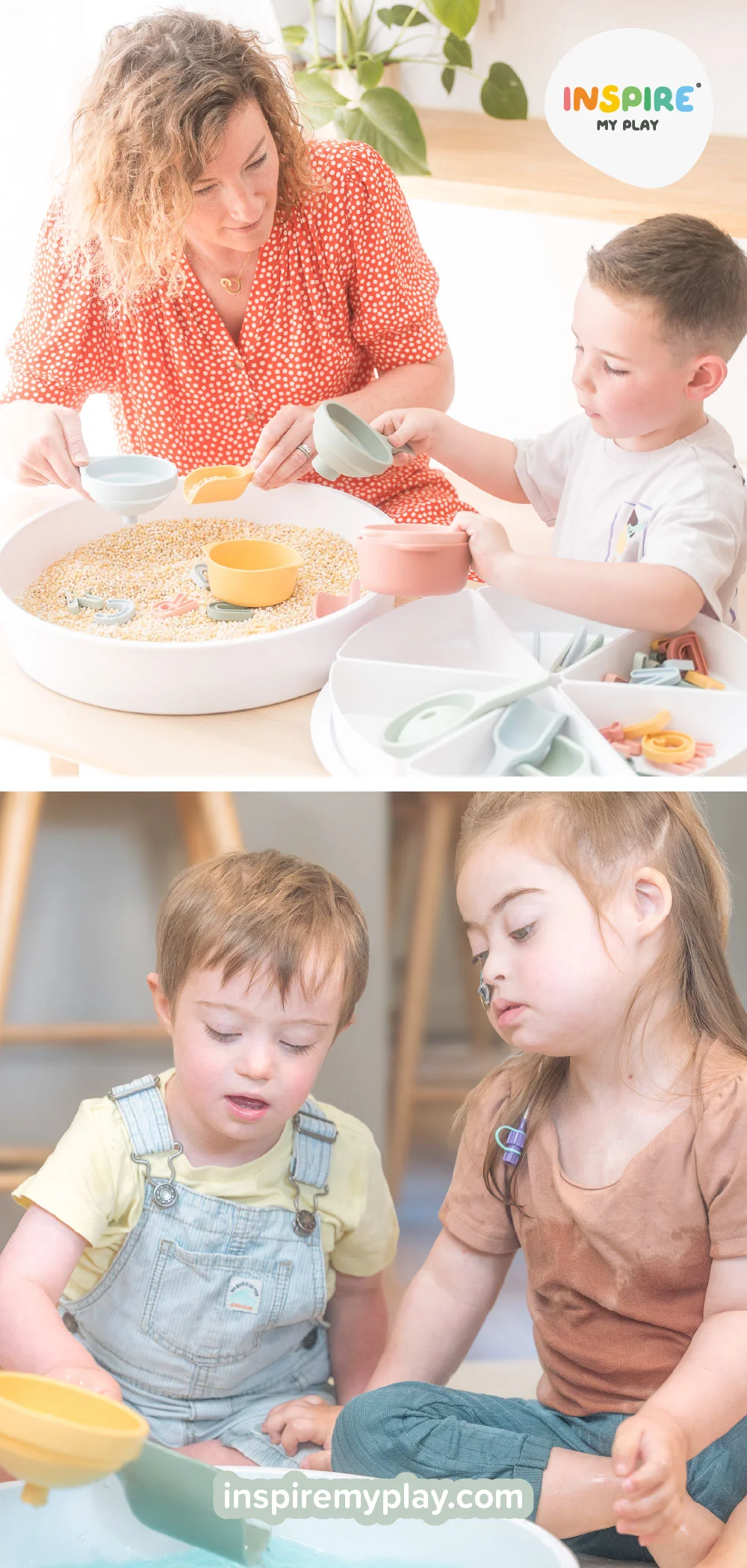
A home where children thrive doesn’t look perfect. It looks lived in, loved and full of small moments of connection.
It’s a home where play is welcomed, feelings are named, curiosity is encouraged and resulting mess is anticipated and forgiven.
Start small. Choose just one playful change this week, whether it’s a sensory tray, a cosy corner to read in, or a simple outdoor adventure. Watch how your child responds. Follow their lead. And trust that you are doing enough.
For more playful ideas, simple sensory setups and everyday inspiration, explore our blog or come and join us over on Instagram for easy, real-life play ideas that actually fit into family life.
You’re creating a home where your child can thrive, one playful moment at a time!


