



Sensory Play Setups for World Book Day


Laura @inspiremyplay
Founder of @inspiremyplay, Early Years teacher for 11 years and mummy to three gorgeous girls. I'm passionate about about the benefits of play in early childhood.
This post may contain affiliate links. This means that if you click on a link and go on to make a purchase, I may receive a small commission (at no additional cost to you). Please read my disclosure policy for more details.
What better way to celebrate World Book Day than bringing your little one’s favourite stories to life through the magic of sensory play. Combining books and sensory play is a wonderful way to spark imagination, build language skills and deepen children’s understanding of the stories they love.
As children explore story-inspired trays and create story-themed crafts with their hands they live the stories — acting out scenes, feeling the textures and engaging all their senses. This hands-on approach helps strengthen comprehension and memory, while the sensory elements support emotional connection as children experience the character’s adventures in a more tangible, meaningful way.
We’ve rounded up some of our favourite World Book Day sensory play trays and creative setups inspired by classic tales and beloved characters.
If you try any of these World Book Day setups or crafts, please tag us @inspiremyplay — we’d love to see them!
1. We’re Going On A Bear Hunt
We’re Going on a Bear Hunt is a classic children’s picture book about a family who wade through grass, splash through the river and squelch through mud in search of a bear. Its repetitive, rhythmic, onomatopoeic prose is great for building children’s early literacy and language skills
We love how @early.explorer has brought We’re Going On A Bear Hunt To Life using materials readily found around the home.
To recreate your Bear Hunt sensory PlayTRAY you’ll need:
- A PlayTRAY.
- Chives for the long, wavy grass.
- ¾ cup of Bicarb of soda, and a dash of water for the swirling, whirling snowstorm
- Water and food colouring for the deep, cold river.
- ¾ cup of corn flour, ¼ cup cocoa powder and ⅔ a cup of water for thicky, oozy mud.
- Coffee beans and pebbles for the narrow, gloomy cave.
- 1 cup flour, ¼ cup cocoa powder, ¼ cup of vegetable oil, sticks, pebbles and pine cones for the big, dark forest.
- Toy characters for the family — and of course, a bear!
Add scoops, droppers, tongs or props to help little ones explore and move between each “scene.” It’s a brilliant multi-sensory way to support storytelling, sequencing and imaginative play.
Check out our three favourite ways to create fake snow in our blog: “Winter Themed Sensory and Creative Play Ideas for Toddlers and Young Children”, which also features a great recipe for frozen mud!
2. The Gruffalo’s Child
We love Julia Donaldson books and this wonderful rhyming sequel to the world-famous The Gruffalo is a favourite in our house. In a nutshell, the Gruffalo’s Child doesn’t listen to her father’s warnings and ventures out into the snow. She doesn’t believe that the Big Bad Mouse is real, but she soon discovers “he does exist!”
To bring the Gruffalo’s Child story to life, I created a shadow puppet theatre – a lovely craft, particularly for the darker winter months when you’re cooped up indoors.
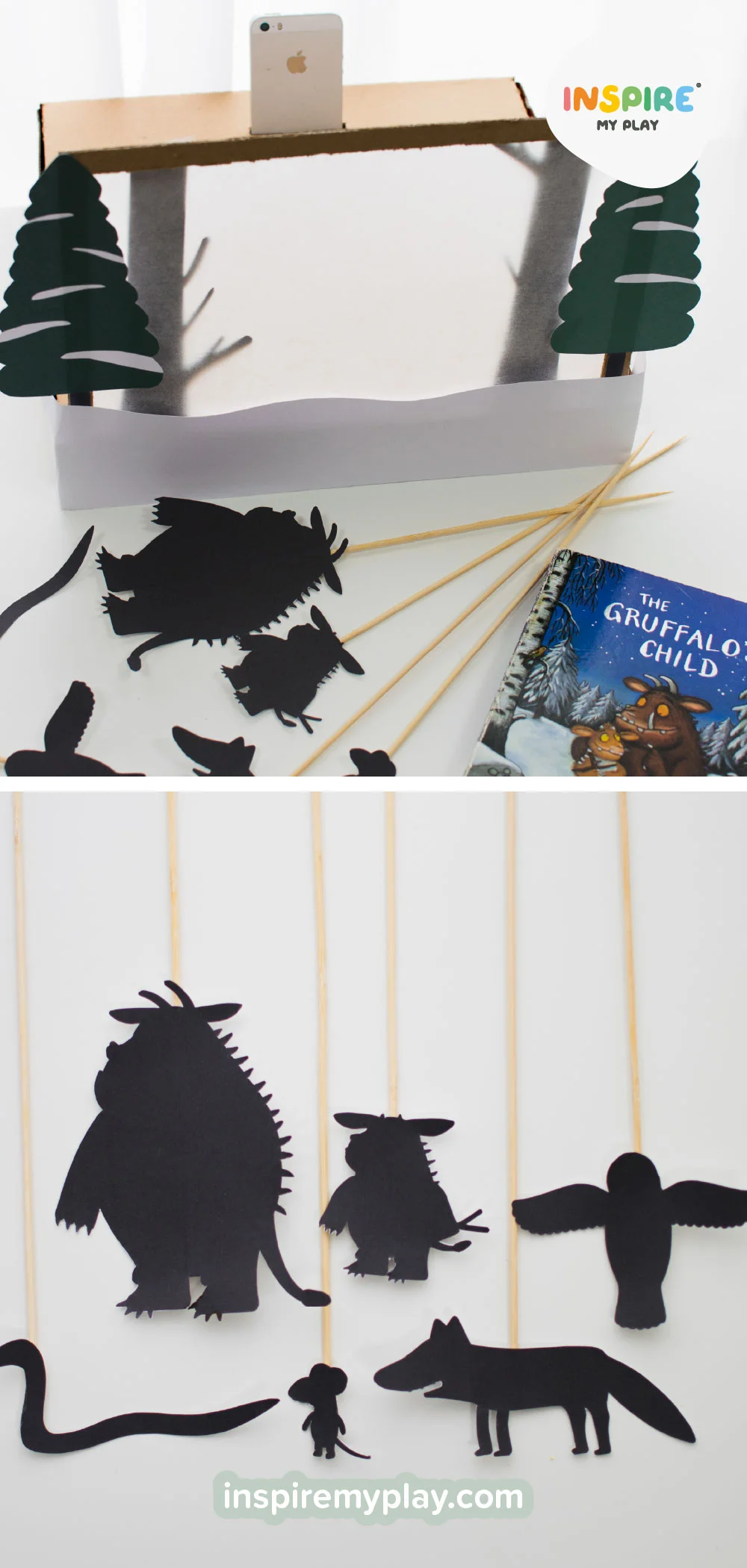
To make your theatre, start with a pizza box or small cardboard box and create a screen using a piece of greaseproof paper. Then make a small slot at the back for your phone (I used a craft knife) or use a torch to backlight the screen.
Print and cut out the Gruffalo’s Child puppets and scenery from our printables page (or draw your own characters). Attach them to craft sticks or twigs from the garden, then use them to retell the story against your glowing screen.
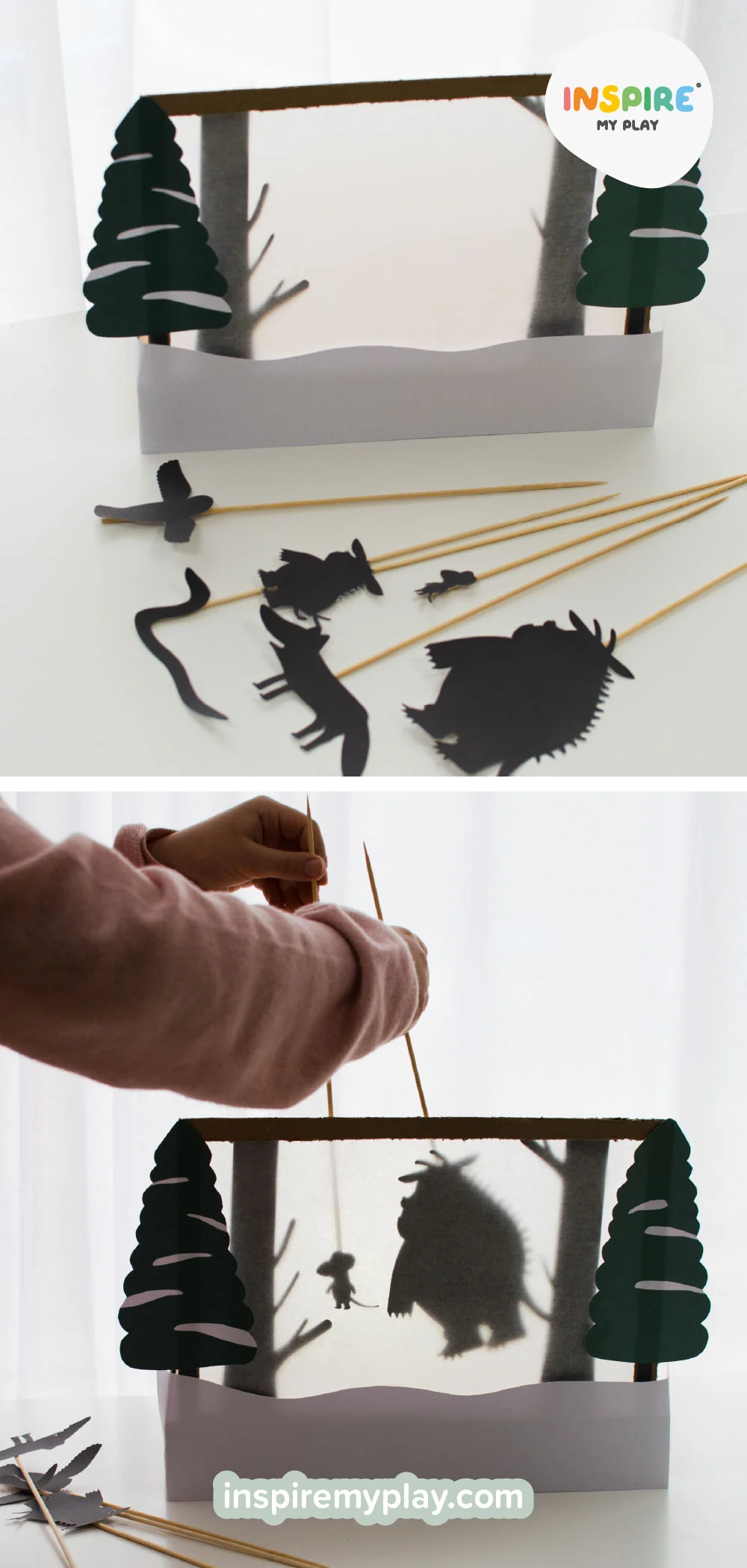
This activity is great for storytelling, sequencing, and imaginative play — and little ones will love seeing their favourite tale come to life in the shadows!
3. The Very Hungry Caterpillar
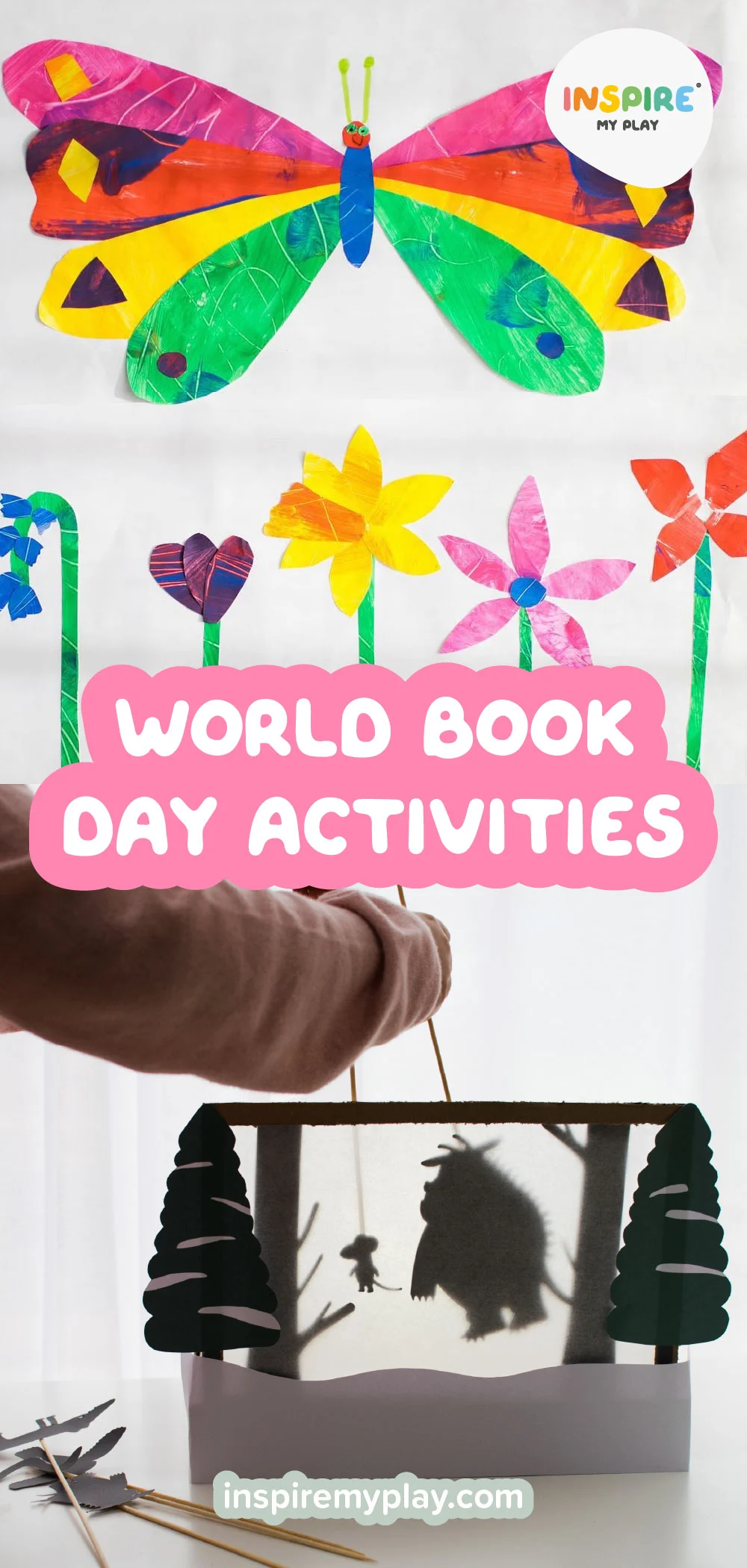
We have chosen a beautiful craft and simple sensory setup to reimagine The Very Hungry Caterpillar, Eric Carle’s bright, bold and brilliant picture book — a charming story that helps children develop counting, pattern and colour recognition skills as they recall everything The Very Hungry Caterpillar ate throughout the week!
The Very Hungry Caterpillar Craft
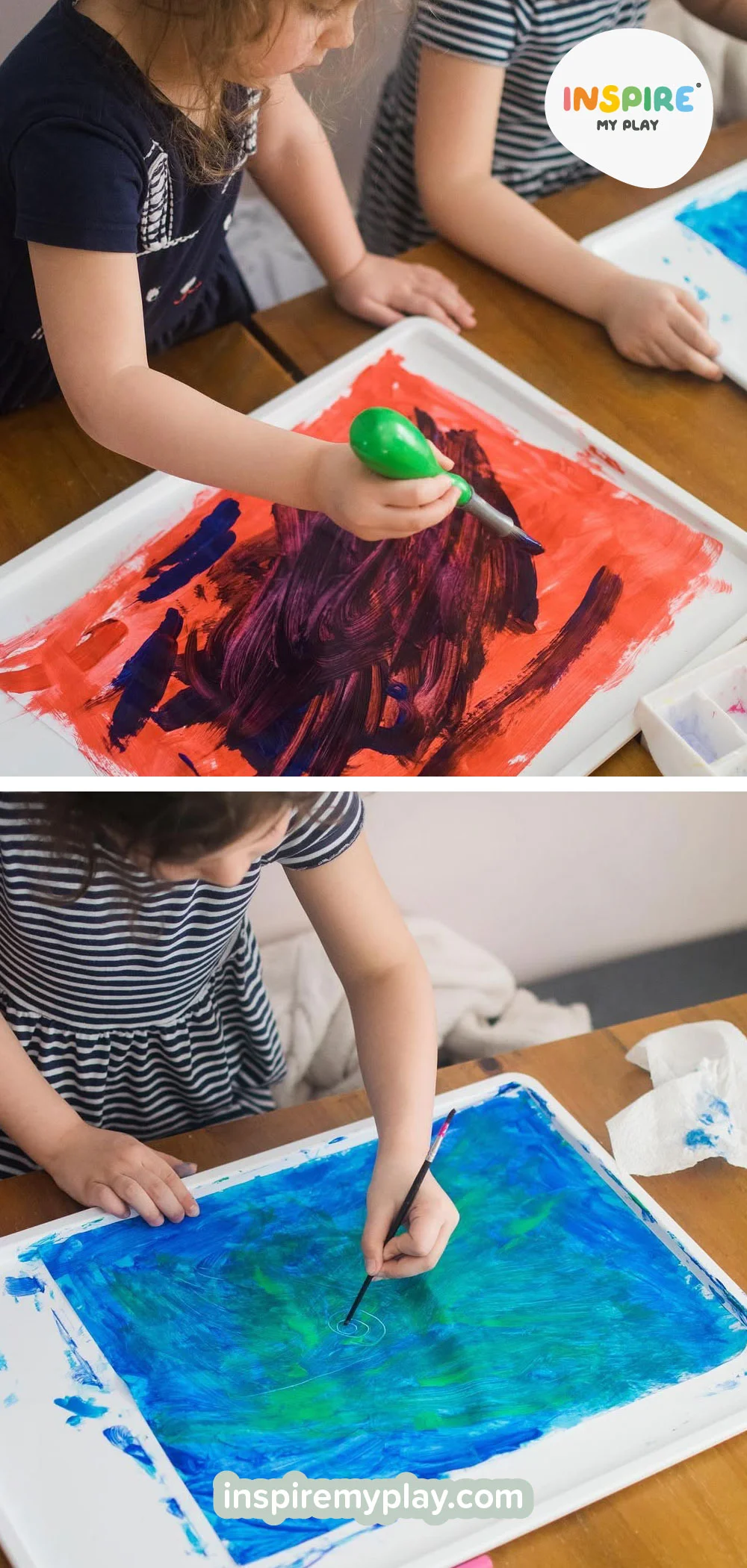
This beautiful butterfly and flower scene was inspired by watching a YouTube video where Eric Carle demonstrates the technique he used to create his iconic illustrations.
It’s such a lovely activity to do as a family at the weekend or during school holidays.
We chose a couple of colours to paint onto the paper. You don’t need to be careful, just let your children get creative! Whilst the paper was still wet, we used the end of a paintbrush to scratch away at the paint and add patterns and textures onto the page.
Once the painted sheets were dry, we cut out shapes and arranged them to build our colourful butterfly and flower picture on white paper.
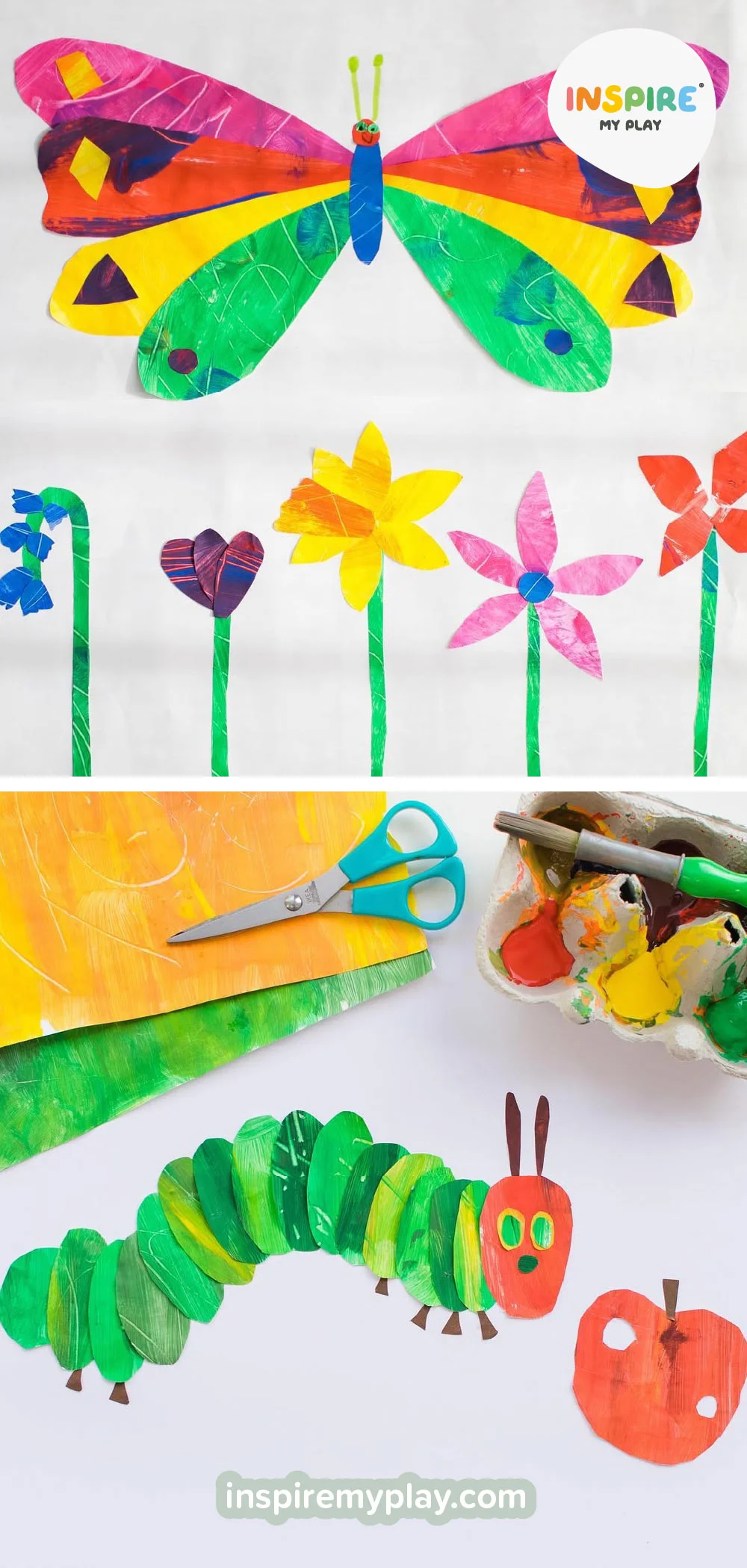
The girls were so pleased with their creations, and it’s a fantastic project for children of different ages — from toddlers who enjoy exploring paint and texture, to older ones who can cut, design and layer their own artwork.
The Very Hungry Caterpillar Sensory Tray
@lifewith3men’s The Very Hungry Caterpillar sensory tray is such a simple yet effective way to celebrate this fabulous story for World Book Day.
Set out some paints (greens, red and yellows) and let your children paint pasta. Add some rainbow rice or coloured chickpeas to reflect the bold colours of the book, and download Twinkl’s The Very Hungry Caterpillar Story Cutouts (or draw, colour and cut out your own) to add to your PlayTRAY.
Include a few scoops, bowls and funnels to encourage hands-on exploration — little ones will love pouring, filling and transferring the materials as they retell the story.
As your children explore, read the story together and ask them to identify the different foods and colours. Such a wonderfully sensory-rich activity!
4. Dear Zoo
The lift-the-flap preschool classic Dear Zoo by Rod Campbell is a wonderfully charming interactive story to help children develop their vocabulary — learning about different animals and the noises they make.
We absolutely love @inspiredbychay’s Dear Zoo-inspired sensory play tray, which uses the compartments of our PlayTRAY to represent the animals in the book.
Here’s what you need for each tray:
- Monkey – uncooked rice
- Lion – oats
- Frog – washable metallic paint and water
- Snake – jelly (or Jello)
- Camel, Elephant and Giraffe – paper fillers or shredded paper
Then simply add your animals and let your children explore as you read the story. For extra storytelling magic, you could play the Dear Zoo audiobook on the YOTO Player in the background.
5. The Tiger Who Came To Tea
Judith Kerr’s The Tiger Who Came To Tea is, as the title suggests, about a tiger who invites himself to tea at a little girl called Sophie’s house, eats and drinks all the family’s food, leaves, and never returns.
We think @x_twinmama_x’s The Tiger Who Came to Tea sensory tray using the lid of our PlayTRAY is so inviting! She’s used red lentils (you could also use coloured rice or pumpkin seeds to create a warm, vibrant orange base), plus wooden props including cakes, biscuits and other tea party food, cups, saucers, spoons, characters for Sophie and her mother, and of course, the infamous Tiger!
This sensory play setup is fantastic for sparking imagination and initiating conversations. Ask your child questions like: “What do you like for tea”, “What animal would you like to come to tea?” or“What would you have given the tiger to eat?” It’s also a great way to explore emotions: “How would you feel if the tiger ate all our food?”.
And it’s perfect for role play as children create their very own tea party!
6. Bear Sees Colours
Bear Sees Colours by Karma Wilson is a playful story that introduces children to colours through adorable illustrations as a mouse and bear explore nature and meet friends along the way.
This Bear Sees Colours sensory setup from @keepingthelittlesbusy using the PlayTRAY is super-cute, and makes learning colours through hands-on play engaging and fun, while also building fine motor skills.
The sensory base is homemade coloured rice (see our “How to Make Rainbow Rice” blog for the recipe). Each PlayTRAY compartment represents a different colour, with corresponding coloured letters, pom poms and objects added to bring the scene to life, like orange carrots, a green turtle and a red toadstool.
Once you’ve coloured the rice, give your little one scoops to pour each colour into the PlayTRAY compartments for a fine motor workout. Encourage them to:
- Match the coloured letters to the corresponding compartment (our silicone colour alphabet letter sets feature raised edges so you can fill them with rice to further support fine motor development and concentration)
- Sort and count the pom poms aloud
- Transfer items to the right compartment to boost hand-eye coordination (our sensory tong set is perfect for this)
This tray creates endless opportunities for exploration and learning — reading, sorting, counting, matching and imaginative play all rolled into one colourful, sensory-rich experience!
7. Peter Rabbit
Beatrix Potter’s The Tale of Peter Rabbit is the perfect story to celebrate World Book Day, and Easter too!
@Playdayswithjess has created the most gorgeous sensory setup using a wooden greenhouse placed in the lid of our PlayTRAY. Green coloured rice forms the “grass” surrounding the greenhouse, while taste-safe soil fills the deep tray next to it to create an allotment. Wooden vegetables, stumps, a wheelbarrow and some of Peter Rabbit’s friends — Jemima Puddle-Duck and Jeremy Fisher — bring the scene to life.
While your children explore the scenes, read The Tale of Petter Rabbit with them and encourage them to:
- Find each of Peter Rabbit’s friends and name them
- Transfer the wooden vegetables into the soil, naming each one and its colour
- Describe the texture of the soil and rice as they use their hands to explore
Watch in wonder as they use the characters to play, retell the story and imagine their very own Peter Rabbit adventure!
For the soil base, check out our ‘soil’ cloud dough recipe in our blog: “10 Sensory Bases for Small World Play”.
8. Owl Babies
Owl Babies by Martin Waddell is a family favourite in our house that we often read at bedtime. Featuring beautiful illustrations and descriptive language, it’s perfect for children from birth up to around 7 years old. The story follows three baby owls, Sarah, Percy and Bill, who wake one night to find their mother has gone. As the night draws on and the forest gets darker, they start to worry where she is. But when she finally returns, they shriek with joy and relief!
Inspired by our love for Owl Babies, we created these cute tinfoil and kitchen towel owls.
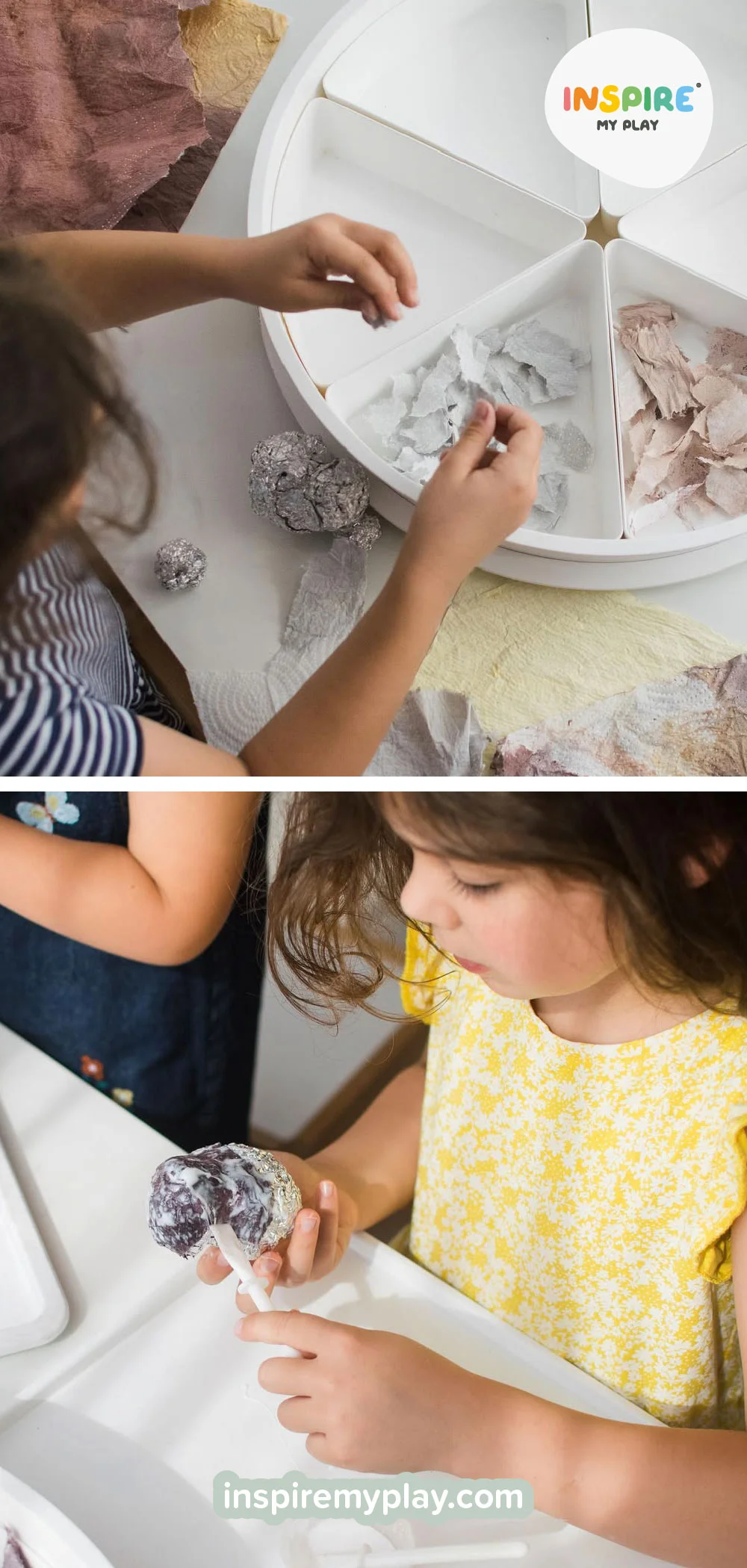
Tinfoil is quicker and far less messy than paper mache, and decoupaging kitchen towel over the top makes the finished figures robust — perfect for imaginative play afterwards.
What you’ll need:
- Tinfoil
- Kitchen towel
- Paint
- PVA glue
- Card
- Googly eyes
Method:
- Paint pieces of kitchen towel with slightly watered-down ready-mix paint. You want it to soak through to the other side. These will make the feathers.
- While the kitchen towel is drying, scrunch up some tinfoil into a ball to form the owl’s body shape.
- Once the kitchen towel is dry, tear it into small pieces and stick them onto the tinfoil using PVA glue, similar to decoupage. Once the foil is hidden you can add a few extra feathers with just the top end glued down to make it look like the owl’s wings.
- To finish, glue on googly eyes and make the feet and beak from yellow card.
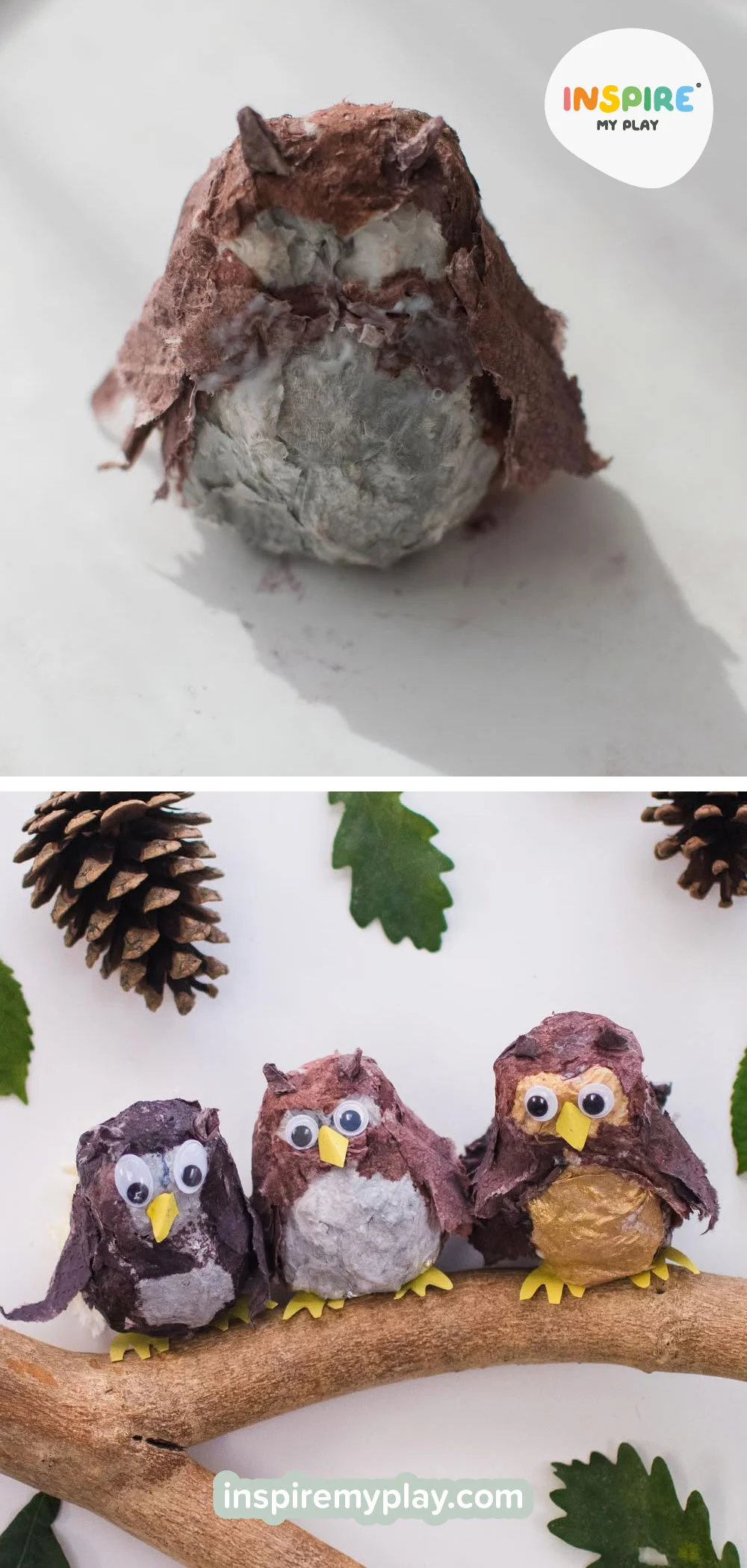
The girls loved this craft. Scrunching the foil is great for strengthening little hand muscles, tearing and gluing the kitchen towel pieces develops hand-eye coordination, and playing with the finished owls encourages creativity and imaginative storytelling.
9. The Gruffalo
What better way to finish our World Book Day sensory play tray blog than by returning to everyone’s favourite purple-spiked, black-tongued and orange-eyed beast — The Gruffalo!
@Playdayswithjess has created a wonderful Gruffalo Café using our PlayTRAY and compartments, featuring a variety of sensory bases to make Gruffalo recipes and potions:
This setup is imaginative play at its finest! Mixing and creating different “recipes” helps develop fine motor skills, hand-eye coordination and problem-solving, all while sparking endless creativity.
Bring Stories to Life This World Book Day
From The Gruffalo’s Child shadow puppets to The Very Hungry Caterpillar rainbow pasta, there are endless ways to make children’s favourite stories come alive through sensory play.
Using the PlayTRAY and simple, everyday materials, these setups invite children to explore textures, colours, shapes and fine motor skills — all while encouraging imaginative storytelling, language development and emotional connection to the characters and stories they love.
Whether it’s scooping, pouring, sorting, or acting out the scenes, these sensory activities help children live the story, strengthen comprehension and build memories that last long after the book is closed.
Celebrate this World Book Day by turning reading time into hands-on adventures, and don’t forget to share your creations with us @inspiremyplay!


