



Sensory Play for Babies: 20+ Simple and Fun Ideas


Laura @inspiremyplay
Founder of @inspiremyplay, Early Years teacher for 11 years and mummy to three gorgeous girls. I'm passionate about about the benefits of play in early childhood.
This post may contain affiliate links. This means that if you click on a link and go on to make a purchase, I may receive a small commission (at no additional cost to you). Please read my disclosure policy for more details.
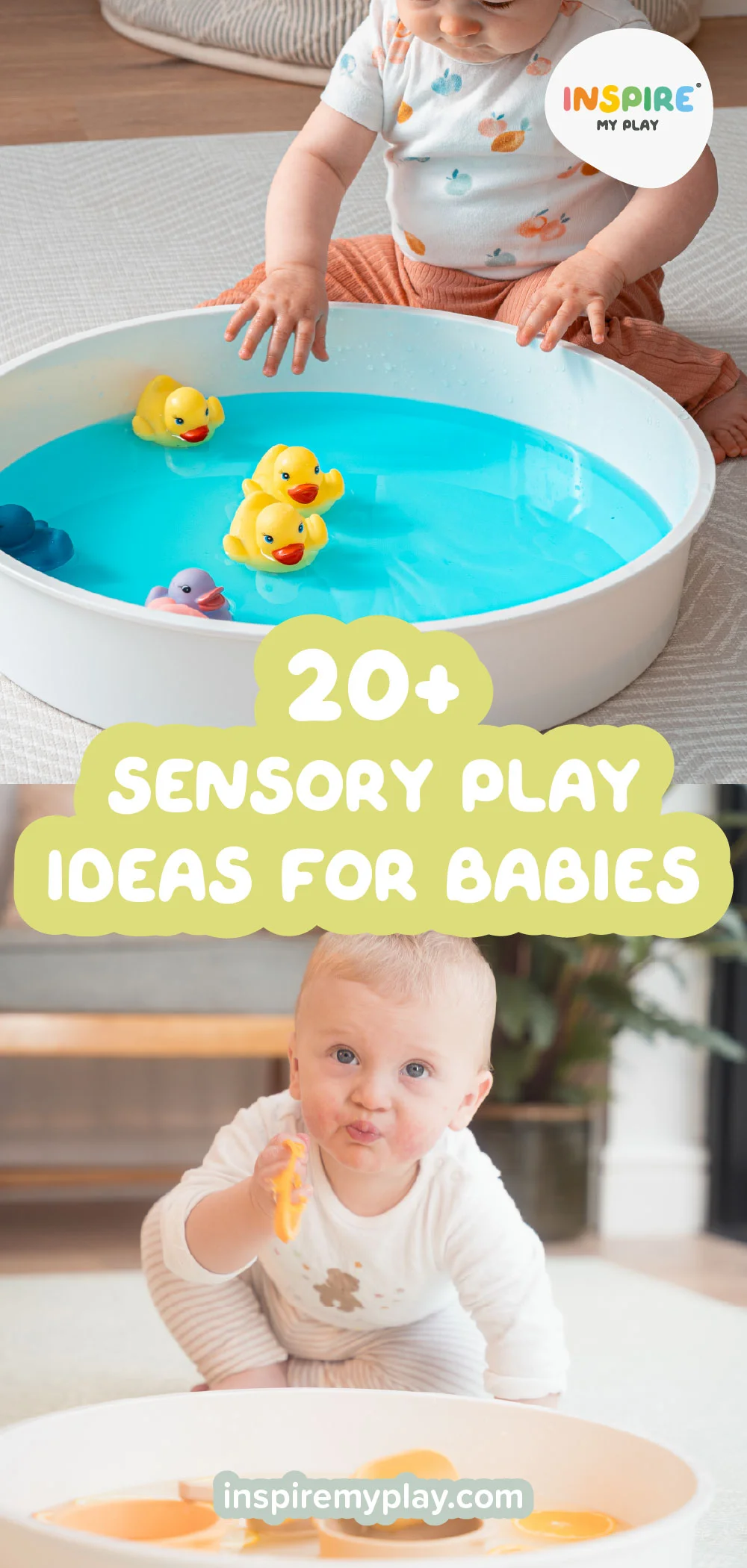
Getting started can feel overwhelming, especially when it comes to thinking up activities and choosing the right resources. But don’t worry, we’ve pulled together a list of ideas to get you started.
Safety first: Please read our safety guidelines before starting your sensory play journey.

What is Sensory Play?
Sensory play focuses on activities that engage your child's senses — touch, sight, smell, sound, taste — and sometimes movement or balance. It helps babies learn about the world while developing key skills.
Why Encourage Sensory Play?
Sensory play supports your child’s development from birth through early childhood. Research shows that the first few years are critical for brain growth, shaping the foundations for future learning, social and emotional development, and overall health and happiness.
Here are just some of the many benefits of sensory play:
- Language development: Engaging the senses helps your child describe what they’re experiencing.
- Cognitive growth: Hands-on play supports problem-solving, curiosity and perseverance.
- Social skills and experimentation: Encourages interaction and creativity.
-
Physical development: Builds fine and gross motor skills through activities like pouring, mixing, building and playing with playdough.
You can read more about the benefits in our blog: “The 7 Amazing Benefits of Sensory Play for Children.”
Need Some Inspiration?
If you're not sure where to start, our Baby & Toddler Activity Cards are packed with simple, hands-on activities to try at home. Each card features an engaging, developmentally appropriate, taste-safe activity for children aged 6 months to 3 years, making it simple to incorporate sensory-rich play that supports curiosity, growth and development while keeping your little one entertained.
Sensory Play Activity Ideas for Babies 0-9 months +
At first your newborn will engage in sensory activities more passively than actively, taking in the textures, smells, sights and sounds around them. But it won't take long for your baby to begin mouthing, grabbing and eventually crawling towards everything that captures their interest.
Here are some simple activities to try at home to aid sensory stimulation:
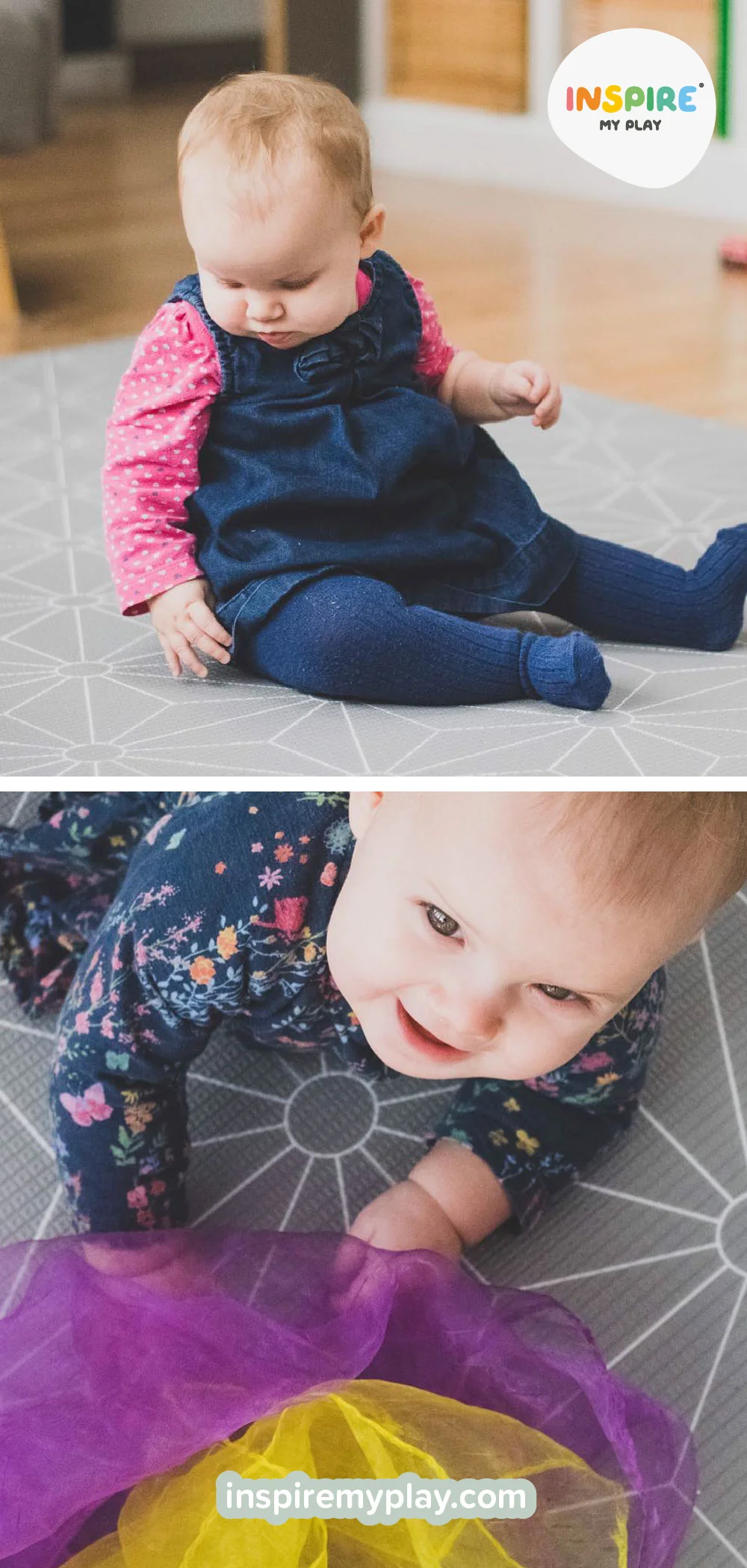
1. Turn tummy time into a sensory experience
2. Use black and white shapes around your little one’s play area
3. Have fun at bath time with water play
4. Explore different textures
5. Make music and sing
6. Let your baby mouth safe objects
Sensory Play Activity Ideas for Babies 9 months+
From around 9 months, your little one will be ready for a wider range of sensory play experiences.
Here are some simple, safe and engaging ideas:
Edible and taste-safe Sensory Bases
In the early years, babies and toddlers explore the world with their mouths, so it’s safest to stick to edible and taste-safe sensory play. There’s often some confusion about the difference between the two:
- Taste-safe sensory play uses non-toxic, food-grade materials like dried pasta, oobleck, or homemade play dough. These aren’t meant to be eaten and might not taste very nice, but if a little is ingested during play, it’s completely safe.
-
Edible sensory play uses materials meant to be eaten, like jelly, fruit, cereal and cooked spaghetti. It’s perfect for introducing new textures, tastes and smells and can also help teach healthy eating habits. You can even make it part of a more elaborate play experience by adding other materials or objects — for example a cereal PlayTRAY with small toy diggers.
You can read more about sensory bases in our “10 Sensory Bases for Small-World Play” blog.
1. Edible Oat Sensory Bin
A child's attention span develops as they grow, so for younger babies, low-prep, simple ideas work best.
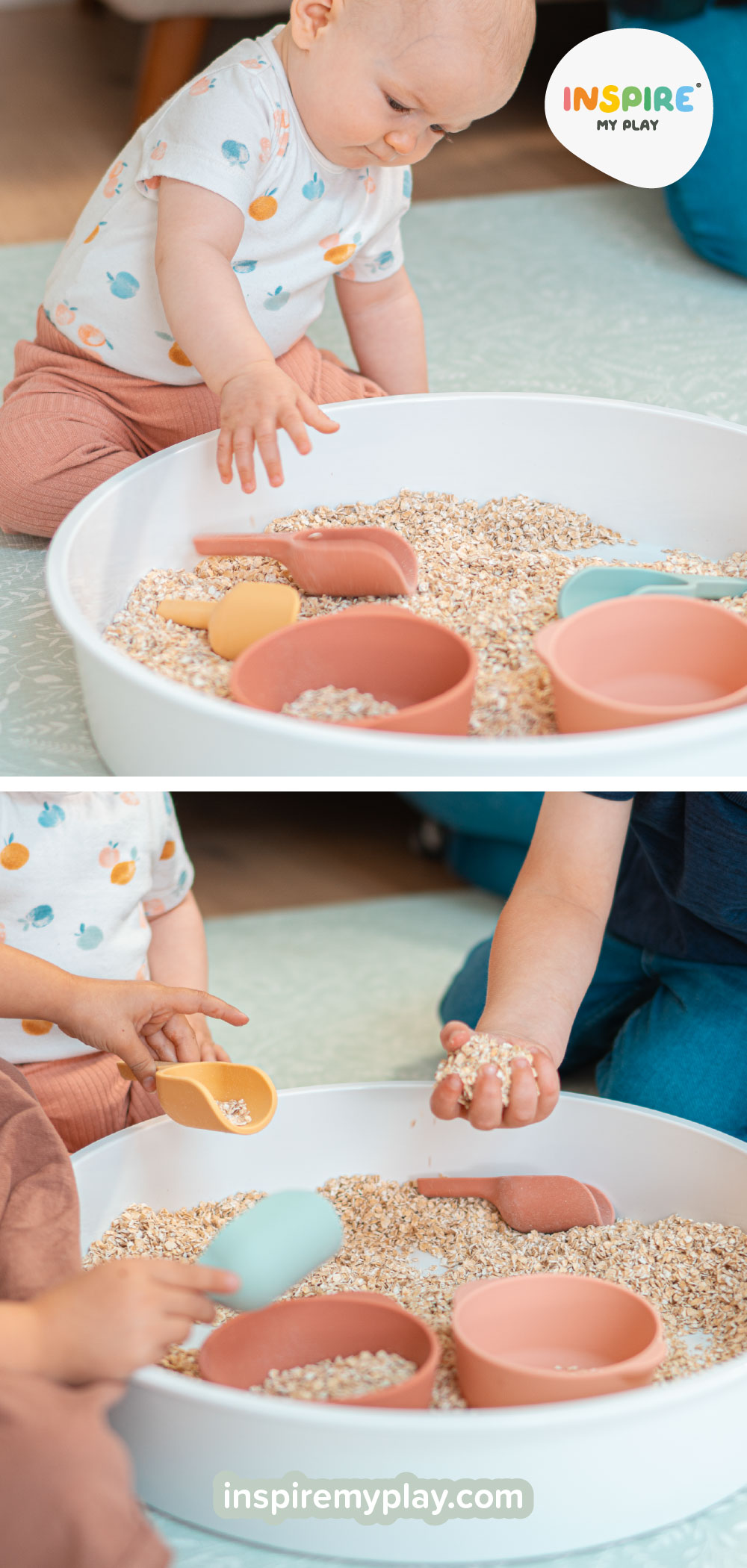
- Pour some oats into a PlayTRAY and bury a few objects or toys for your baby to discover.
- This simple activity teaches object permanence (a child’s ability to recognise objects even when they’re out of sight), while keeping play fun and engaging.
- Our multi-award-winning PlayTRAY is suitable from 6 months+ and is perfect for containing the oats and keeping them accessible at floor level for curious little hands.
2. Edible Cereal Safari
Toddlers love exploring textures and shapes, and cereal is a wonderful taste-safe option.
- Set up a cereal safari with cereals of different textures and shapes.
- For toddlers you can even grind some cereal in a blender to create sand for digging and scooping.
- This activity encourages sensory exploration and helps children get used to new textures – great for picky eaters.
3. Edible Water Beads - Coloured Chia Seeds
A simple (but messy) taste-safe activity that’s perfect for little ones just starting their sensory play journey. Chia seeds have such an interesting texture to explore! I would suggest doing this one outdoors in old clothes or swimsuits, because they can be very sticky!
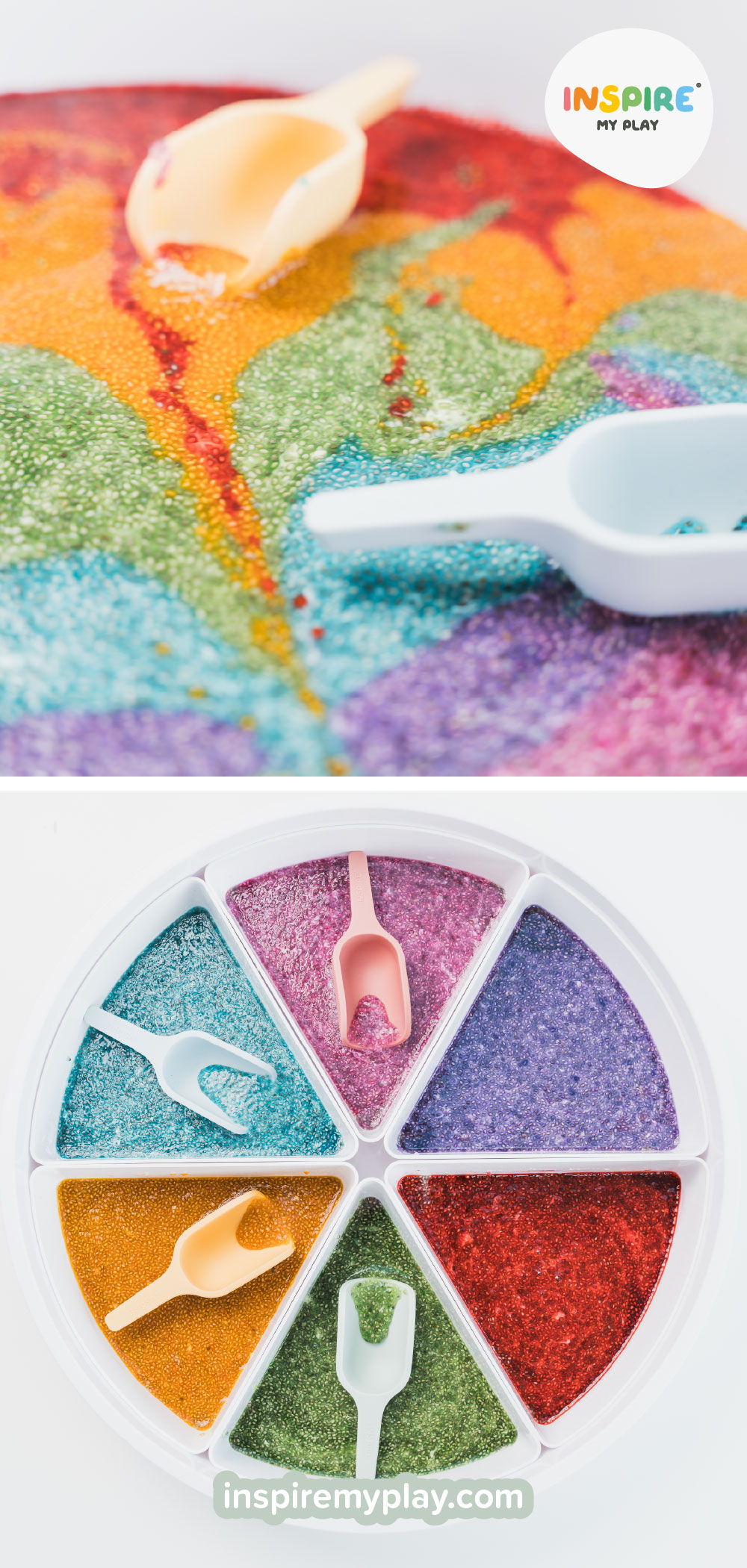
- Pour ¼ cup of chia seeds into each PlayTRAY compartment with 1½ cups of water, and a drop of food colouring (start with just one colour for beginners).
- Mix and leave overnight in the fridge. Give it a quick stir before play to break up any clumps.
- Give your little one scoops or spoons to scoop and pour the chia seeds into bowls or containers — this helps develop fine motor skills and hand-eye coordination.
- This activity is taste-safe, making it suitable for babies. Start with just one colour so your baby can get used to the texture.
- Store any leftover mixture in the fridge for a few days, or freeze portions in ice cube trays for another sensory activity involving melting and water play.
- As your child grows, add more colours to create a beautiful rainbow effect for a visually engaging and exploratory experience.
Tip: Buy chia seeds in bulk for the most cost-effective option (we buy ours from Amazon). Black chia seeds tend to be cheaper than white.
4. Edible Spaghetti Play
Cooked spaghetti is a fun, slippery texture for little fingers to explore
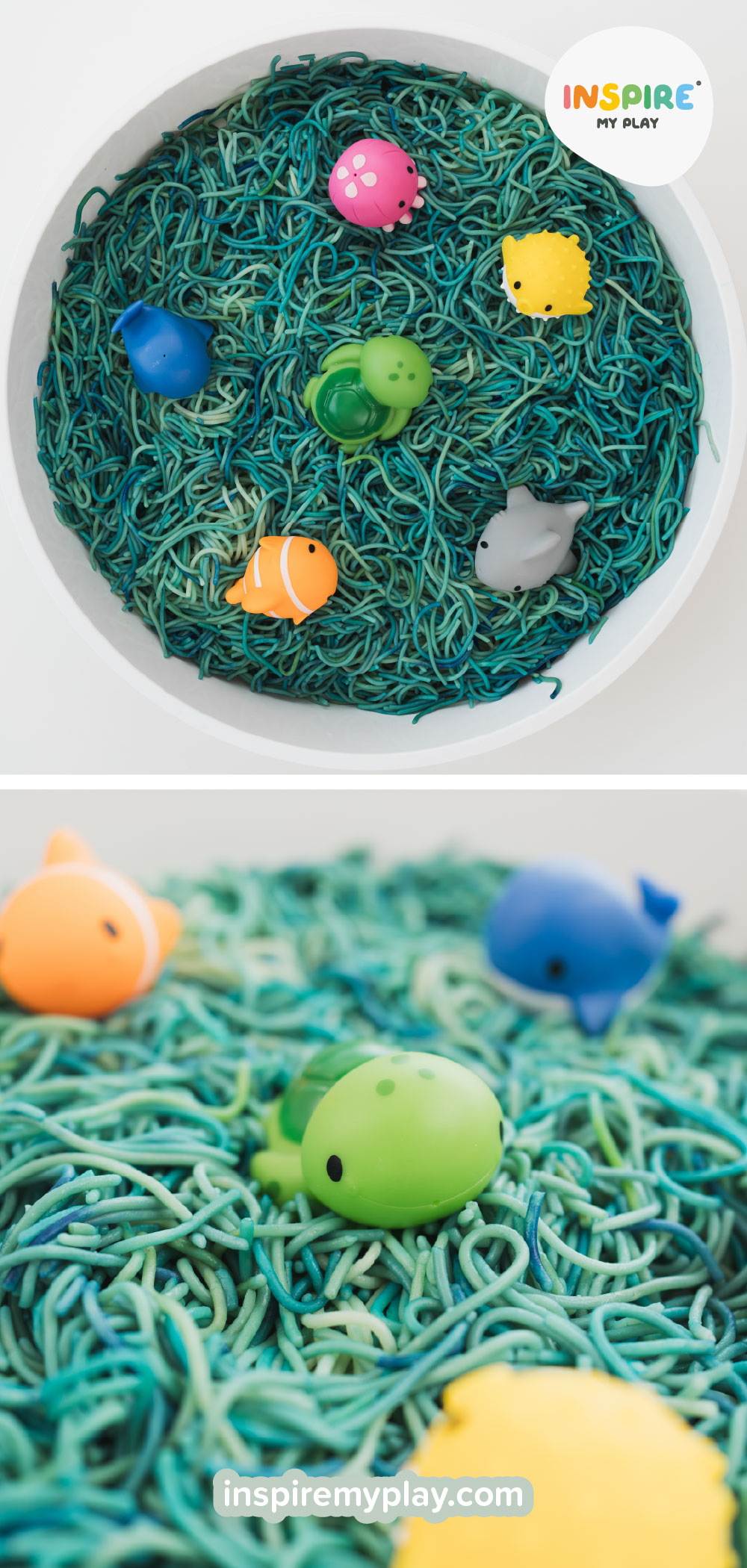
- Cook and divide spaghetti into portions, then mix each with a small amount of food colouring.
- Let it sit for a few minutes and rinse any excess away with water.
- This is a great activity for sensory exploration and can be themed – for example animal-themed spaghetti play, or an ocean!
- You can revive spaghetti with a tiny bit of oil to keep it soft.
5. Taste-Safe Sensory Farm
Babies and toddlers love a farm! And you can let them explore safely by using edible or taste-safe materials.
- Use baby/toddler-friendly animal figures or squirters.
- Base ideas:
- Crushed Weetabix
- Water with a drop of blue food colouring
- Baby porridge
- “Mud” — 1 cup flour, bake at 180°C for 10 min. Once cool mix with ¼ cup cocoa powder and ¾ cup water.
- O-shaped cereal
- “Grass” — oats with green food colouring
Play ideas:
- Encourage feeding the animals or making animal noises.
- For less mess, skip the water in the mud recipe.
- Dress little ones in just a vest or nappy for easy clean-up.
6. Taste-Safe Paint
Introduce your baby to painting without worrying about what ends up in their mouth! This activity is simple, quick, and safe for babies and toddlers.
- Mix a few spoonfuls of natural yoghurt and a drop of food colouring (use natural food colouring if you prefer) onto the lid of the PlayTRAY.
- Let your little one explore!
- Always keep a close eye on your baby during edible paint activities.
7. Bubble Foam
A fun alternative to water play that’s super simple to set up and so much fun! Bubble foam encourages scooping, pouring and imaginative play.
How to make bubble foam:
- Mix ½ cup of tear-free bubble bath in a bowl with 1 cup of water. (You can use dish soap but just be aware this may sting their eyes if they rub them.)
- Add a few drops of food colouring (optional).
- Whip with an electric mixer until you get stiff peaks.
- Scoop out the bubble foam into your PlayTRAY and add small toys, scoops and bowls for exploring.
Tip: If you have some liquid left at the bottom of the bowl just give it another mix and you’ll be able to use that too!
8. Taste Safe Foam – Chickpea Water (Aquafaba)
Perfect for babies still exploring with their mouths, this taste-safe adaptation of our Bubble Foam recipe uses Chickpea water, also known as Aquafaba. It’s a brilliant early sensory play experience for little ones.
- Drain the water from two tins of chickpeas, add 1 teaspoon of cream of tartar, a drop of food colouring (optional) and whizz into a foam!
- The cream of tartar helps to keep it foamy for longer but if you don’t have any, it’s absolutely fine.
- Use immediately for sensory play, or revive with a little whisking!
- Add toys for counting or imaginative play.
9. Nature Walk
Explore the great outdoors and turn a simple walk into a sensory adventure! Babies and toddlers can engage their senses by touching, seeing, and listening to the world around them.
- Feel the soft grass, rough tree bark and brightly coloured flowers.
- Listen to birds, rustling leaves and other natural sounds.
- Always keep a close eye on your little one - pretty flowers and plants can be very tempting to put in their mouths.
10. Rainbow Sensory Bottle
A visually engaging activity that encourages calm, focused observation for babies, toddlers and older children. Perfect for exploring colours, textures and gentle movement.
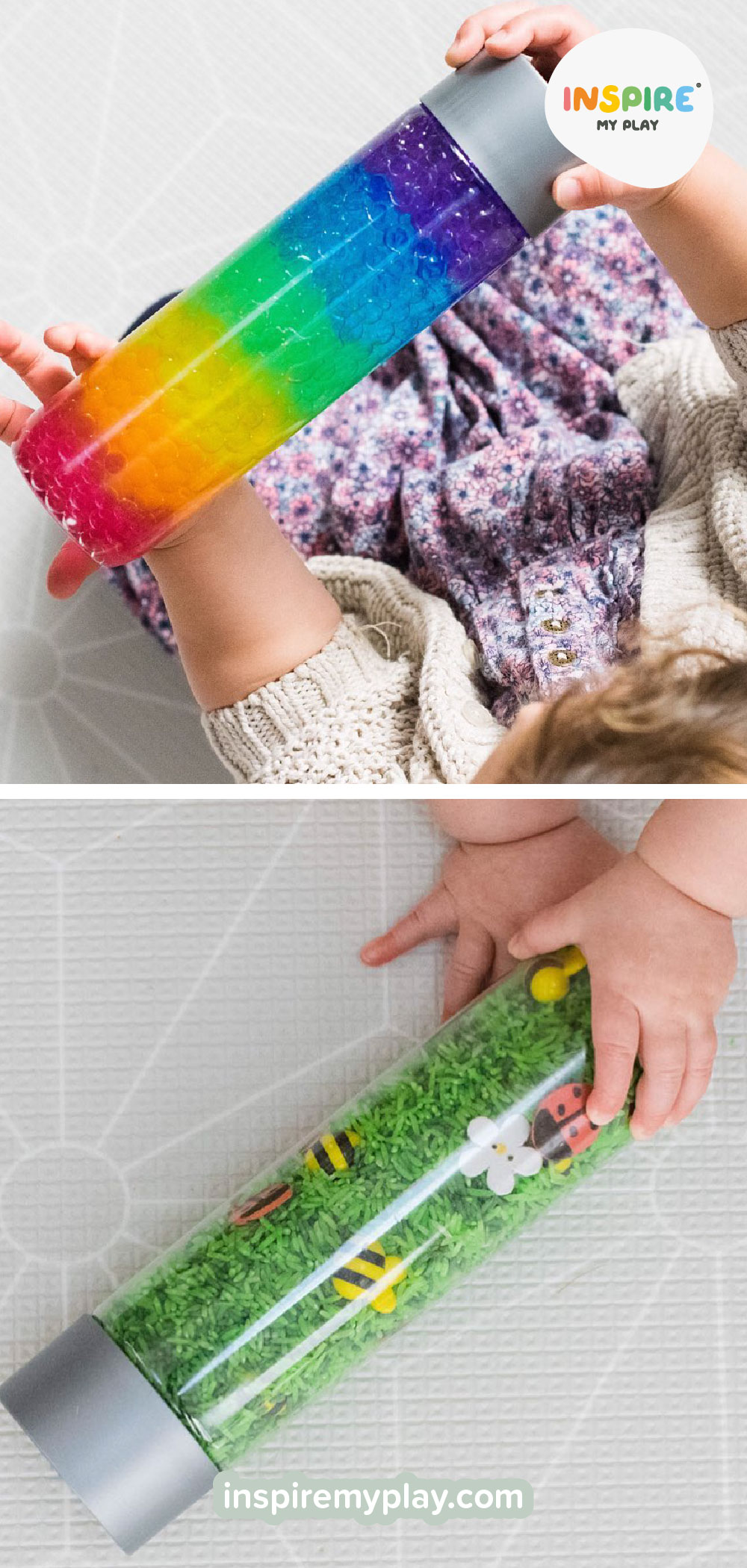
- Fill a clear, empty plastic bottle (we used a Voss water bottle) with water beads in layers of different colours, then add baby oil to fill the gaps.
- Seal the lid securely, or glue it for extra safety so it can’t be opened.
- Even though the bottle is sealed, always watch your child during this activity.
11. Spring Sensory Bottle
A playful twist on the rainbow bottle that’s perfect for introducing little ones to textures, colours, and the beauty of nature.
- Fill a bottle with dyed rice and add small objects like bees, flowers or ladybirds (we made our ladybirds from craft foam).
- Make sure the bottle is securely closed.
- Even with a sealed bottle, always keep an eye on your child while they explore.
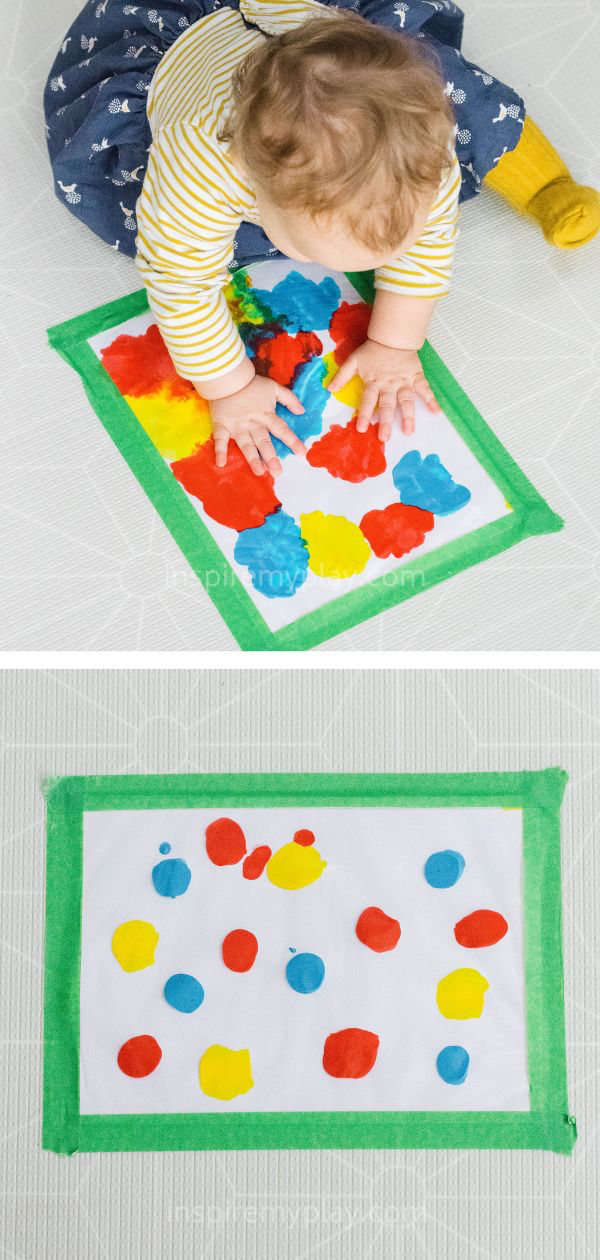
12. Mess-Free Paint
A great one for babies and toddlers who love to explore, but without the mess!
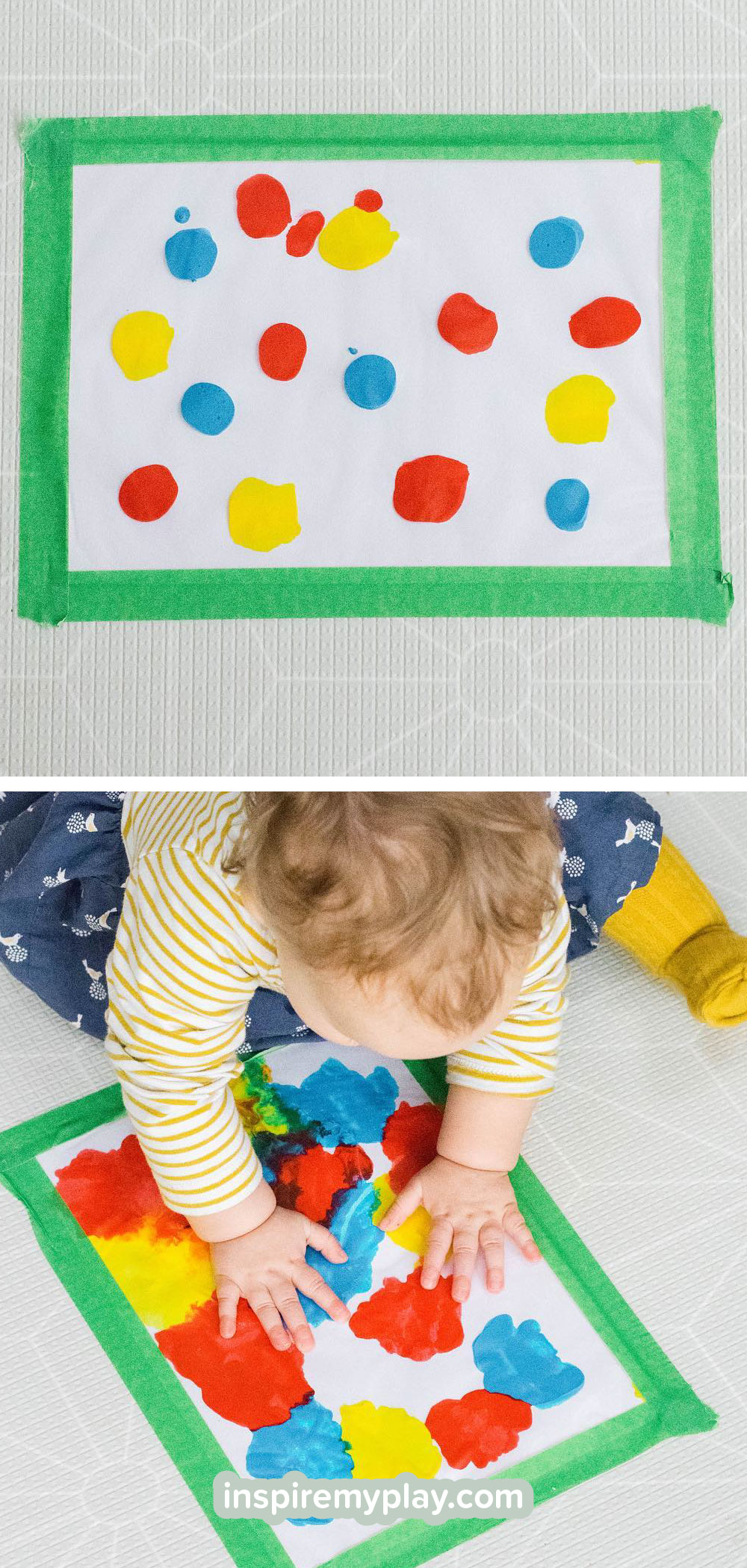
- Squirt generous blobs of paint onto a piece of thick card and place inside a sealable bag.
- Tape the bag to the floor to keep it in place.
- Let your little one squish, press and explore the colours.
- Take care when removing the bag as it can tear easily.
13. Pom-Pom Sticky Wall
Children love a sticky wall! This is a tactile, problem-solving activity that develops fine motor skills.
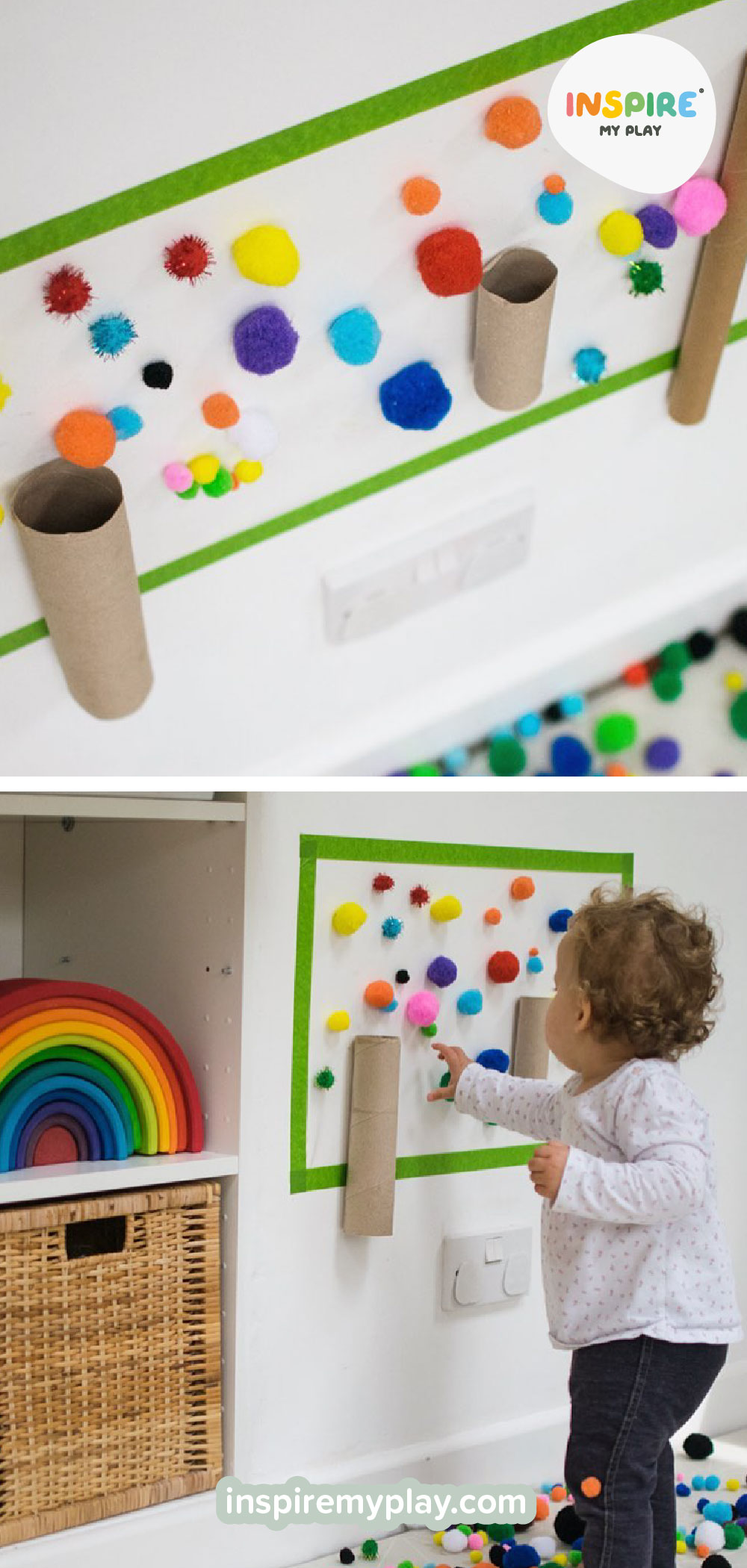
- Tape contact paper (sticky-back plastic) sticky side up to create your wall
- Attach cardboard tubes and add pom-poms for sticking and peeling.
- Always supervise your little one, especially with small objects like pom-poms.
14. Water Patio Painting
A simple, water-based outdoor activity that encourages early mark-making and coordination — perfect for developing pre-writing skills without the mess!
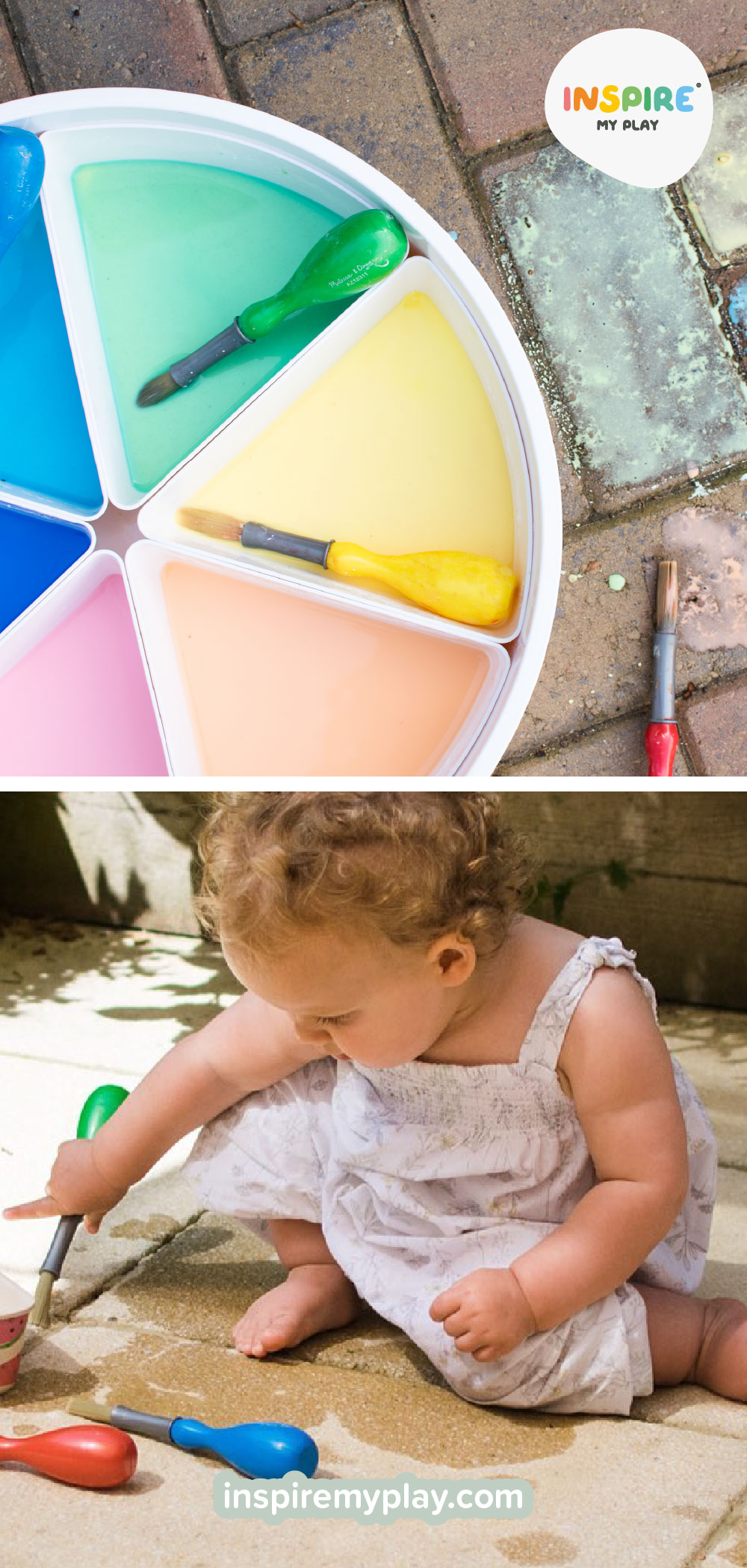
- Fill a container with water and give your little one some paintbrushes.
- Let them explore and “paint” on the patio, observing and talking about the marks they make.
15. Chickpea Play
A wonderfully tactile activity that’s perfect for scooping, pouring and discovering the delightful sounds and textures of chickpeas.
- Place the PlayTRAY lid on the floor and fill with dry chickpeas.
- Hide objects inside, like blocks, cups, or small toys, for your little one to uncover.
- Encourage them to explore with their hands, and even their feet, to really feel the texture.
- Chickpeas are a choking hazard so always supervise your child closely.
16. Wooden Balls
Open-ended play at its finest! These natural wooden balls (dyed with food colouring and sealed with plant-based, non-toxic wax) are great for little hands to explore.
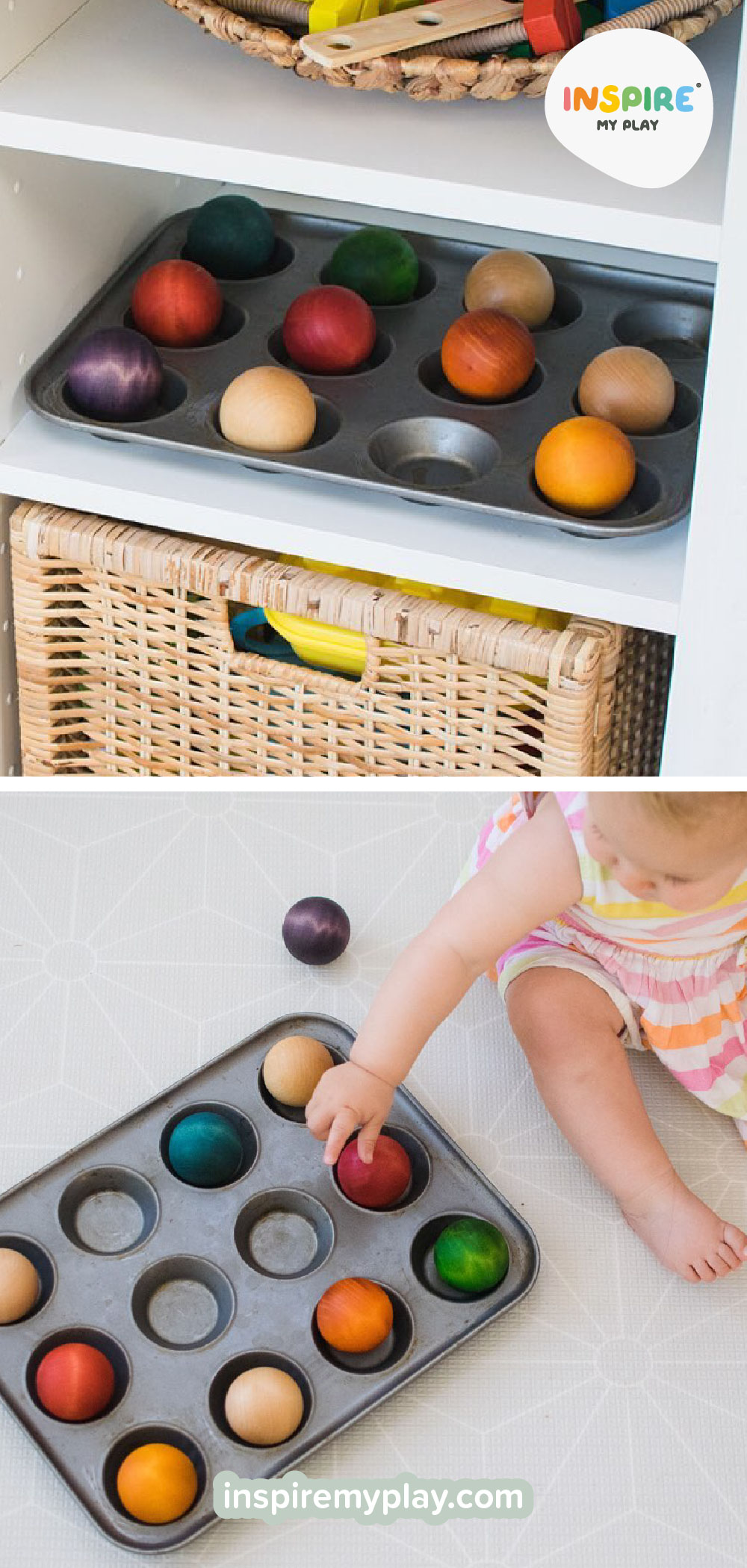
- Pop them into a muffin tin for some satisfying scooping and dumping fun.
- Older siblings can use them to build ball runs with blocks.
- They also make perfect scoops of ice cream for imaginative play with toy cones.
17. Rainbow Rice and Puzzle Fun
My littlest loves filling and emptying, and this is a colourful way to combine sensory play with problem-solving.
- Fill a PlayTRAY with rainbow-coloured rice (see our “How to Make Rainbow Rice for Play” blog).
- Hide wooden puzzle shapes inside for little ones to dig out and place into the puzzle board, helping them learn colours and shapes.
- This chunky wooden puzzle (gifted to us by @big.little.baby.steps) is perfect for tiny hands and can be used again and again for open-ended play. Check out their Etsy shop.
Sensory Play: Endless Fun for Babies and Beyond
Sensory play is all about curiosity, exploration and letting little hands (and mouths!) discover the world around them. From taste-safe setups to tactile adventures, there’s no limit to the ways you can encourage your baby or toddler to learn, grow and have fun.
Even my older children can’t resists exploring my PlayTRAY setups — the opportunities for play and learning really are endless.
Remember, every play session is a chance to bond, experiment, and make memories, so keep it relaxed, follow safety guidelines and let your little one lead the way!
For more ideas, check out our blog, follow us on social @inspiremyplay, and if you haven’t already, sign up for our newsletter for tips, activities, offers, and even more playtime inspiration!