




Teaching Maths Through Play: 7 Simple Activities to Try at Home


Rebecca @inspiremyplay
Marketing Manager @inspiremyplay. Mum of two boys (and one very spoiled miniature dachshund). I’m passionate about helping families everywhere discover the joy and benefits of sensory play.
When I was at school, hearing the word “maths” was almost like someone uttering “Voldemort”! Numbers just didn’t seem to click for me. Seeing them written down on a page didn’t really bring them to life, and I often needed things explained in a different way before they started to make sense.
That’s one of the reasons I love sensory play. It gives children a hands-on way to explore early maths concepts, turning abstract numbers into something they can touch, move, count, sort and explore.
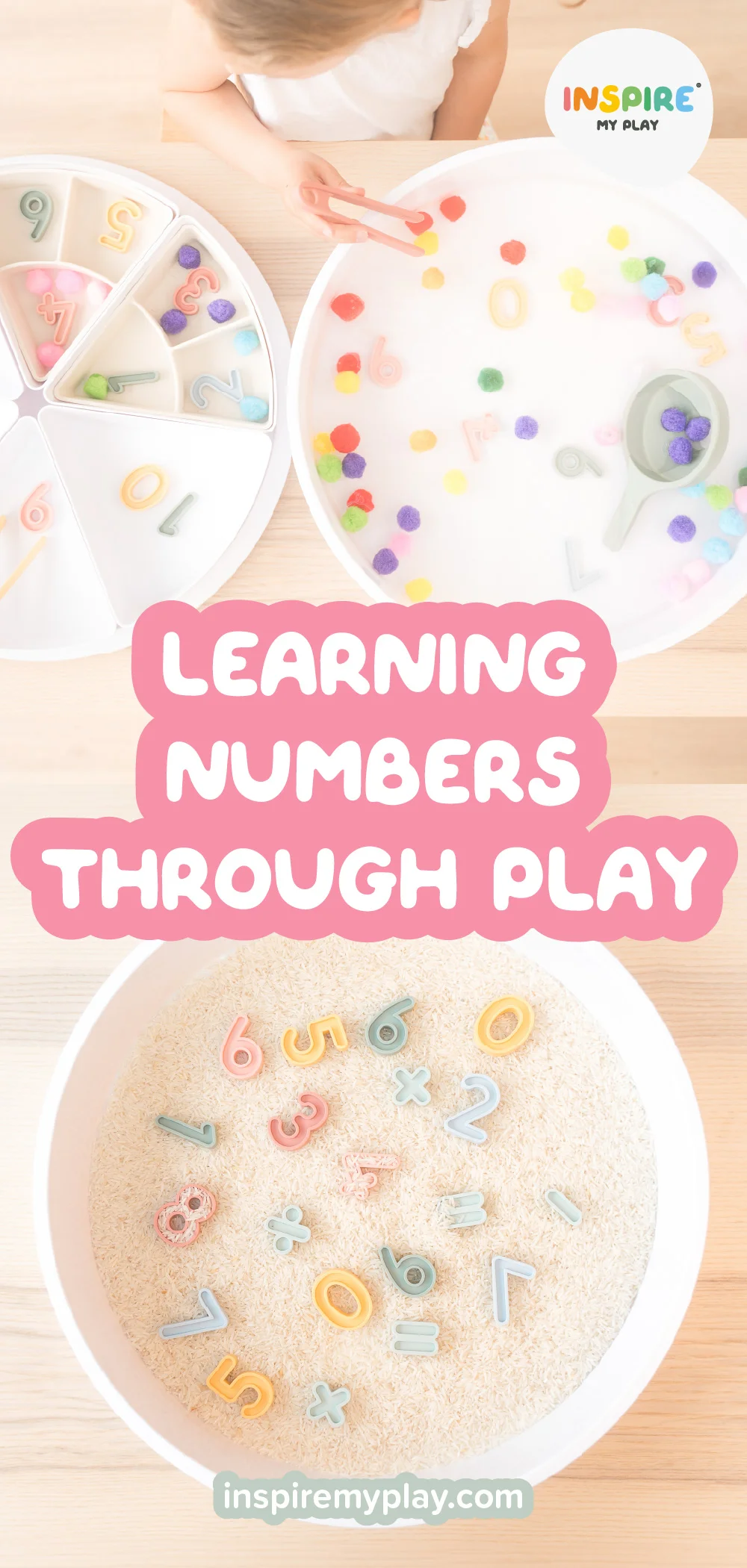
Sensory play can be particularly helpful for preschoolers who are beginning to develop the early numeracy skills they’ll use when they start school. Counting, recognising numbers, sorting, matching, comparing sizes and spotting patterns are all important building blocks for later maths learning. And while they’re busy playing, children are also practising concentration, coordination and fine motor skills along the way.
Whether your child loves numbers or would rather avoid them altogether, sensory play is a great way to introduce simple maths concepts without making it feel like a lesson. They can learn through doing, experimenting and, most importantly, having fun.
I wish I’d learned more maths through play when I was younger. I’m pretty sure if I had, I wouldn’t still feel slightly fearful when I have to create or decode a spreadsheet!
So, if you’re looking for an easy way to bring a little more maths into playtime, here are 7 simple activities to try at home. They’re fun, hands-on, and perfect for helping young children build those all-important early maths skills before they start school.
1. Birthday Moon Sand
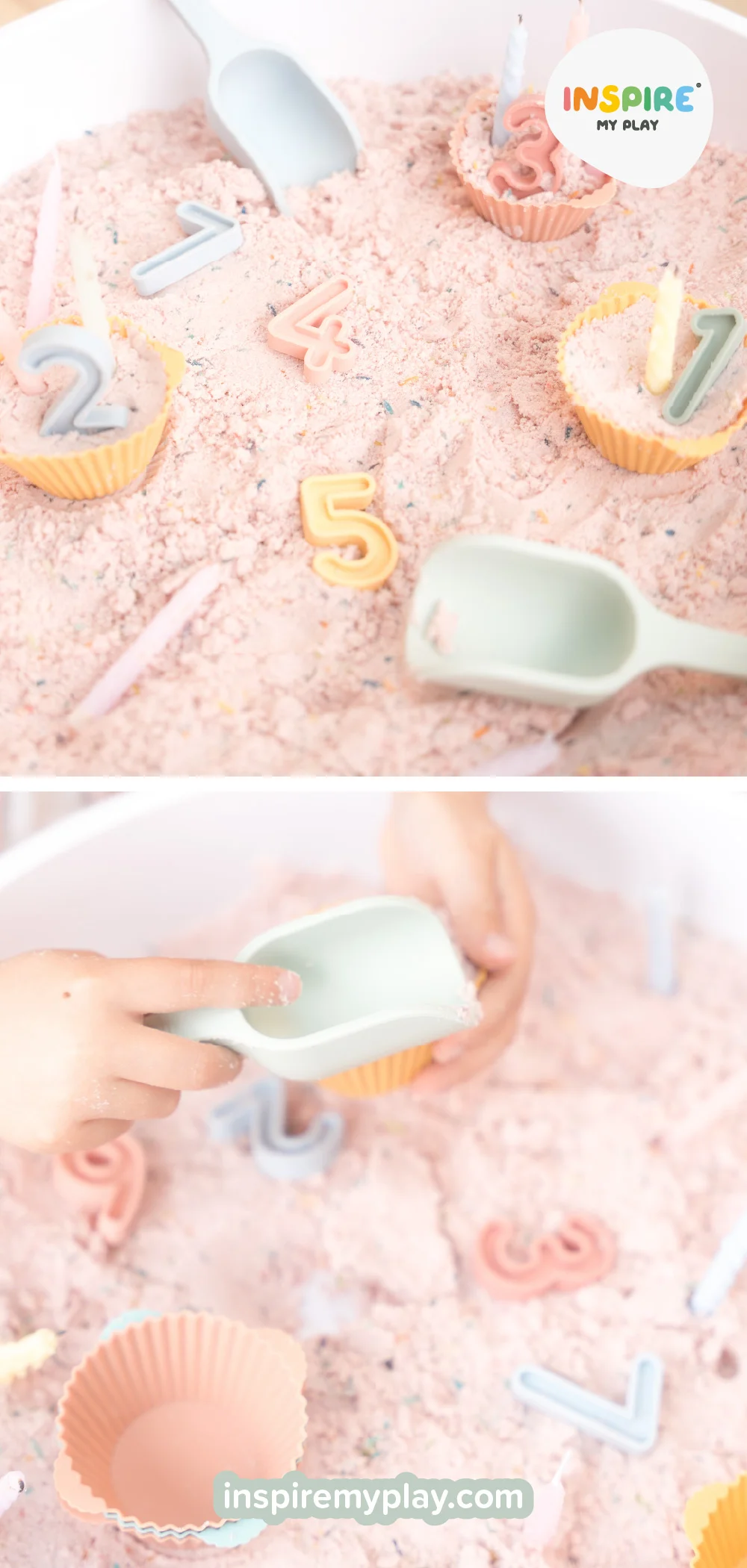
Pretend play is a wonderful way to build early years skills, and what better way to practise counting than with a birthday party? This activity combines sensory play with simple maths, using moon sand, cupcake cases, candles and numbers to make learning feel like play.
What you’ll need:
- 6 cups (720g) of plain flour
- 1 cup (240ml) of vegetable oil
- Chalk to colour (optional)
- Sprinkles
- 1 tsp of vanilla essence
- Cupcake cases
- Candles
- Number Set
-
PlayTRAY
How to play:
- Pour the flour into the PlayTRAY.
- Grate a small piece of chalk into the flour to colour.
- Add the oil, vanilla essence and sprinkles.
- Mix with a spoon and then use your fingers to rub the oil through the flour.
- Add cupcake cases, candles, scoops and let your child first explore the moon sand and enjoy some pretend birthday play.
- Introduce numbers and candles to practise number recognition and counting. Can they choose a number from the PlayTRAY and then count out the correct number of candles to match?
- For an extra challenge, ask them to make two birthday cakes. Which has more candles? Which has less? Can they make them have the same number.
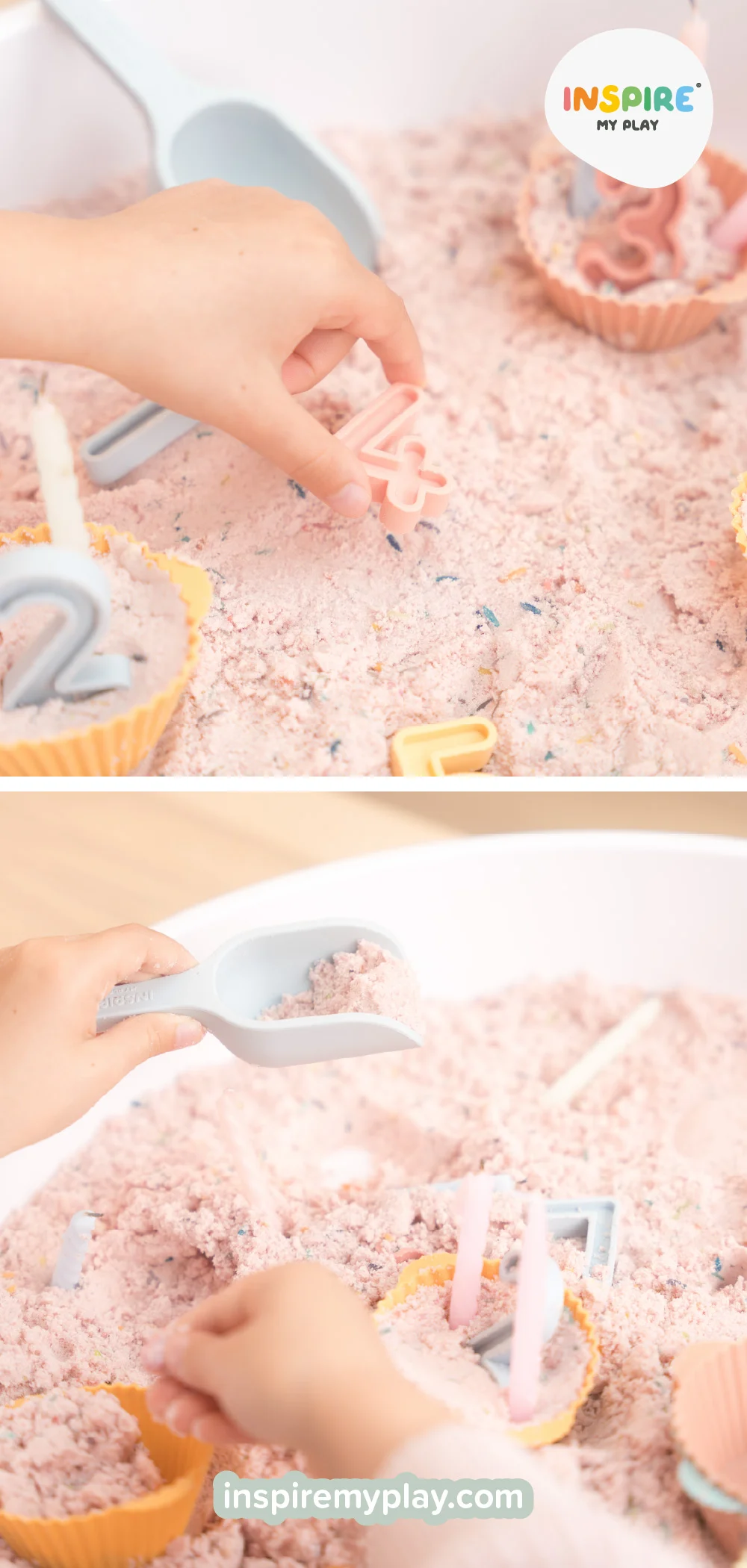
This activity helps children practise number recognition, counting and matching, while introducing simple maths concepts such as more or less. Scooping, mixing and placing the candles also helps develop fine motor skills, hand-eye coordination and concentration.
Top Tip: To make the moon sand taste-safe, bake the flour on a baking tray at 180ºC/350ºF for 10 minutes. Leave the chalk colouring out of the recipe or replace with beetroot powder to colour pink.
2. Jelly Number Dig
Kids lovely jelly, so what better way to learn numbers than by letting them get a little messy?
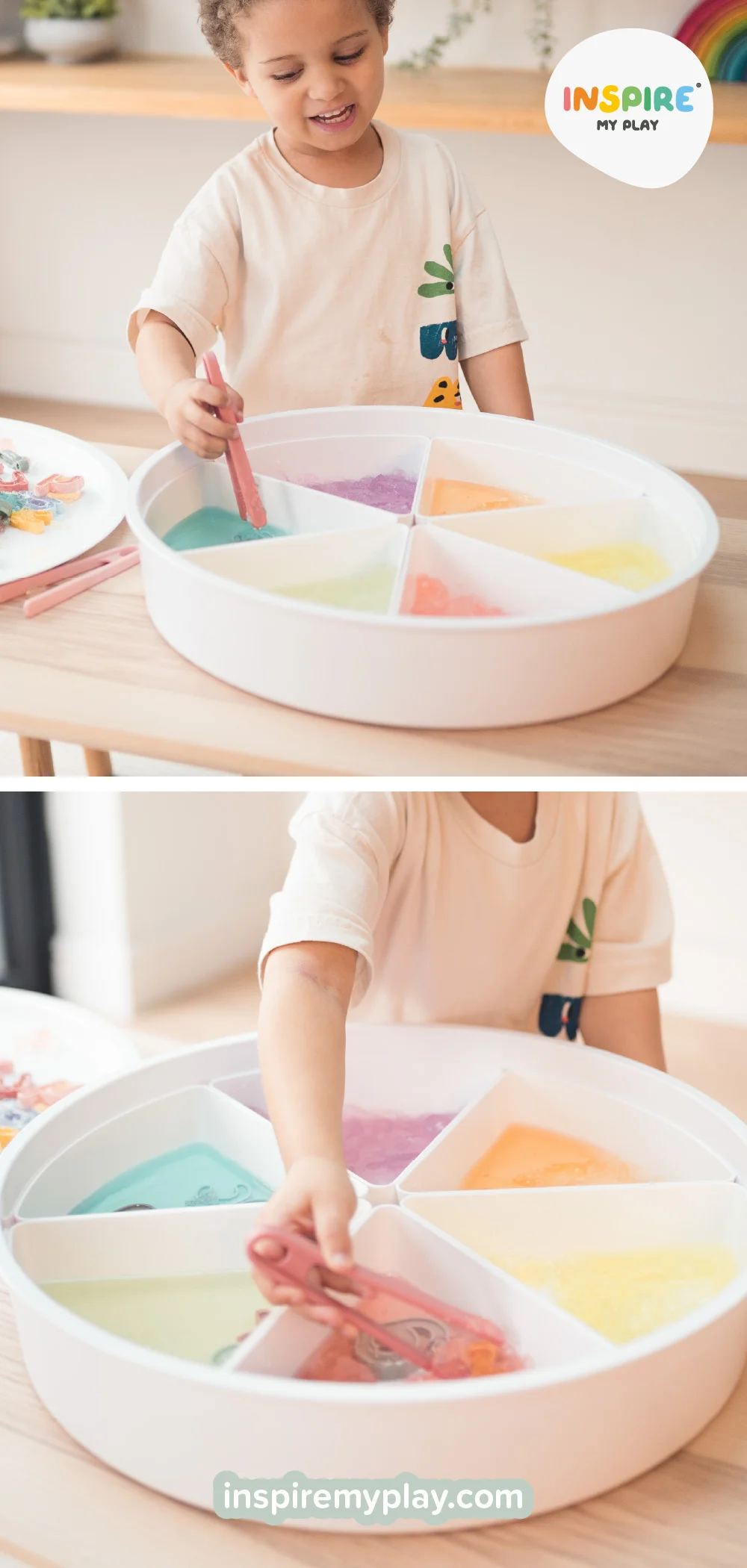
This activity uses gelatine coloured with a drop of food colouring to create a fun number dig. Children can retrieve and match the numbers while developing number recognition and fine motor skills.
What you’ll need:
- 2 packs of gelatine powder (to make 2pts of liquid)
- Food colouring
- Numbers
- Numbers Printable
- Tongs
-
PlayTRAY
How to play:
- Make the gelatine according to the packet instructions.
- Pour it into the PlayTRAY and add a few drops of food colouring.
- Place the silicone numbers into the PlayTRAY, then transfer it to the fridge until set.
- Provide tongs and ask your child to retrieve the numbers and match them to the Numbers Printable.
- For an extra challenge, add the operation symbols and practise making some simple number sentences.
This is hands-on learning at its best!
3. Ice Cream Shop Maths
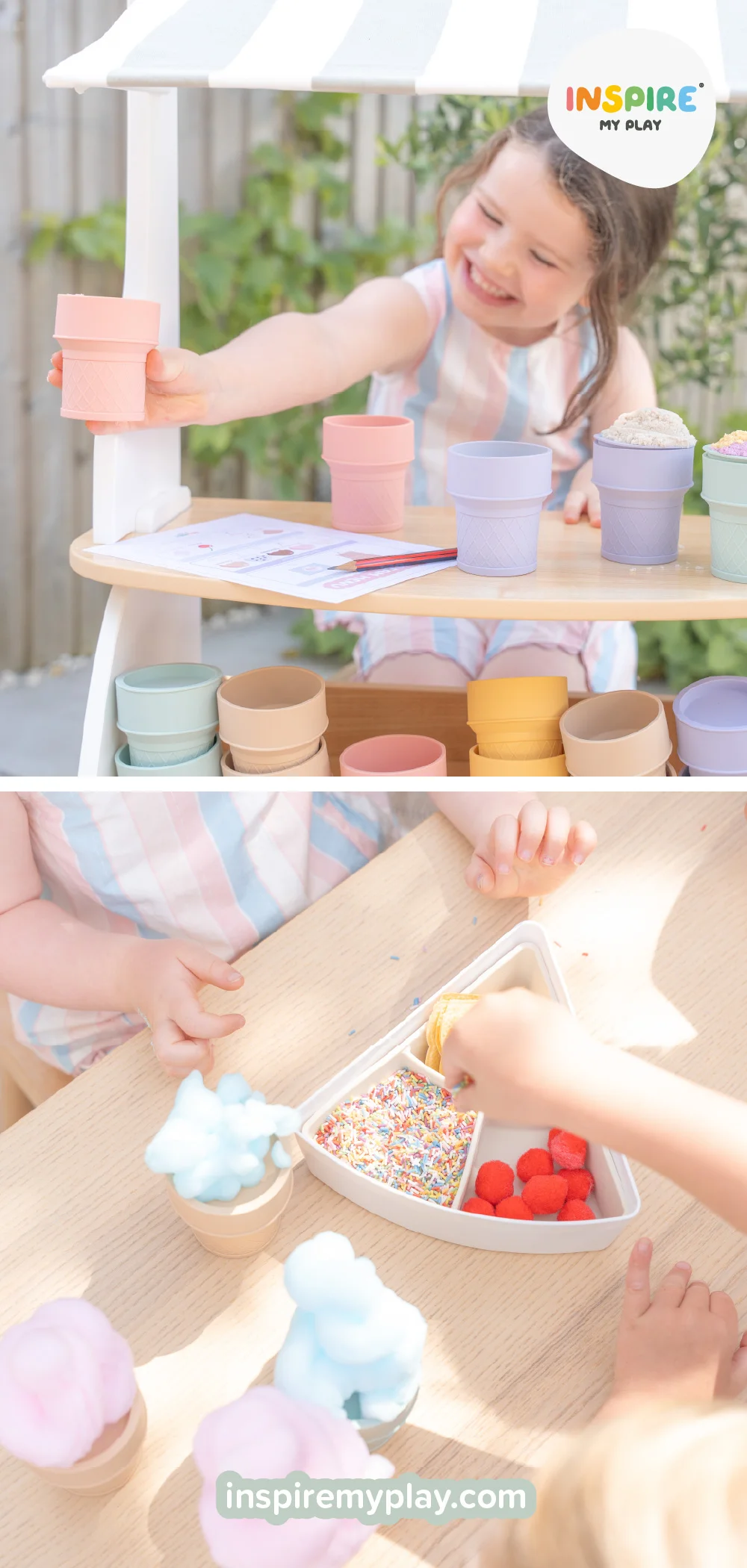
Time to open your very own ice cream shop! This activity combines sensory play and imaginative play with simple maths, giving children the chance to practise counting, quantities and even early money skills while serving up some delicious-looking pretend ice creams.
What you’ll need:
- Playdough, cloud dough or your favourite sensory base
- Ice Cream Play Set
- Coins (real or pretend)
How to play:
- Set up your ice cream shop with your chosen sensory base and Ice Cream Play Set.
- Take turns being the customer and shopkeeper and start placing orders. Try asking, “Can I have two scoops of strawberry ice cream please?”
- Encourage your child to count out the correct number of scoops and make the order.
- You can also introduce money by asking, “That will be three coins please!” For children who are familiar with coins, you could give them a specific amount to pay, like 50p.
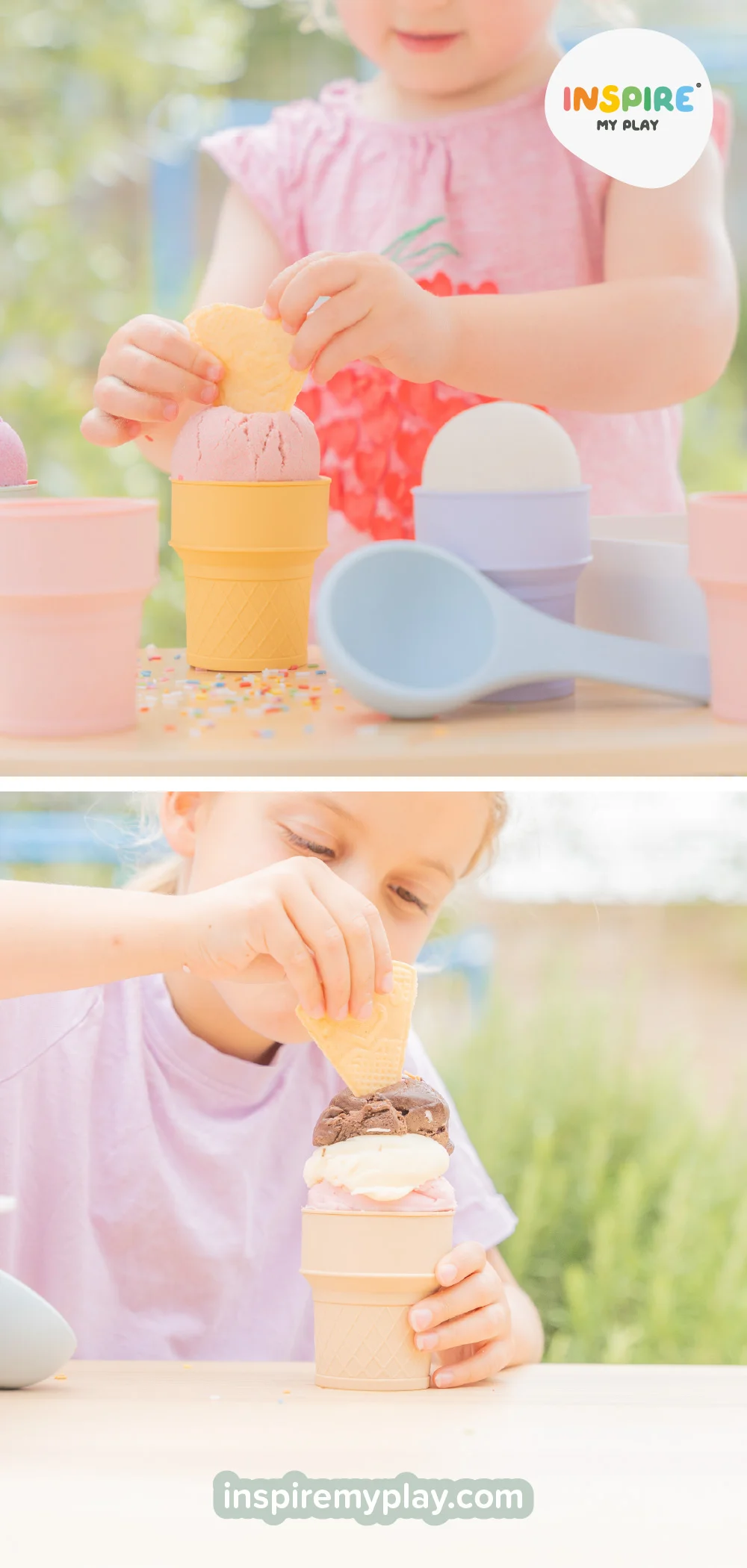
This activity is a fun way to practise counting, number recognition and understanding quantities, while introducing early money concepts. Pretend play also encourages communication, concentration and problem-solving, making maths feel like a natural part of play. Learn more about the benefits of pretend play in our blog, The Benefits of Role Play for Children: Why Pretend Play Matters.
Top Tip: Keep the orders simple to begin with, then make them more challenging as your child gains confidence. Try “one scoop of pink and two scoops of yellow” or ask them to work out how many scoops they need altogether.
4. Number Ice Rescue
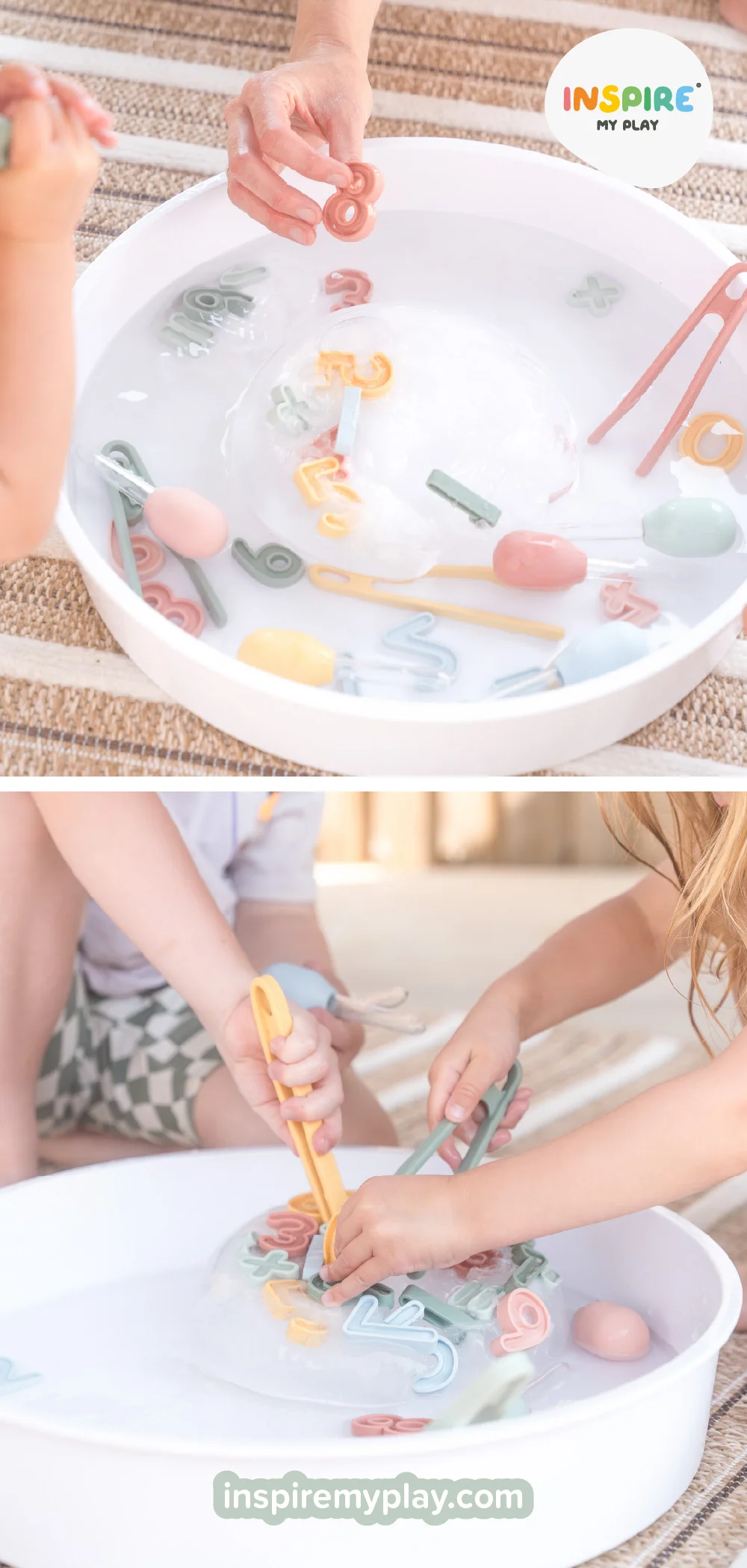
Ice excavation activities are always a hit with children, and they’re also a fantastic way to develop number recognition and counting, while building those all-important fine motor skills.
What you’ll need:
How to play:
- Fill a large plastic bowl with water.
- Place the silicone numbers into the bowl along with some coloured pom-poms.
- Freeze overnight.
- Turn the frozen block out into the PlayTRAY.
- Provide tongs and droppers and invite your child to rescue the numbers and pom-poms from the ice.
- For an extra challenge, ask them to match the correct number of pom-poms to each number.
This activity helps children practise number recognition, counting and one-to-one correspondence as they match the pom-poms to each number. Using tongs and droppers also gives little hands a great fine motor workout, while the challenge of rescuing the frozen pieces encourages concentration and problem-solving.
What I love about this activity is that the ice takes a long time to melt, so children can stay engaged for longer – giving you the chance to enjoy a well-earned break!
5. Mystery Water
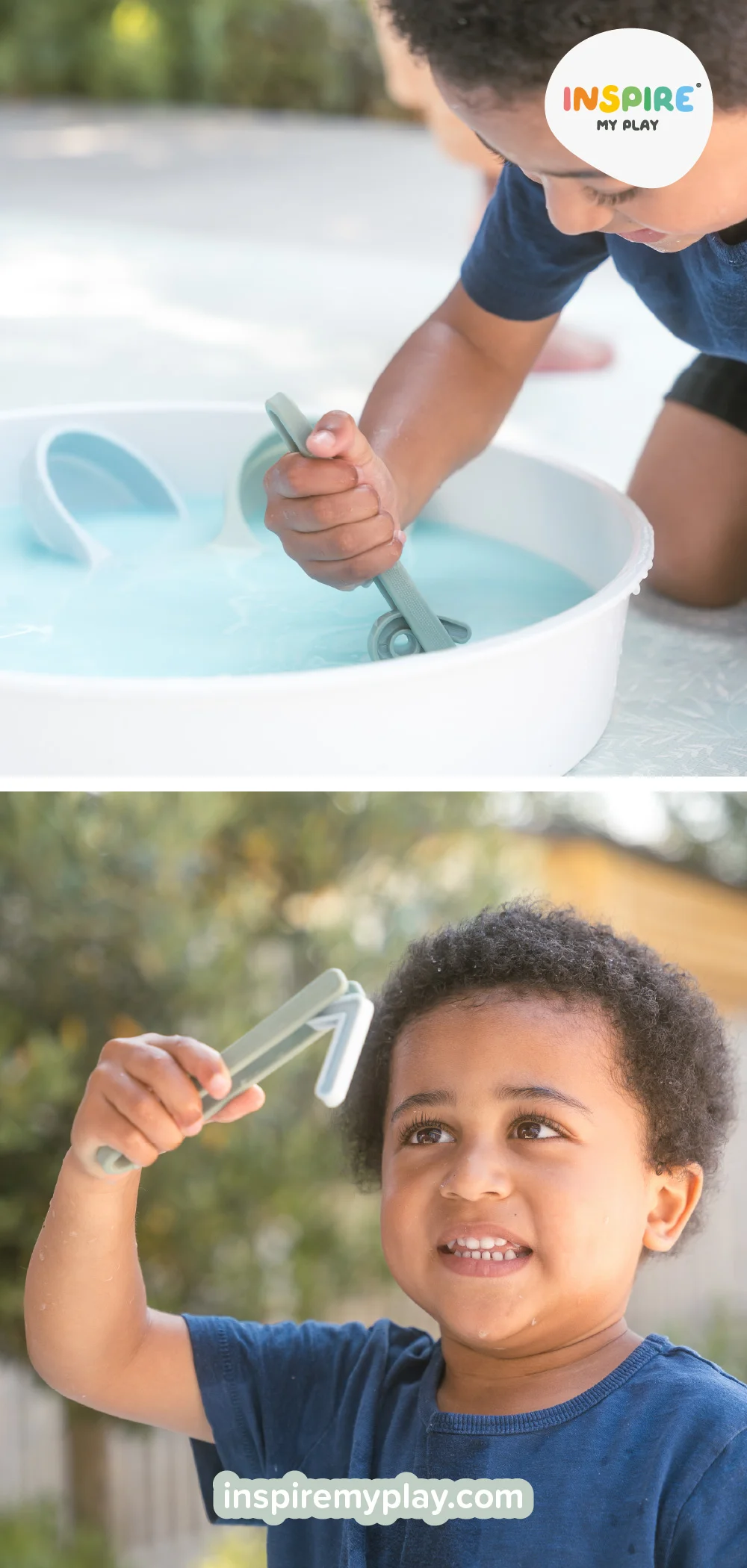
This mystery water takes water play to the next level and offers a great opportunity to practise counting and develop early maths and fine motor skills through hands-on play.
What you’ll need:
How to play:
- Fill the PlayTRAY with water.
- Add a few drops of food colouring and stir the cornflour into the water until it turns cloudy. You might need to stir the water from time to time to stop the cornflour from setting.
- Hide the silicone numbers and plastic jewels in the water.
- Provide funnels and tongs to retrieve the numbers and jewels from the water.
- Ask your child to place the correct number of jewels next to each corresponding number.
This activity helps children practise number recognition, counting and matching, while using tongs and funnels gives little hands a chance to develop fine motor skills, hand-eye coordination and concentration.
Mystery water is such a versatile sensory activity and can be easily adapted for different ages, interests and abilities. Try switching the numbers for letters and asking your child to create simple words, or get them to sort the jewels into different colour groups for another early learning challenge.
6. Playdough Number Stamping
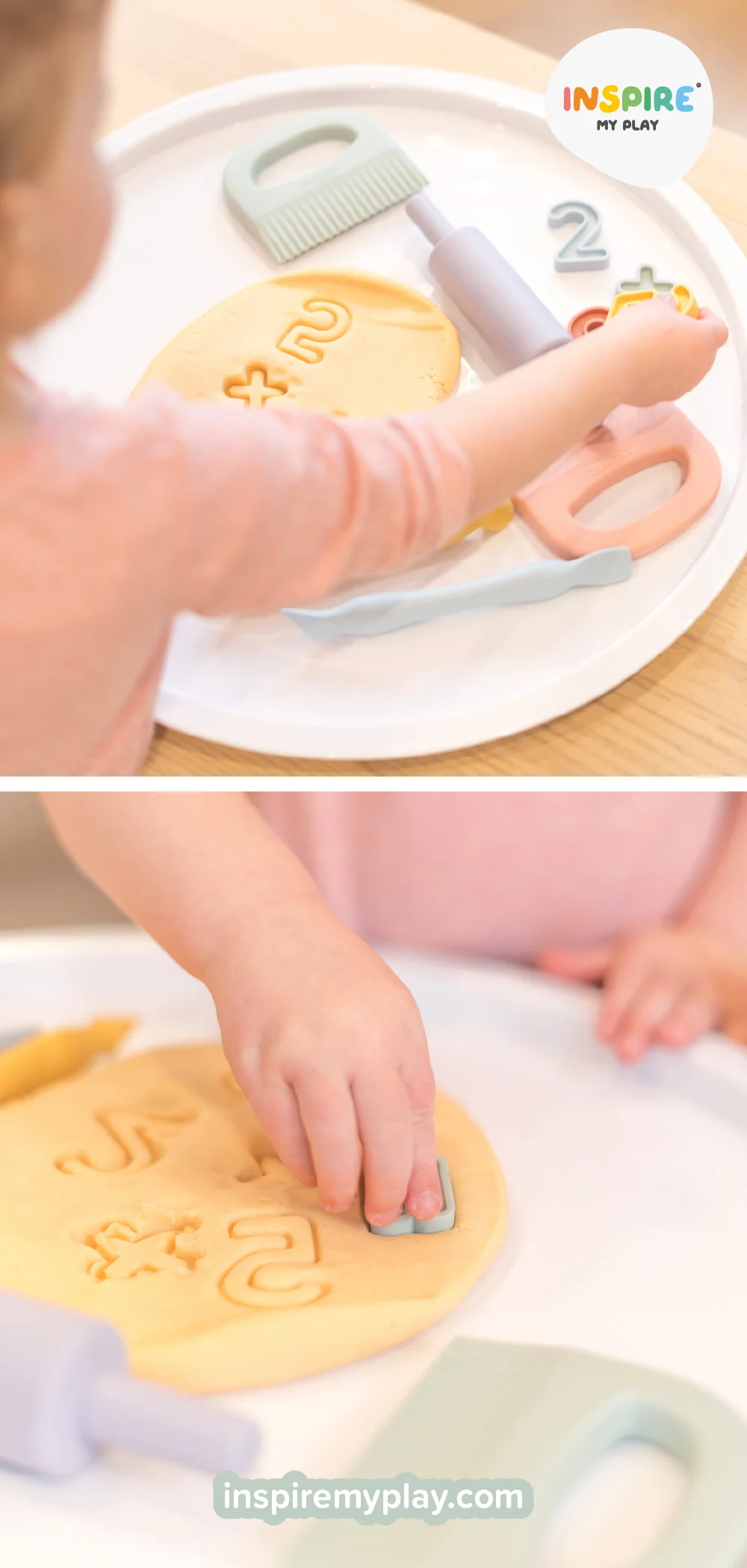
Playdough is such a brilliant sensory base, offering so many opportunities for little ones to explore, create and learn. Discover all the benefits of playdough for sensory play and child development in our blog.
What you’ll need:
How to play:
- Pop the playdough in the lid of the PlayTRAY along with the silicone numbers and Sensory Dough Tool Set.
- Encourage your child to stamp the numbers into the playdough and name each one as they go.
- For an extra challenge, ask them to press a number into the playdough, then use the stylus tool to make the same number of dots underneath it.
- For older children, introduce the operation symbols and see if they can create and solve simple sums.
This activity helps children practise number recognition and understanding quantity, while creating the dots gives them a hands-on way to connect a written number with the amount it represents. Rolling, pressing and stamping playdough also helps develop fine motor skills and hand strength.
7. Number Oobleck
Oobleck is a fascinating sensory material made from cornflour (also known as cornstarch) and water. It’s a non-Newtonian fluid, which means it behaves differently depending on how much pressure is applied – making it a brilliant material for curious little hands to explore!
This activity uses oobleck and numbers to practise number recognition and counting, while providing a great fine motor workout.
What you’ll need:
How to play:
- Mix 2 cups of cornflour and 1 cup of water in the PlayTRAY.
- Stir with a spoon until combined.
- Add the numbers and leave the oobleck to dry.
- Once dry, invite your child to use the tongs to retrieve the numbers. Ask them to name each number as they find it.
- For an extra challenge, ask them to put the numbers in the correct order from 0–10.
- You can also introduce colour recognition by asking them to group the numbers by colour.
This activity helps children practise number recognition, counting and number sequencing, while sorting the numbers by colour introduces early classification skills. Using tongs to rescue the numbers also helps develop fine motor skills, hand strength and hand-eye coordination.
Top Tip: For younger children, start with just a few numbers and gradually add more as their confidence grows. You could also ask them to find a particular number, such as “Can you find number 5?” rather than naming each one as they go.
Make Maths Fun Through Play
I hope you have fun trying all these activities with your little ones! They’re great for independent, sibling or group play, giving children plenty of opportunities to explore early maths concepts in a fun, engaging and hands-on way.
If you’re looking for more ways to weave learning into everyday play, check out our blog, Learning Letters Through Play: 7 Hands-On Alphabet Activities for Kids.