

How to Make Puffy Paint

Laura @inspiremyplay
Founder of @inspiremyplay, Early Years teacher for 11 years and mummy to three gorgeous girls. I'm passionate about about the benefits of play in early childhood.
Looking for a simple art activity with a little something extra? Puffy paint is so easy to make and lots of fun to paint with! Made with just shaving foam, PVA glue and a little food colouring, it has a lovely fluffy texture that makes painting feel a little different.
Once dry, puffy paint creates a raised finish that feels firm and slightly squishy to touch. It’s a lovely activity to get the kids involved in, giving them the chance to explore colours, experiment with textures and get creative.
Whether you’re making colourful ice creams, experimenting with swirly patterns or simply enjoying some creative play, this easy homemade puffy paint recipe is a fun way to add a sensory twist to your next art activity.
What you’ll need
- Shaving foam (no need to go expensive - the cheap stuff will do!)
- PVA/school glue (Elmer's is washable)
- Food colouring (we like to use Wilton food colouring)
- Paintbrushes
- Thick card or paper
- A PlayTRAY
You can also gather a few extras for decorating, such as paper shapes, craft sticks or craft sprinkles.
A little tip: We love using a PlayTRAY as a creative workspace. It gives little ones a dedicated space to explore, with room to keep different colours and materials together while they get creative.
How to make puffy paint
Step 1: Add the glue - Pour some PVA glue into the PlayTRAY compartment.
Step 2: Mix in the shaving foam - Add approximately the same amount of shaving foam as glue. Gently mix the two together until combined, keeping as much of that lovely fluffy texture as possible.
Step 3: Add some colour - Add a little food colouring and stir gently until you reach your desired shade. Start with a small amount and gradually add more to build up the colour.
Step 4: Create your colour palette - Repeat the process in separate compartments to make a selection of colours. Pastels are lovely for ice creams and cupcakes, while bright colours are perfect for more colourful creations like rainbows.
Step 5: Get painting! - Set out your puffy paint, brushes and card, and let your little ones explore. There’s no need for a finished picture or a particular outcome. Sometimes the most enjoyable part is simply experimenting with the texture, making marks and seeing what happens.
Puffy paint activity ideas
Once your puffy paint is ready, there are lots of ways to get creative! Here are three fun activities to try with your little ones.
1. Create your own puffy paint ice creams
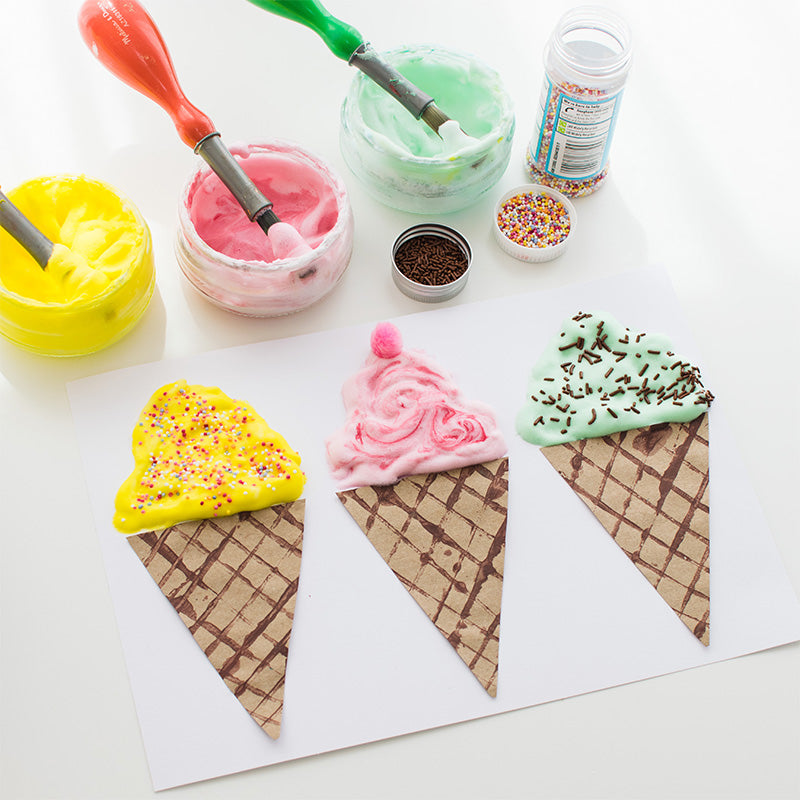
We used our puffy paint to make colourful ice creams, and it’s such a fun way to combine creative art with imaginative play.
Start by drawing and cutting out a whole ice cream shape, including the scoops and cone, from thick card or cardboard. Decorate the cone with brown paint or crayons, adding crisscross lines to create a waffle pattern. Then, use different colours of puffy paint to decorate the scoops, gently swirling shades together with a craft stick to create a marbled effect.
Once your ice creams are ready, use our Mini Scoops to sprinkle on some pretend toppings and add the finishing touches!
You could even create a whole pretend ice cream shop, with different flavours, colourful sprinkles and combinations to choose from.
Our Ice Cream Play Set is a lovely way to continue the fun through scooping, serving and imaginative play.
2. Experiment with colours and patterns
Offer two or three colours alongside paintbrushes and see what happens when they’re mixed or swirled together. You could explore colour mixing, make stripes and dots, or experiment with different ways of spreading the paint.
Try painting clouds, flowers or rainbows onto thick card, using different colours and patterns to create your own textured artwork. Encourage your little one to notice how the paint looks as it goes on and how the picture changes as it dries.
These simple invitations give children the freedom to follow their curiosity and discover their own ideas. There’s no need to aim for a perfect picture; simply enjoy exploring and creating together.
3. Make puffy paint cupcakes
For a sweet-inspired art activity, try making your own puffy paint cupcakes! Draw or cut out cupcake shapes from thick card, then use different colours of puffy paint to create swirly icing on top.
Add dots of contrasting colours to look like sprinkles, or gently swirl two shades together to create different icing designs. You could even decorate a whole batch of cupcakes in different colours and flavours.
Once dry, your creations could become part of a pretend bakery or café, ready for lots of imaginative play!
What are the benefits of puffy paint?
Alongside being a fun creative activity, puffy paint offers opportunities for children to explore and practice a range of skills.
- Sensory exploration: The fluffy consistency and raised finish offer an interesting way to explore texture and visual changes.
- Fine motor skills: Holding a paintbrush and making different marks provide opportunities to practice hand movements and coordination. For more ideas, explore our '5 sensory play activities to strengthen fine motor skills' blog.
- Creativity and imagination: Children can experiment with colours, patterns and their own ideas without needing to follow a set outcome. Creating pretend ice creams and cupcakes can also lead to imaginative play. Discover more in our blog on 'The Benefits of Role Play for Children'.
- Colour exploration: Mixing different shades encourages children to notice similarities, differences and how colours change when combined. For more playful ways to explore colour, take a look at our 'Learning Colours Through Play: 5 Easy Activities for Toddlers' blog
-
Language development: Chat about what your child notices. Words such as fluffy, swirly, thick, smooth, bright and soft can help introduce new descriptive language.
As with any play activity, the experience will look different for every child. The aim is to offer an opportunity to explore, create and enjoy the process together.
For even more inspiration, take a look at our Sensory Play Activity Cards, full of ideas to help you feel confident getting started with sensory play.
FAQs
How long does homemade puffy paint last?
Homemade puffy paint is best used fresh. If you have any left over, you can try storing it in an airtight container for a short time, but the shaving foam will gradually lose its volume and texture. We recommend making a small batch for each activity.
How long does puffy paint take to dry?
Puffy paint can take around one to two hours to dry, although thicker layers may take longer. Leave your artwork somewhere safe and allow it to dry completely before handling it.
Does puffy paint stay puffy?
Puffy paint creates a raised finish as it dries, but the final texture can vary depending on the ingredients, proportions and thickness of the paint. Over time, the raised areas may flatten or change.
Does puffy paint wash off?
Clean-up will depend on the glue you use, the surface and the fabric involved. Check the glue manufacturer's instructions, protect clothing and surfaces, and clean up spills promptly rather than relying on the paint to wash out easily.
Is puffy paint suitable for toddlers?
This activity requires close adult supervision. Shaving foam, glue and food colouring are not intended to be eaten, and the mixture should be kept away from mouths and eyes. An adult should prepare and manage the materials, particularly for younger children, and ensure the activity is suitable for their stage of development.
Ready to get creative?
Puffy paint is a simple way to add a little extra texture to your art activities, using just a few ingredients. From colourful ice creams to textured rainbows and pretend cupcakes, it’s an invitation to experiment, make discoveries and enjoy the creative process together.
Set up your PlayTRAY, gather a few colours and see where your little one’s imagination takes you. Sometimes the simplest activities are the ones that inspire the most wonderful ideas. Tag us in your photos and videos on Instagram @inspiremyplay so we can share in the fun, too!
Happy PlayTRAYing!


