



How to Make Rainbow Rice for Sensory Play


Laura @inspiremyplay
Founder of @inspiremyplay, Early Years teacher for 11 years and mummy to three gorgeous girls. I'm passionate about about the benefits of play in early childhood.
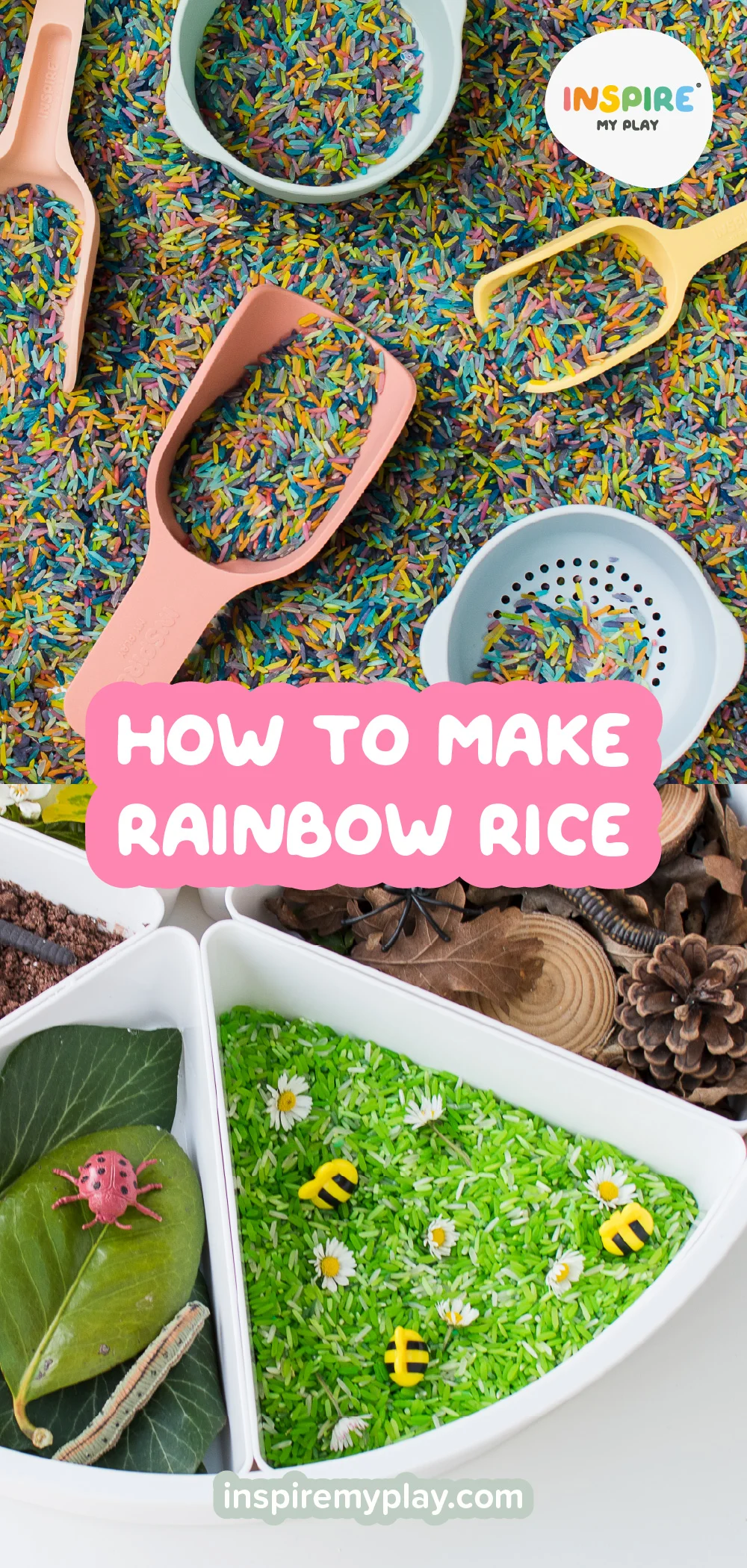
Rainbow rice is one of our favourite sensory play materials. It's colourful, inexpensive to make and perfect for scooping, pouring, filling, sorting and exploring.
Making your own coloured rice is surprisingly simple, and once you've made a batch, you can use it for lots of different sensory play activities.
In this blog, we’ll share how to make rainbow rice using two simple methods: food colouring or paint, plus plenty of ideas for playing with your finished rice.
How to Make Rainbow Rice
There are two easy ways to colour rice for sensory play:
Food colouring and vinegar – ideal when you want bright, colourful rice using ingredients you may already have at home.
Ready-mix or tempera paint – a quick method that creates vibrant colours and is particularly useful when you want unusual shades.
What you'll need
- White rice
- Sealable bags or containers
- A baking tray
- Baking/greaseproof paper
- Either:
Food colouring and white vinegar, or
Ready-mix/tempera paint
You'll need a separate bag for each colour you'd like to make.
Method 1: How to Make Rainbow Rice with Food Colouring
Using food colouring is a simple way to make brightly coloured sensory rice.
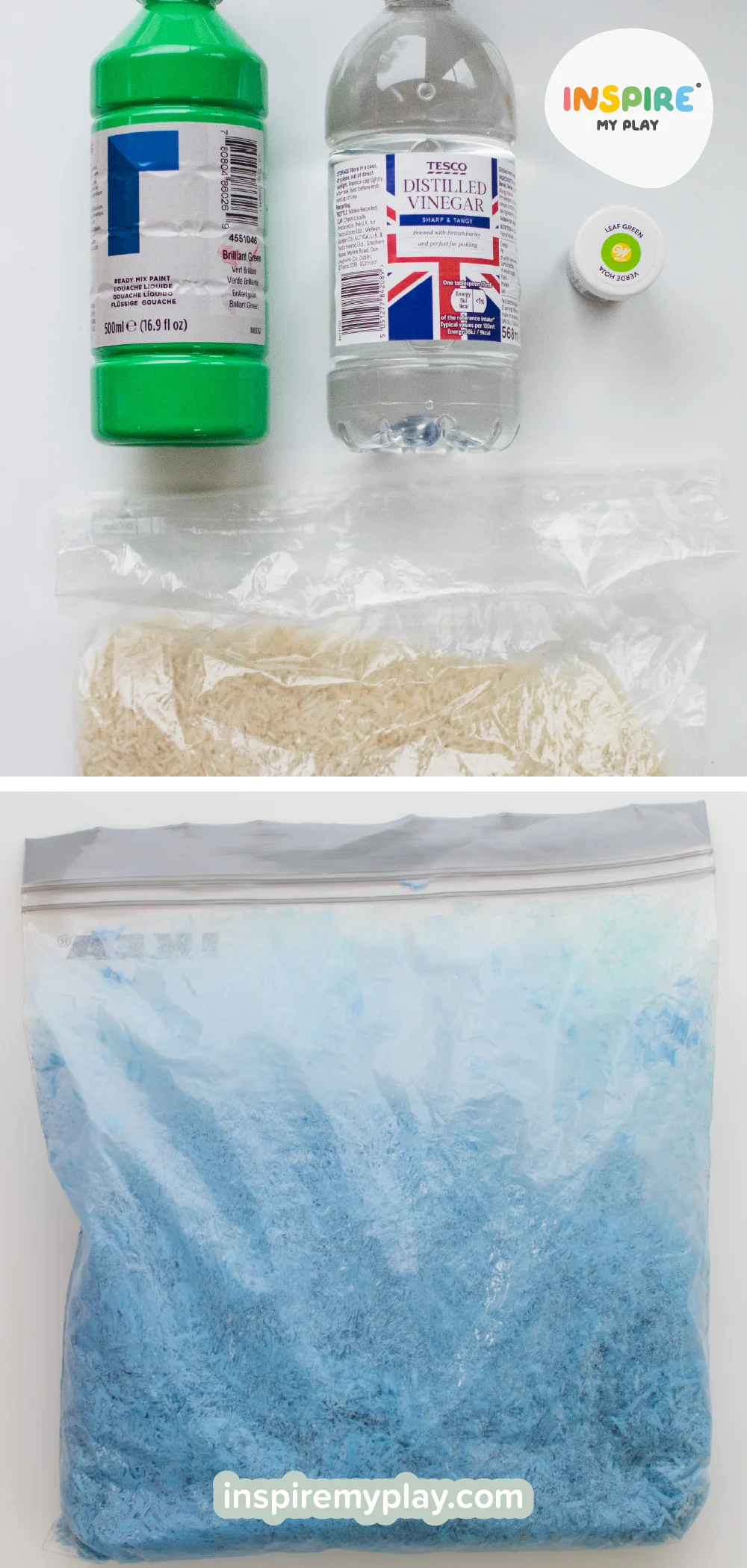
1. Add the rice to a bag
Place around 2 cups of uncooked white rice into a sealable bag.
2. Mix your colour
In a small container, mix around 1 tablespoon of white vinegar with your chosen food colouring.
Gel food colouring works particularly well for creating vibrant colours.
3. Add the colour to the rice
Pour the coloured vinegar mixture into the bag with the rice. Seal the bag securely, then shake, scrunch and massage the rice until all of the grains are evenly coated.
If you'd like a deeper colour, add a little more food colouring and mix again.
4. Leave the rice to dry
Spread the coloured rice out in a thin layer on a tray lined with baking or greaseproof paper.
Leave it to dry completely. This usually takes around 30 minutes to an hour, depending on how much moisture has been added.
Once completely dry, your coloured rice is ready for play!
Repeat the process with different colours to make your rainbow rice.
Important: Coloured rice is a sensory play material, not a food. Uncooked rice can be a choking hazard, so always supervise children during sensory play and keep rice away from children who are still mouthing objects.
Method 2: How to Make Rainbow Rice with Paint
Using ready-mix or tempera paint is another quick and easy way to colour rice. It can also give you particularly vibrant colours and allows you to create shades that aren't always available with food colouring.
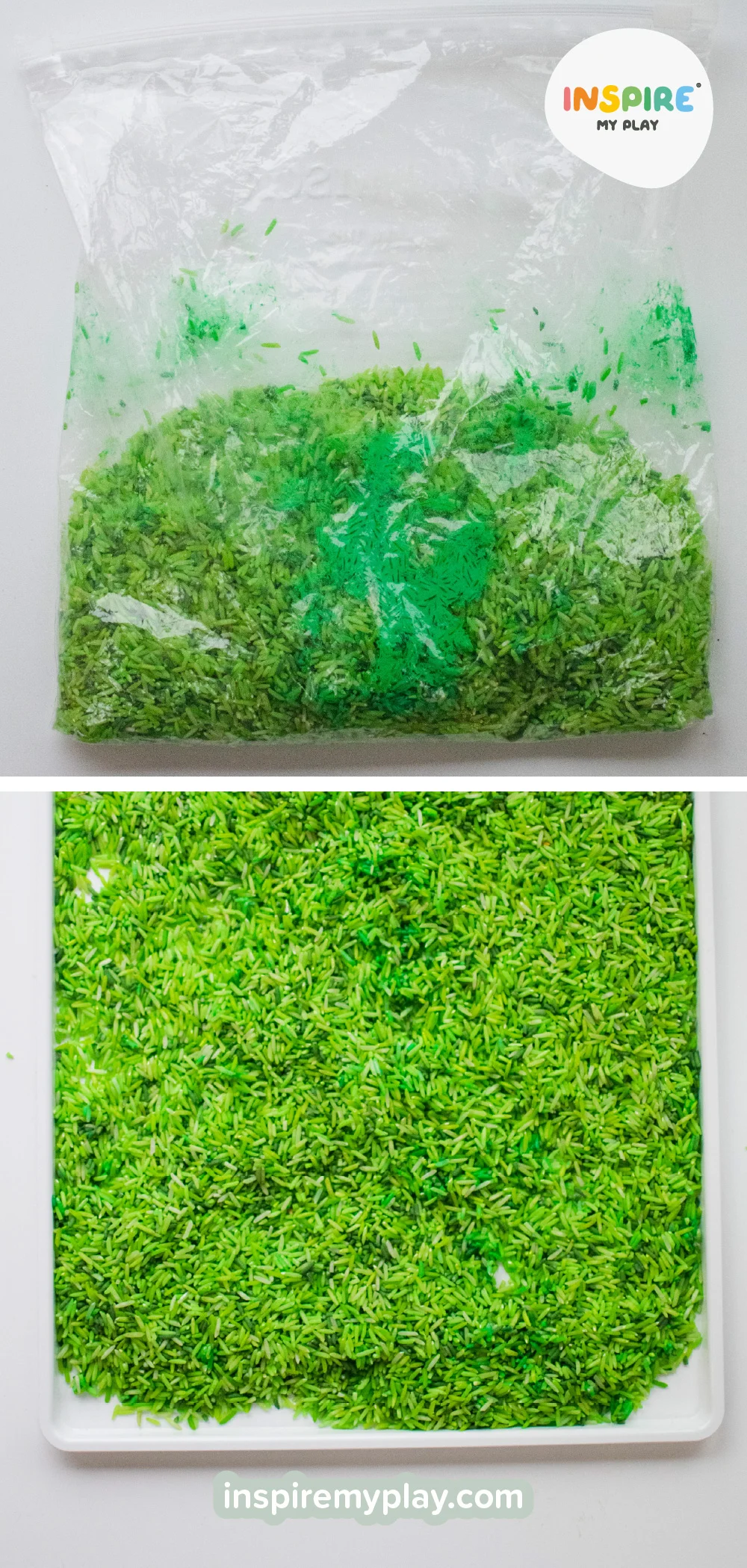
1. Add the rice to a sealable bag
Place your desired amount of uncooked white rice into a bag.
2. Add the paint
Add a couple of squirts of ready-mix or tempera paint.
Seal the bag and massage the rice through the bag, making sure the paint is spread evenly across the grains.
You'll need to work the rice quite vigorously to get good coverage.
If the colour isn't quite vibrant enough, add another small amount of paint and mix again.
3. Dry the rice
Once the rice is evenly coated, spread it out in a thin layer on a tray lined with baking or greaseproof paper.
Leave it to dry completely before using it for sensory play.
Which Method Should You Use?
Both methods work well, so it really comes down to what you have available and the type of rice you want to create.
Food colouring is a great option if you're looking for bright colours and already have food colouring in your kitchen.
Paint is quick and easy, and can be particularly useful when creating unusual colours or shades.
Whichever method you choose, make sure the rice is completely dry before giving it to children to play with.
How to Use Rainbow Rice for Sensory Play
Once you've made your rainbow rice, the fun really begins!
Rainbow rice is a fantastic open-ended sensory base because there are so many ways children can explore it. Simply add a few sensory tools and containers and let them scoop, pour, fill, empty, sort and transfer the rice.
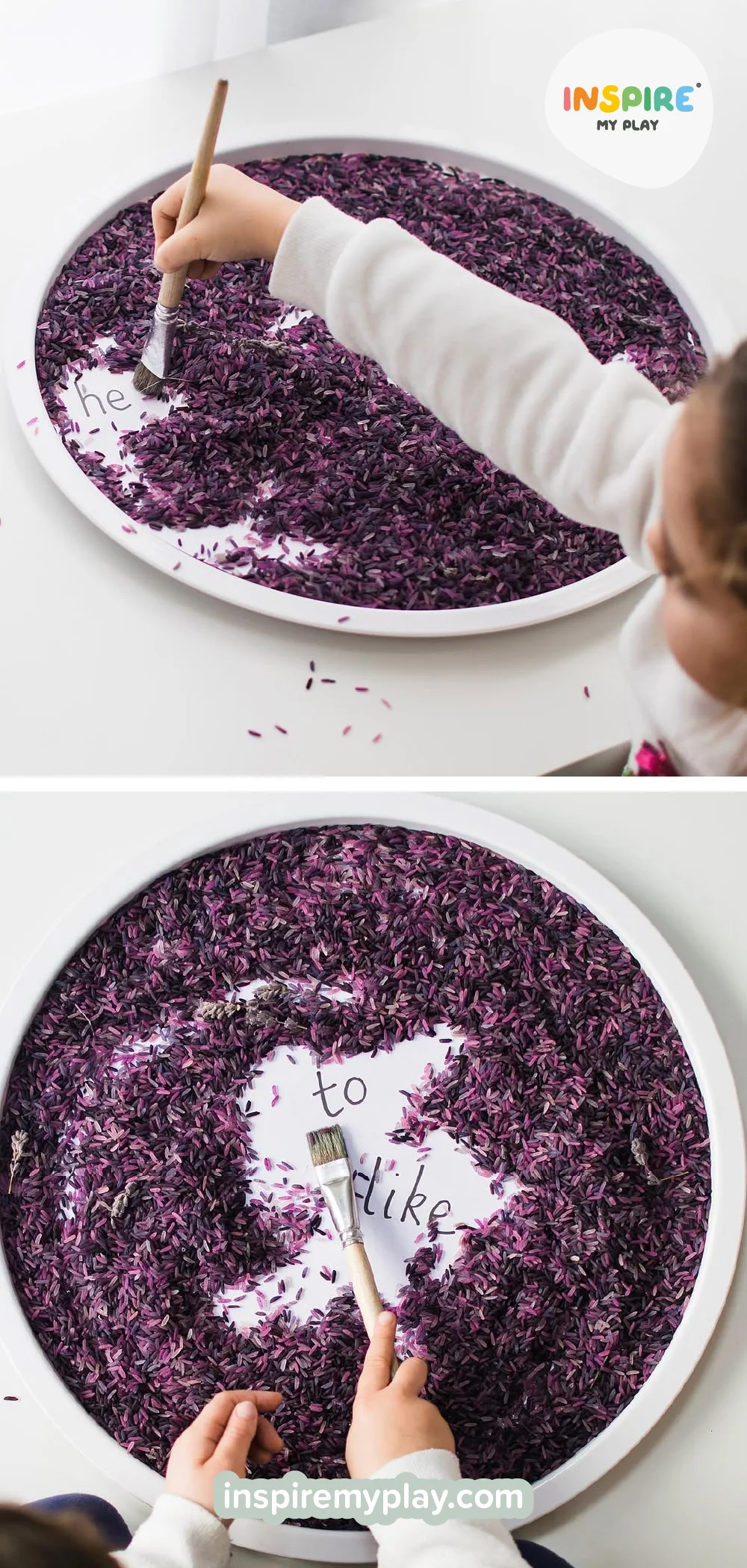
Scoop and pour
Keep it simple with bowls and scoops.
Children can practise filling a bowl with rice, transferring it from one container to another and experimenting with how much they can fit inside.
Our Sensory Play Nesting Scoop Set is designed for exactly this kind of play, with three different-sized scoops that can be used with a variety of sensory materials like rice.
Fill and empty
Add a selection of bowls or containers and encourage children to fill them with different colours.
Our Sensory Play Nesting Bowl Set includes three silicone bowls, including a sieve bowl, making it ideal for scooping, mixing, sorting and pouring.
Add a sensory tray or sensory bin
A sensory tray or sensory bin helps contain the rice and creates a dedicated space for children to explore.
We love using rainbow rice in our PlayTRAY. Its deep tray provides plenty of space for sensory play, while the shallow tray can be used as a sealable lid when you're ready to tidy everything away.
For an easy all-in-one option, our Sensory Play Starter Set includes the PlayTRAY alongside a bowl, scoop, funnel, tongs, dropper, organiser insert and activity cards.
Transfer rice with tongs
Add small objects to your rainbow rice and invite children to find and transfer them using tongs.
This adds another layer to the activity and encourages children to practise squeezing, picking up and releasing objects.
Our Sensory Play Tong Set is designed for little hands and can be used for picking, sorting and transferring during sensory play.
Hide and seek
Bury small, age-appropriate objects in the rice and challenge children to find them.
You could hide:
- Letters
- Numbers
- Coloured objects
- Small toys
- Natural objects
- Puzzle pieces
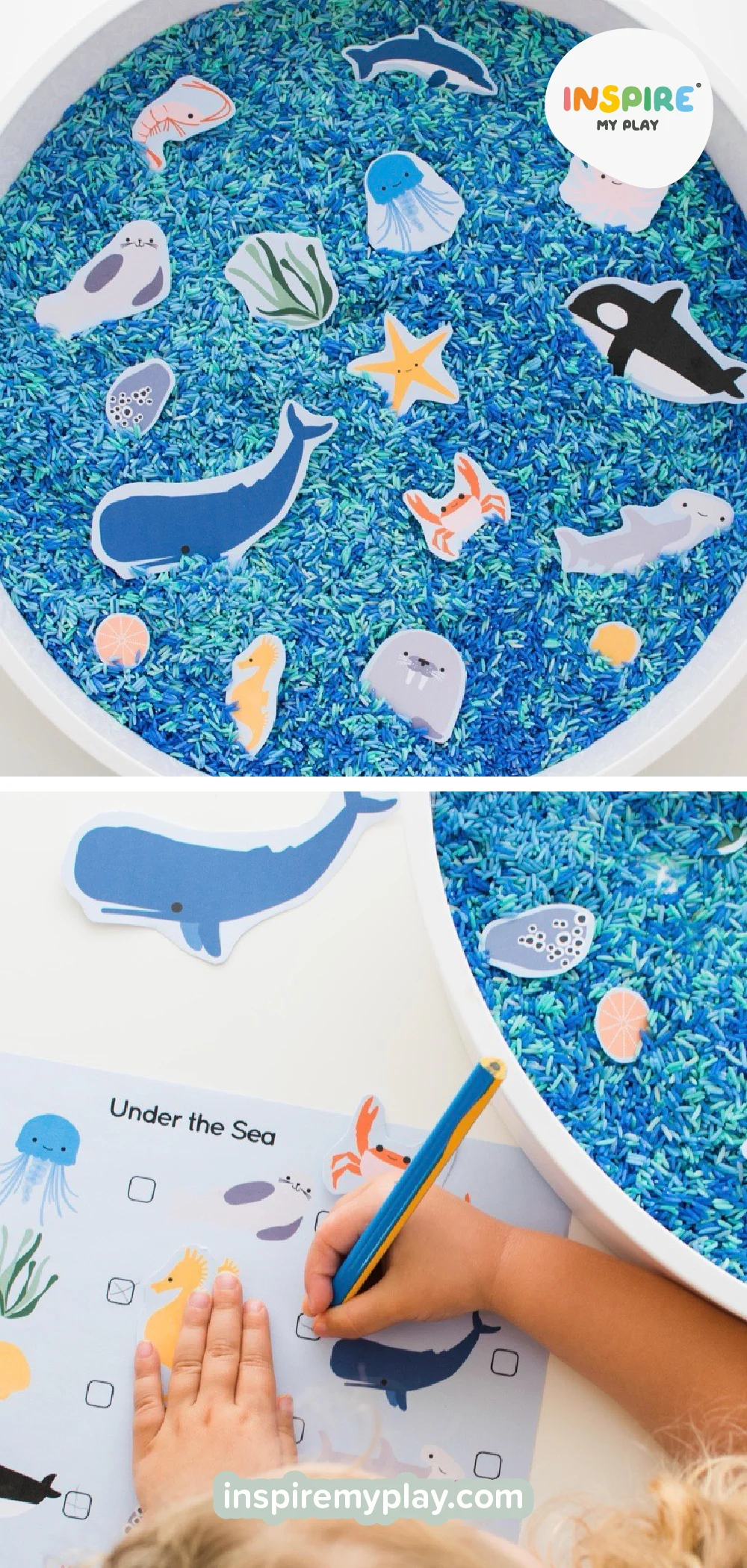
This is also a lovely way to turn rainbow rice into a simple learning activity.
Make a single colour
You don't have to make a whole rainbow every time!
Making a single colour, or two complementary colours, can be perfect for themed sensory play.
For example, try:
- Orange and brown for an autumn activity
- Green for a minibeast, spring or garden-themed setup
- Blue for an ocean-themed activity
- Red and green for Christmas
- Pink and purple for a colourful sorting activity
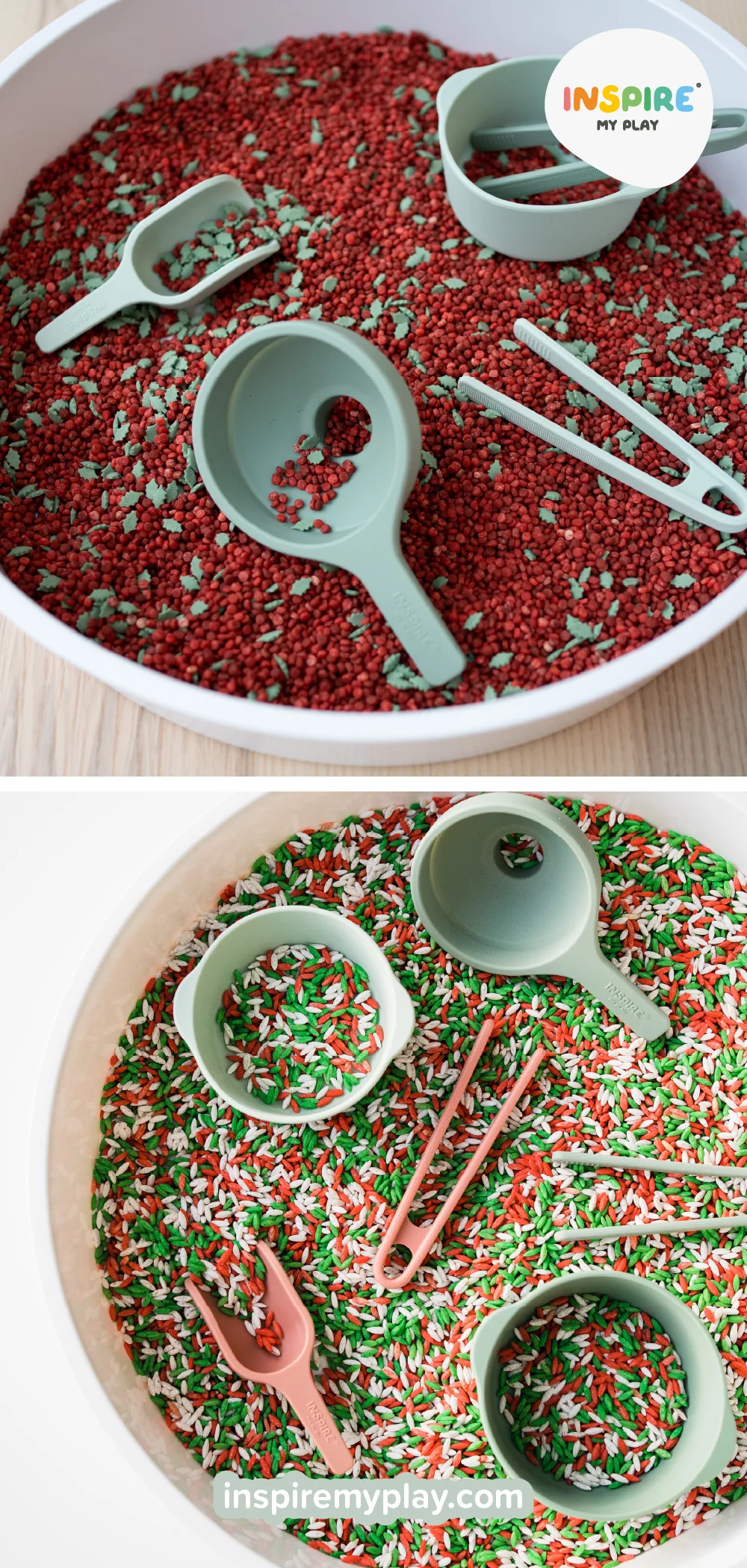
Because colouring rice is so quick, you can easily make smaller batches for a particular activity.
Rainbow Rice Sensory Play Ideas
Once you've got your coloured rice, there are lots of ways to extend the play.
Try:
Colour sorting: Add objects in different colours and encourage children to match them to the corresponding rice.
Letter hunts: Hide letters in the rice and see which ones your child can find.
Number hunts: Bury numbers and ask your child to find them in order.
Pouring practice: Add different-sized containers and let children experiment with filling and emptying them.
Rainbow patterns: Arrange different colours of rice into patterns or stripes.
Small-world play: Use the rice as a colourful base for small-world setups featuring animals, vehicles or other favourite toys.
The beauty of sensory play is that you don't need to provide a complicated activity. Sometimes a tray of coloured rice, a few simple tools and plenty of time to explore is all children need.
How to Store Rainbow Rice
Once your rainbow rice is completely dry, store it in an airtight container in a cool, dry place.
Keeping the rice dry is important because moisture can cause it to spoil or develop mould.
If you're using a PlayTRAY, you can also tidy your sensory setup away ready for another day. Its lid makes it easy to cover and store your sensory materials between play sessions.
Before reusing stored rice, always check that it is dry and hasn't developed any unusual smell, appearance or signs of mould. If you're unsure, throw it away and make a fresh batch.
Frequently Asked Questions About Rainbow Rice
How long does rainbow rice last?
When completely dry and stored in an airtight container, homemade rainbow rice can be reused for a long time. Check it before each use and discard it if it becomes damp, develops an unusual smell or shows any signs of mould.
Is rainbow rice safe for toddlers?
Rainbow rice is intended for supervised sensory play, not eating. Uncooked rice can be a choking hazard, so it isn't suitable for children who are still mouthing objects.
Always supervise children during sensory play and choose materials and objects that are appropriate for their age.
Can you make rainbow rice without vinegar?
Yes. The paint method doesn't require vinegar. Vinegar is used in the food colouring method to help distribute the colour across the rice.
Why is my coloured rice sticky?
This usually means there is too much moisture. Spread the rice out in a thin layer and allow it to dry completely before using it. Next time, try using slightly less liquid.
Can you use coloured rice for sensory play?
Absolutely! Coloured rice is a popular sensory base because children can scoop, pour, fill, empty, sort and transfer it in lots of different ways.
Ready to Make Your Own Rainbow Rice?
Making rainbow rice couldn't be easier. With a bag of white rice, a little colour and a few minutes of preparation, you can create a reusable sensory base for all kinds of open-ended play.
Once your rice is ready, add some scoops, bowls, tongs, funnels and other sensory play tools and let your child take the lead.
For everything you need to get started, explore our Sensory Play collection.
Enjoyed making rainbow rice? Why not try making coloured pasta for sensory play too? Find out how to dye pasta for sensory play & craft activities.